









Hot Articles
-
Hydraulic Press Channel – How Much Money Does the Hydraulic Press Channel Make?
Millions of viewers watch Lauri Vuohensilta of Finland destroy things in his family shop’s 150-ton hydraulic press, such as clocks, fruit, a……
-
What Can Withstand a Hydraulic Press?
The hydraulic press is a powerful machine that can be used for many different purposes. They’re often used to crush unusual objects, but do they act……
-
How to Make Hydraulic Press Brake
Press brakes are essential parts of any metal fabrication shop, yet many professionals and amateur fabricators struggle with understanding them. Pre……
-
How to Make a Hydraulic Cider Press
If you want to produce large volumes of cider, a press is needed; typically this means using a rack and cloth style press. Hydraulic presses can sav……
-
How Much Pressure Can a Hydraulic Press Exert?
As much as people may use hydraulic presses for internet fame by crushing cheese and magnets, they also serve a multitude of practical uses. Operate……
-
Can You Make Manual Press Into Hydraulic Press?
Manual workshop presses offer versatility in their application with low maintenance costs and small footprints compared to their counterparts. Wor……
-
How Much Force Does a Hydraulic Press Exert?
A hydraulic press is an instrument that leverages Pascal’s Law to generate incredible force. According to this principle, any pressure exert……
-
How to Make a Hydraulic Forging Press Dies
Forging presses apply large forces to pieces of metal at low pressure, an essential process in manufacturing automobile parts such as nuts, bolts,……
How to Make a Hydraulic Shop Press
time:2023-09-30 views:(点击 1,145 次)
A hydraulic shop press can serve multiple purposes. From repair jobs and compacting powders, to creating molds.
Presses can also help separate rusted parts, though spraying them first with lubricant is always advised. There are two primary types of shop presses: H-frame and table models.
Frame
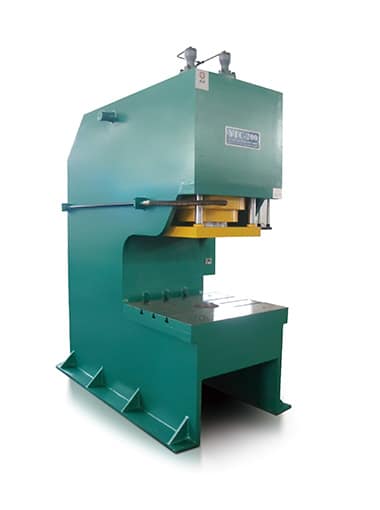
A hydraulic shop press is a tool used for producing force by means of hydraulic fluid, making it suitable for metal forming, woodwork and rubber/plastic processing among many other tasks. Available in various sizes and designs for home DIY jobs to heavy industrial work environments.
Hydraulic presses are a useful tool in maintenance and fabrication operations, as they can bend, straighten, flatten and stamp various types of materials. They typically sit on either the floor or workbench and feature master/slave cylinders to apply pressure directly. A hydraulic pump is then used to generate this pressure and is often prefilled with hydraulic oil before use.
The frame of a hydraulic shop press serves to support its rams and other parts. Constructed from steel, it can be built in any number of ways - one method involves creating an I-beam frame with all necessary mountings to house and support its main pressing arm.
When selecting the frame you need for your hydraulic shop press, several factors should be taken into account, including its size and purpose of your project. For instance, working with metals that require high levels of compression might necessitate using a heavier frame; on the other hand, for fragile or thin wood pieces you may require something lighter.
Frame of a hydraulic press plays an integral role in determining how much force can be exerted by its rams, as it determines how much force can be applied by it. To avoid damage and ensure proper welding of thick metal sheets or welds on each joint of its frame. Depending on your project and goals, additional reinforcement may be necessary with steel mesh or bars.
Assembling a hydraulic press requires cutting the appropriate metal parts. Once assembled, you can add your cylinders - keeping an extra set handy could prove handy if using your press for bending purposes.
Cylinders
Cylinders are at the core of any hydraulic shop press, taking power from pressurised hydraulic fluid, often oil, through pressurisation. A typical hydraulic shop press cylinder comprises of a barrel with piston rod attached to an hydraulic piston powered by pressurisation; this piston does linear work for pushing down and pulling forward on press ram. Sliding rings and seals protect its separation from cylinder walls before it connects with rod via connecting mechanisms such as flanges, trunnions or clevises to transfer its force onto whatever press ram push or pull force is exerted through press.
Hydraulic cylinders can be made out of various materials depending on their intended use and environment, with some coated with anticorrosion materials like COREX for improved performance and longevity. Furthermore, internal surfaces can often be painted or finished as desired; although their significance usually isn't as prominent as with pistons.
Hydraulic cylinders feature ports at their head and rod ends to regulate the flow of hydraulic fluid, with head end ports controlling direction of movement while rod end ports assist ram retraction or extension. A double acting cylinder features ports on both ends for easier hydraulic pumping in both directions - typically used to raise and lower heavy objects or machine components.
Flange mounting is typically the best method for keeping piston and cylinder rod aligned during prolonged use, although other methods like trunnions or clevises may also work. Bearings and seals ensure smooth motion inside and outside of the barrel of a cylinder; seal materials should also be slow-wearing so as to withstand repeated cycling of moving in and out.
Hydraulic Pump
No matter if it's used for metal forging, cutting, drawing, punching or coining; the hydraulic press is an indispensable tool that can perform multiple tasks. Able to produce precisely defined and precisely shaped metal parts and assemblies quickly and precisely makes this machinery indispensable in industrial settings as well as construction industries - specifically used for concrete testing purposes.
Presses can either be manually or automatically operated. A manual press requires someone to control its controls during use; an automated system monitors itself and shuts itself off if load exceeds maximum capacity. Hydraulic pumps play an integral role in how quickly and how much pressure can be applied to workpieces.
Hydraulic pumps come in various designs, such as bent axis, gear, vane and piston pumps. Gear pumps tend to be the least energy-efficient with regards to power-to-volume ratio; piston pumps can achieve up to 95% efficiency and offer adjustable flow rates.
A hydraulic accumulator is a container designed to save energy and save costs by holding pressurized fluid at pressure in order to save energy by relieving the pump from having to run continuously. This feature is especially valuable during longer operations since it reduces frequency and duration of starting and stopping machine and thus operating costs.
When not in use, an accumulator allows fluids to travel from the pump through an accumulator tank into a hydraulic tank in either the frame or cylinders, where they can then be replenished back into the hydraulic pump for use again.
To ensure proper functionality of its machine, the hydraulic pump uses a control valve to direct oil flow to tilt and rigging cylinders or actuators for presses. These control valves may either be uni-rotational types or bi-rotational, meaning that they operate in both directions of shaft rotation.
Hydraulic pumps utilize a rotor with multiple vanes that are enclosed in a housing or cavity with inlet and outlet check valves, and its operation requires atmospheric pressure forcing oil into this space created by atmospheric pressure. As it spins during operation, atmospheric pressure forces oil in, closing both inlet and outlet check valves when necessary for operation while opening both outlets to allow oil out from pump. An electric, motor or gas engine provides prime mover to rotate rotor.
Die Set
Die sets form the core of any shop press. Comprised of various components like die plates and bolts, these parts fit into a ram that moves toward an anvil to exert pressure, possibly with metal punches to cut material to specific shapes. Depending on project size, additional anvils or multiple rams may need to be added for additional cutting or punching capabilities. A two-cylinder hydraulic press usually features one large cylinder carrying the ram while one smaller cylinder contains its plunger; these pressure generators then control both components via pressure generated within these cylinders for smooth operations of press operations.
As part of any tap and die set, the initial step should be selecting an appropriate sized tap or die. A table that typically comes with your set can help you determine which tap will suit your task best. When choosing your set, be sure to choose one made from durable materials as these will endure greater force when exposed to impact and force.
Before using a tap and die set, it is crucial to apply lubrication. This will make the process simpler and more efficient. Once the lubricant has been applied, simply insert the tap into the hole, turn clockwise until all threads have been formed, and repeat this step until threads have been successfully completed.
It is best to use moderate pressure when working with a tap and die, in order to ensure threads are cut properly without becoming damaged or stripped. A tap and die set may also be used to rethread stripped bolts; simply begin by drilling or redrilling to achieve the correct size before placing the die on top of the bolt and securely clamping it with vise grips or clamps before turning clockwise until the result meets your expectations. Reversing may be required several times before reaching an ideal result.
For long threading needs, use a circular tap instead of the taper tap for neat results at the end of your bolt. A chasing tool may also come in handy during this process to clean up and smoothen out your threads.
Link to this article: https://www.ihydraulicpress.com/nsn/4862.html
Hot Articles
-
How Much Pressure Can a Hydraulic Press Exert?
Have you seen a hydraulic press at work squeezing metal into shapes resembling kitchen sinks and car body panels? These machines are often employe……
-
How Much Force in Hydraulic Press?
Have you seen someone using a hydraulic press before? These powerful machines can produce incredible force, making short work of crushing cars or ……
-
The Benefits of a Hot Press Machine For Doors
In the wood industry, you’ll come across a range of hot press machines for doors. These devices allow users to laminate decorative material on……
-
How to Make a Hydraulic Briquette Press
Briquette presses use hydraulic devices that produce high levels of specific pressure on raw material, which is more efficient than using lever desi……
-
How to Make a Hydraulic Press for Knife Making
The Press is an extra heavy duty hydraulic device used for creating eye catching damascus steel knives. Built like a tank, its super heavy duty hy……
-
How Much Force Can a Hydraulic Press Produce?
Hydraulic presses can generate immense force, making them ideal for industrial applications. But how exactly does this incredible force come to fr……
-
How to Make a Hydraulic Fruit Press
Making a hydraulic fruit press doesn’t require too much technical skill or woodworking knowledge, though you will require a stool for use wh……
-
How Much Does a Hydraulic Press Cost?
Hydraulic presses are powerful machines used to shape metal and other materials into shapeable forms, offering various industries several distinct a……
Latest News
-
How to Make Hydraulic Press Substitute
On YouTube, hydraulic presses can often be seen crushing items. These powerful machines feature various force capabilities for assembly, deep drawin……
-
How to Make a Hydraulic Press Machine
Hydraulic presses are powerful machines used to apply extreme pressure. As demonstrated in this video, these hydraulic presses can crush anything fr……
-
How to Make Hydraulic Press Machine
A hydraulic press is a machine that utilizes fluid pressure to compress materials. It consists of an oil tank, cylinder and plunger. The cylinder ……
-
How to Make a Hydraulic Briquette Press
Briquette presses are machines designed to make different sized briquettes that can be used as fuel for cooking and heating, and easily transporte……
-
How to Make a Hydraulic Press Juicer
Hydraulic press juicers are specialized juicing machines that employ hydraulic pressure to extract juice from raw produce. There are various model……
-
How to Make a Hydraulic Press Machine
Hydraulic presses can be invaluable tools for crushing large, heavy objects. Constructed to withstand high pressure levels, this tool can be utilize……
-
How to Make Your Own Hydraulic Jewelry Press
Hydraulic presses are powerful machines often employed for metal-forming. Comprised of a pump, endplates and hydraulic cylinder, these presses offer……
-
How to Make a Small Hydraulic Hash Press
Rosin presses use heat and pressure to produce clean cannabis concentrates without using solvents as an extraction method, becoming increasingly pop……