









Hot Articles
-
Can You Make Manual Press Into Hydraulic Press?
Manual workshop presses offer versatility in their application with low maintenance costs and small footprints compared to their counterparts. Wor……
-
How Much Does a Hydraulic Press Weigh?
Hydraulic presses are powerful machines used in many industries to crush materials like metals or mold plastics and composites into final products……
-
How to Make a Tabletop Hydraulic Press
Hydraulic presses utilize hydraulic fluid to apply pressure, often used to extract pins, bearings and other items from their housings. Hydraulic pre……
-
How Are Hydraulic Presses Used to Make Ceramics?
A hydraulic press is a powerful machine used for compressing materials into specific shapes and sizes, including scrap baling and ceramic manufactur……
-
How Much Money Does Hydraulic Press Channel Make?
The Hydraulic Press Channel is a YouTube channel dedicated to crushing objects with green hydraulic presses. Curated by Lauri Vuohensilta from his f……
-
How to Make a Hydraulic Press For Forging
Hydraulic presses are essential tools for shaping and forming metal. Their force far surpasses that generated using mechanical hammer-and-anvil me……
-

What Is a Hydraulic Press Machine?
What Is a Hydraulic Press Machine? A hydraulic press is a machine that applies force through pressure, which makes it perfect for forming materials……
-
How to Make a Hydraulic Shop Press
No matter if it be metalwork or woodworking, a hydraulic shop press is an indispensable tool for projects requiring significant force. Used to ben……
How to Make a Hydraulic Shop Press
time:2023-07-01 views:(点击 1,141 次)
No matter whether it's for engine, suspension or any other vehicle component work, applying sufficient pressure can often be essential. A hydraulic shop press can provide just this pressure.
Hydraulic shop presses work by forcing hydraulic fluid through a small double-acting cylinder into a larger one, until reaching its set pressure threshold, at which point a relief valve opens to release pressure.
How Hydraulic Shop Press Works
Hydraulic shop presses generate extreme forces to bend, flatten, punch holes and separate items, especially metal. This makes them indispensable tools for a variety of trades and manufacturing industries, from car repair shops to machinists. They're also useful in removing and installing gears, bearings and other parts that are fused together by rust or other damage.
They operate by pushing a steel cylinder against the item, compressing it with a set force controlled by the hydraulic pump. Shop presses come in a variety of sizes and types based on the applications they'll serve, but all operate essentially the same way. The press is powered by a hydraulic pump, which can be manual, pneumatic or electric, depending on the application and press size. The pump creates a fixed pressure that determines the capacity of the press, which is usually rated in tons. Once the pressure is engaged, the pump activates the ram to move down and make contact with the item being pressed.
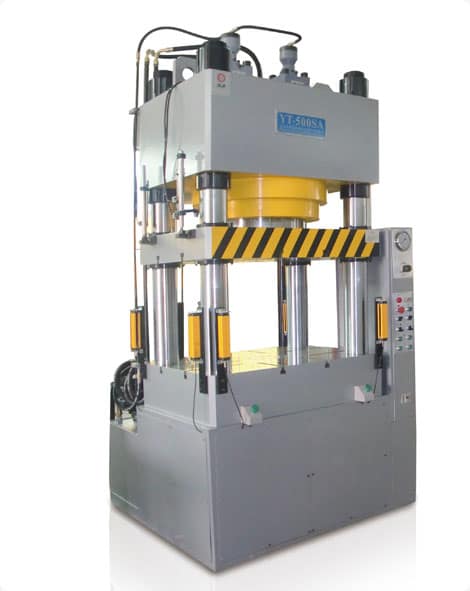
The cylinder is housed within a press frame, which can be H or C shaped and can have one or two cylinders, depending on the application. The frame itself can be stationary or movable, which allows the operator to position the item to be pressed more precisely and symmetrically.
Once the item is positioned, the operator can use the handle to slowly push hydraulic oil into the cylinder, increasing the pressure until the desired amount of compression is reached. Then the operator can stop pumping, let the ram down and remove the item from the press.
Hydraulic presses typically have fewer moving parts than other machines, which reduces their maintenance needs. The few parts that are moving are fully lubricated by a constant flow of pressurized hydraulic oil, so they're less likely to break down or wear out over time. This reduces the risk of someone getting hurt, increases uptime and helps keep repair costs down.
In addition to reducing operating and maintenance costs, hydraulic presses tend to be quieter than other machines, which improves workplace safety. They're also more accurate than other machines when pressing items, which can save time and money in production settings.
Cylinder Design
Hydraulic shop presses offer more versatility than mechanical presses in many applications, from deep draws and shell reductions to urethane bulging, blanking, piercing punching straightening assembly and press fits (pressing bearings onto shafts without using mechanical fasteners). Their adjustable cylinder allows them to meet different stroke lengths or dwell times while pressure in their ram can also be controlled for optimal precision and safety.
Hydraulic presses feature built-in overload protection that eliminates the need to monitor pressure during operation. Once the ram has reached its set limit, its pressure relief valve opens to reduce force output - helping protect both its components as well as making sure no one exceeds the machine's capacity by accident.
Based on your needs, you can further tailor the press to meet them by adding additional accessories. For instance, adding a heater to the hydraulic oil reservoir and an air or water circulating system that maintains proper oil temperature are both options, as is adding a knockout unit that removes finished parts from punch or die punchings or dies. There are also multiple controls available to you such as programmable logic controller (PLC) systems or new computer interfaces that make these presses even more adaptable than before.
Hydraulic presses also offer many other advantages, including their portability. Unlike a conventional mechanical press which requires its operator to manually pump its jack when changing loads, hydraulic presses come equipped with foot operated hydraulic cylinders which make moving them around an operation quick and simple - saving both time during setup/changeover as well as being available throughout the day rather than being stuck in one spot where they may not be needed. This allows them to be more quickly used where it's most beneficial.
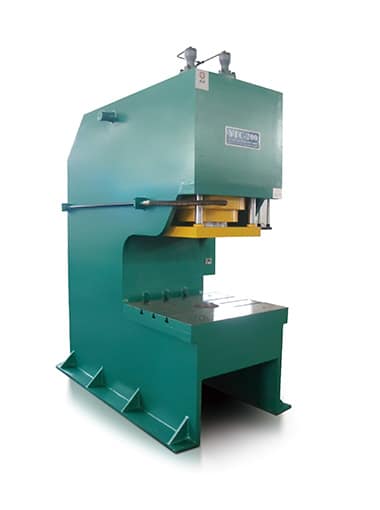
There are various kinds of hydraulic shop presses designed for specific uses. For instance, C-frame hydraulic shop presses feature small frames designed to fit easily into small workshops, making them an excellent solution if space is an issue. H-frame models provide more powerful cylinders and beam capacities compared to their C-frame counterparts - perfect for more powerful tools that can even be mounted to the floor for use if necessary.
Ram Design
When one of two hydraulic system cylinders is pushed down, it creates force which is transferred to a ram which moves and presses against an anvil or die under it, pressing against them with force. This mechanical action can then be used to punch holes in materials or flatten them out - some presses even come equipped with special applications designed to press bearings or pull pins!
Hydraulic shop presses can be hazardous. In addition to their high pressure levels, workers may suffer lacerations or puncture wounds from jagged metal and pressurized hydraulic fluid. Therefore, it's imperative that workers follow proper operating and safety procedures with regards to this machine; an incorrectly maintained press may malfunction or have parts that haven't been installed correctly, creating potential hazards for those not careful with its use.
Many industrial and commercial applications rely on hydraulic presses for manufacturing applications. These machines are often employed in producing metal and other hard materials, forming and cutting processes, mold making/casting processes as well as testing and quality control in production lines.
Hydraulic press design is complex, comprising multiple parts. These include the main components: cylinders, pumps and hoses to connect all of them together. Cylinders may be made of steel or cast iron with pistons surrounded by seals that provide greater sealing performance - these have diameters that reach 8 inches when connected through a hydraulic system run by a pump.
Most hydraulic systems comprise two cylinders, with one larger than the other. The smaller cylinder contains a plunger connected to a pump via tube that when depressed creates pressure in the hydraulic system and drives a ram through its hole into contact with anvils or dies to compress materials into desired shapes.
Some hydraulic presses feature opposing rams that work simultaneously to produce more uniform compaction, making these presses useful for applications including metal powders and graphite, welding, forging/clinching operations as well as punching, blanking/deep drawing operations.
Variable-Feed Hydraulic System
Hydraulic presses are essential tools in any machine shop, metal fabrication, and assembly work environment. Boasting up to 50 ton pressing capacity, Eastwood offers an assortment of hydraulic presses designed specifically to suit workshop requirements; featuring fully welded heavy-duty H-frame construction that's built for longevity and is built for heavy-duty duty work.
The hydraulic system is driven by an electric motor and hydraulic pump, with fluid flowing to a master cylinder through small cylinders connected by pipes from this pump. When an operator presses a button on their control panel, this liquid in these smaller cylinders is forced back into the larger one, creating immense force that pushes back against the top die as it contacts with its bottom die and completes a press cycle.
Some press applications require long periods of pressure holding, which can be cumbersome and ineffective to achieve manually. To address this problem, some manufacturers use pneumatic dwell systems powered by hydraulic pumps integrated into press control systems that enable operators to remotely adjust each press cycle's duration - helping reduce energy usage, noise pollution and warping while protecting work pieces from damage or warping.
Hydraulic presses can also be automated to save both time and money while assuring consistent quality output every time, according to Greenerd. Automation of hydraulic presses is commonly practiced by manufacturing facilities producing large or complex pieces for automobiles or aircraft production lines; similarly it's popular across other industries that demand high volume repetitive work.
Dependent upon industry, location and application, hydraulic presses must meet different construction standards. Some manufacturers comply with OSHA requirements while others adhere to ANSI or ISO guidelines; furthermore if used for military or medical production components then Mil-Spec standards must also be observed.
Link to this article: https://www.ihydraulicpress.com/nsn/3818.html
Hot Articles
-
How Much Force Can a Hydraulic Press Exert?
Hydraulic presses use Pascal’s principle to multiply force. According to this principle, any change in pressure within an enclosed incompressi……
-
Can a Hydraulic Press Make a Diamond?
Diamonds are one of the hardest materials on Earth. Even bullets cannot penetrate their hard exterior; however, it may be possible to chip a diamond……
-
How to Make a Hydraulic Press Machine
Hydraulic presses are machines that use liquid to transmit force. Based on Pascal’s principle, which states that pressure applied to confined ……
-
How to Make Small Hydraulic Press at Home
Hydraulic presses are indispensable tools for crushing cardboard boxes or plastic bottles, and forming metal into certain shapes. Although industria……
-
How to Make a Blacksmith Hydraulic Press
A forging press is an indispensable tool in modern blacksmithing, performing many of the same functions as a power hammer but with greater control……
-
How to Make a Hydraulic Press for Jewelry
When large jewelry companies went out of business, master artisans’ exquisite steel dies were often given up as scrap. Now these old, beautifu……
-
How Can Make a Small Hydraulic Hot Press?
Hydraulic presses use fluid pressure to compress, assemble, punch, trim, stamp, and stretch materials – offering limitless engineering possibi……
-
How to Make an Electric Hydraulic Press
Hydraulic presses are remarkable machines capable of accomplishing multiple tasks quickly and effortlessly. Their mechanical operation follows Pas……
Latest News
-
How to Make a Small Electric Hydraulic Press
Hydraulic presses employ Pascal’s law, which states that any force exerted upon fluid will produce pressure. They’re ideal for metal f……
-
Hydraulic Press Channel – How Much Money Does the Hydraulic Press Channel Make?
Lauri Vuohensilta of Finland created The Hydraulic Press Channel and has since October 2015 been crushing things with his 150-Ton hydraulic press ……
-
How Much Does Hydraulic Press Channel Make?
Since Lauri Vuohensilta started posting videos of himself crushing random objects with a hydraulic press, his channel has experienced incredible p……
-
How to Make Hydraulic Press Pocket Super-Viral Videos
If you own an extra laptop and wish to enjoy the popular Casual Game Hydraulic Press Pocket, there is an easy way! Simply follow this guide on how t……
-
How Much Does the Hydraulic Press YouTube Channel Make?
Vuohensilta began his YouTube channel in 2015 and since then has crushed an assortment of objects such as hockey pucks, Lego toys, Nokia 3310 phon……
-
How to Make a Hydraulic Press With Syringes
Hydraulic presses can be used to crush objects with considerable force. Their hydraulic systems rely on fluid pressure that acts equally across al……
-
Can a Hydraulic Press Make a Diamond?
A hydraulic press is an indispensable machine, capable of creating great amounts of force by compressing liquid into smaller volumes and thus prod……
-
How to Make a Hydraulic Press at Home
Hydraulic presses are invaluable tools in any garage, used to crush items such as soup cans and metal tools while compressing organic waste into b……