












Hot Articles
-
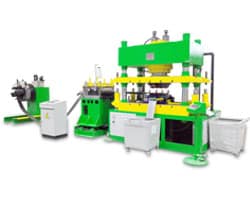
Hot Press Machine For Doors
Hot press machine is a type of woodworking machinery used for lamination decorative material onto furniture panels, building partitions, wooden door……
-
What is the Difference Between Hydraulic Press and Mechanical Press?
While each type of press provides unique benefits for businesses and jobs alike, ultimately choosing mechanical versus hydraulic presses comes dow……
-
What Does Hydraulic Press Do?
Hydraulic presses play an essential part in numerous fabrication and production processes, from car crushing to producing fat-free cocoa powder. The……
-
Where to Buy Hydraulic Press Juicer
Juicing can be time-consuming and messy. Your chute size and whether or not your ingredients need to be chopped, peeled or cored will determine the ……
-
How Does a Hydraulic Press Work?
Hydraulic presses operate by applying Pascal’s law, using incompressible fluid (such as oil) as the conduit through which to transmit force. A……
-
What is Stock in Hydraulic Press?
Hydraulic presses are powerful machines capable of exerting significant pressure on materials. Their main component, hydraulic fluid, generates and ……
-
Where Do They Sell Hydraulic Presses?
Hydraulic presses are powerful machines used to compress materials like metal into form factor shapes – and even car chassis! These machines a……
-
Hydraulic Press – What Are Hydraulic Presses Used For?
Hydraulic presses are versatile machines used to apply pressure on materials like metal. They’re often found in industrial and manufacturing s……
Why Oil and Not Air is Used in Hydraulic Presses
time:2023-06-05 views:(点击 1,248 次)A hydraulic press uses Pascal's Law to amplify any force applied against it, creating high volumes of pressure with minimal effort.
Hydraulic presses feature two cylinders and pistons, connected by hydraulic lines. A pump pushes oil into one of these cylinders, which in turn pushes against metal ram or piston to create pressure against it.
Why Oil?
Hydraulic presses are machines designed to generate and transfer force by employing a system of pipes and cylinders filled with hydraulic fluid. Oil is the preferred hydraulic fluid as its high resistance to pressure allows pumps to generate high levels of force that are then transferred via hydraulic fluid to smaller pistons in cylinders containing hydraulic fluid; larger pistons then apply pressure directly to material being pressed by this press type. Hydraulic presses have become indispensable tools across industries due to their versatility; metalworking, manufacturing, textile processing are among them!
The hydraulic press utilizes Pascal's Law, which states that force exerted on a fluid is magnified based on its area and pressure ratio. This allows it to apply tremendous amounts of force, making it suitable for various uses such as crushing bowling balls, soda cans and metal tools - and popular enough that there are YouTube channels dedicated to showing its capabilities by crushing various items.
For a hydraulic press to operate efficiently, it must contain clean and fresh oil that circulates throughout its entirety, much like in your car engine or body. Dirty or aged oil causes various issues which shorten its lifespan significantly.
One of the primary concerns with hydraulic presses is an oil leak. Not only can this cause equipment failure, but it is also highly flammable; thus it is important to regularly check the level of oil in your press at 120 degrees F for safe operating temperatures.
Leaks from piston oil seals or pump plungers are among the main causes of oil leakage in hydraulic presses, so to protect yourself and keep the reservoir at an appropriate level, clean or replace check balls regularly and replace piston packing as soon as it wears out. To do so effectively.
Pressure
Hydraulic presses are large machines used to compress objects with hydraulic fluid using a hydraulic ram, making them highly versatile pieces of machinery that can be put to numerous uses ranging from molding, forming, straightening and punching materials through to cutting them. Unfortunately, like all machines they do not always perform without issue; problems could range from minor leakage issues up to complete system failure; however many issues can be easily prevented through routine inspection and maintenance checks.
Ensure a hydraulic press works efficiently by selecting an appropriate hydraulic fluid. Hydraulic fluid serves as the energy transmitter, lubricant and heat transfer vehicle in machines; there are three distinct kinds: mineral, water-based and petroleum based - each having different viscosities, seal compatibilities and additive packages that affect how it performs within shop presses.
Hydraulic fluid is distributed to a hydraulic cylinder through an oil pump and integrated cartridge valve blocks, where its pressure is then controlled using one-way and relief valves. A double acting cylinder then lifts tooling attached to the ram; depending on its type and size, its capacity to produce pressure may differ accordingly.
Failing hydraulic cylinders usually result from overfilled oil reservoirs or contaminated piston oil seal, loose or worn piston packing, or overfilling. Regular inspection can help avoid these problems from arising and keep employees safe.
Pressing metal objects with a hydraulic press can be immensely useful, yet can become hazardous if the machine malfunctions, leading to production losses and minor or severe injuries. Workers must understand these risks when operating any machine and take proper precautions when operating any type of machine - with daily inspection and routine maintenance scheduled, such issues can be avoided so your company can continue using its hydraulic press with confidence.
Viscosity
Viscosity of fluids measures their resistance to motion internally. This property relates to friction between adjacent layers that results from shear energy generated when forces exert themselves upon one of their molecules; hence fluids with higher viscosities tend to be thicker.
Viscosity is an invaluable property, enabling us to predict the rate of deformation of materials under mechanical forces. A material's viscosity is determined on an microscopic level through interparticle interactions; hence it can vary drastically with temperature or other parameters - this explains why engine oil and hydraulic fluid thicken considerably on cold days.
Calculating a fluid's viscosity requires following the principles of conservation of mass, momentum and energy as well as material's constitutive relations and constitutive laws. The Navier-Stokes equations offer excellent approximations of actual fluid motion.
These models provide an effective framework for understanding how a fluid moves, but it is essential to remember that its motion is dictated by many macrolevel factors including temperature and pressure.
As an example, low viscosity fluids flow more readily at room temperature than at lower or higher temperatures due to the greater contact time between molecules of such liquids compared with their surroundings. On the contrary, high-viscosity liquids contain more molecules occupying a given volume, and thus spend less time touching.
Hydraulic presses have many uses in both food manufacturing and medicine, for instance cocoa powder manufacturers utilize them to extract fat from chocolate liquor and turn it into powder form for later use by cosmetic and face mask makers, as well as in medicine.
Construction businesses rely heavily on hydraulic presses to construct structures. Tensile strength of set concrete can be measured using these presses, providing useful data that can then be used when designing stronger buildings. Lubrication is critical for proper performance of this equipment to prevent damage and ensure operator safety; leakage from worn seals or mismatched oil types can result in equipment failure, chemical exposure and possible hazards to employees.
Temperature
Hydraulic presses are essential tools in industrial settings that require significant mechanical force to shape, form and crush metal and other strong materials, like stone. These presses create immense amounts of pressure via pistons, working cylinders and an incompressible liquid stored within their tanks - often reaching several tons for manual presses up to thousands for motor driven models.
Presses operate under the principle of compressive force, with hydraulic oil serving as its lubricant fluid. From small hand-operated hydraulic presses to expansive four-column electric motor machines, operating temperature of the oil is key for its proper function and longevity; increased temperatures can cause the fluid to breakdown, leading to decreased lubricity and increased friction; this may ultimately result in mechanical failure, loss of power or equipment damage.
As previously discussed, an effective thermal management system can prevent this breakdown by keeping hydraulic system temperatures from exceeding critical thresholds. Furthermore, using additives containing VI (Viscosity Index) improving agents can help mitigate viscosity reduction effects - though prolonged exposure to high temperatures could erode their effectiveness as well.
Water's susceptibility to freezing and boiling severely limits its use in hydraulic presses, while oil maintains its fluid properties over a wider temperature range, enabling its hydraulic system to work more effectively under different environmental conditions.
Oil provides greater corrosion and oxidation protection for components of the hydraulic system, which otherwise would degrade them over time. Furthermore, oil provides superior lubrication of moving parts which extends its lifespan further.
Hydraulic presses are powerful pieces of machinery that require professional expertise to operate safely. Poor machine maintenance or practices could result in serious injuries, including amputations. Therefore, it is crucial that all safety guidelines for all hydraulic systems and equipment be strictly followed and regular oil leak checks be conducted on your press in order to detect potential issues before they escalate further.
Link to this article: https://www.ihydraulicpress.com/yn/3495.html
Hot Articles
-
What Do You Need to Use a Hydraulic Press?
Hydraulic presses produce massive amounts of force to assist facilities with fabrication and assembly processes. Hydraulic fluid (usually oil) tra……
-
Where to Buy Hydraulic Press Juicer
We may receive compensation or products from companies mentioned here, although their pricing information was accurate at the time of publishing (……
-
What is an Air Hydraulic Press?
Shop presses are essential components in many industrial settings, operating by pressurized liquids (usually oil). Air hydraulic presses are cheaper……
-
What is the Hydraulic Press Used For in Manufacturing?
The hydraulic press is used for a number of manufacturing processes. From forging to blanking and compress molding, a hydraulic press can help you p……
-
Why Did Joseph Bramah Invent the Hydraulic Press?
Today, hydraulic presses are among the most frequently used machines on factory floors, used for stamping, forming, blanking and many other processe……
-
The History of Hydraulic Presses
Hydraulic presses have a long and distinguished history in manufacturing. They remain essential components that keep industries running smoothly and……
-
What Happens When You Put Adamantium in a Hydraulic Press?
Marvel fans are familiar with Wolverine’s claws being coated in indestructible metal alloy adamantium – but is this really the strongest……
-
What is a Hydraulic Forging Press?
Hydraulic forging presses utilize liquid pressure to form and shape metal, and they can be employed for many tasks such as forging and cold working.……
Latest News
-
How to Maintain a Hydraulic Press
If your business relies on hydraulic presses, it’s essential to keep them running safely and efficiently. By following a regular maintenance r……
-
Hydraulic Press for the Woodworking Industry
In the woodworking industry, hydraulic presses can be utilized to shape and form various materials. They’re an invaluable tool for metal or pl……
-
Hydraulic Presses Used in the Mining Industry
Hydraulic presses are indispensable tools in many industries, from fabrication and assembly to maintenance and repair. Not only do they help operato……
-
What Do You Need to Use a Hydraulic Press?
Hydraulic presses produce massive amounts of force to assist facilities with fabrication and assembly processes. Hydraulic fluid (usually oil) tra……
-
Where to Buy Hydraulic Press
A hydraulic press is a type of shop tool that uses fluid pressure to form and modify metal objects. These presses use working cylinders filled with ……
-
What Type of Hydraulic Cylinder for Forging Press?
Hydraulic forging presses use an easy yet efficient system to generate intense pressure and shape metal pieces, consisting of a frame, ram and hydra……
-
What is a Hydraulic Press Used For in Metalworking?
A hydraulic press works by applying pressure to a liquid medium such as oil. This type of press operates according to Pascal’s principle and i……
-
What Happened to Hydraulic Press Channel?
Vuohensilta operates a family machining business using various machines such as hydraulic presses. Millions of viewers follow his YouTube channel ……