










Hot Articles
-
How to Make Hydraulic Press Using a Hydraulic Jack
Hydraulic presses are invaluable tools for creating custom metal shapes. Additionally, they can also be used to crush items such as aluminium cans……
-
How to Make Dabs With a Hydraulic Press
Interested in making dabbing at home? A hydraulic press can help. It provides an effective solvent-free extraction method, producing sticky cannab……
-
How Much Force Can a Hydraulic Press Produce?
Hydraulic presses are widely utilized for industrial uses, including metal forming. Their design uses an ingenious principle: pressure applied any……
-
How Can a Hydraulic Press Make a Diamond?
Diamonds are one of the hardest naturally occurring materials on Earth, used in a wide variety of jewelry applications and widely revered for their ……
-
Hydraulic Press Pocket – How to Make Hydraulic Press Pocket Super-Viral Videos
Crushing things is immensely satisfying to watch, which explains the popularity of numerous YouTube channels devoted to hydraulic press crushing o……
-
Can a Hydraulic Press Make a Diamond?
Diamonds are widely known to be among the hardest materials on Earth; however, hardness shouldn’t be taken as synonymous with toughness. Dim……
-
How to Make Dies for Hydraulic Presses
Hydraulic presses are machines that utilize hydraulic fluid to generate and transfer force, using compressed cylinders of hydraulic presses to gen……
-
How to Make a Manual Hydraulic Press
Manual hydraulic presses are mechanical devices that use a hydraulic cylinder to exert pressure on a base plate, powered by oil pressure generated……
How Much Pressure Can a Hydraulic Press Exert?
time:2023-10-30 views:(点击 1,217 次)
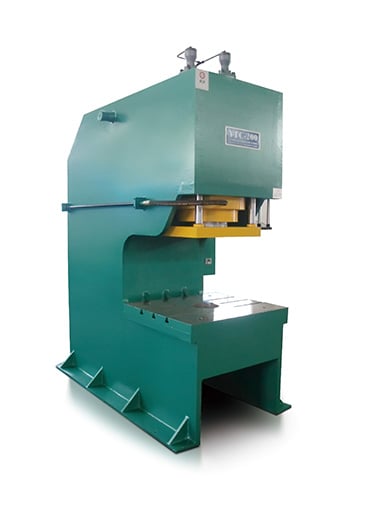
Have you seen a hydraulic press at work squeezing metal into shapes resembling kitchen sinks and car body panels? These machines are often employed in industrial settings for pressing bearings onto shafts or crushing waste material for recycling purposes.
Hydraulic presses rely on Pascal's law, whereby small mechanical forces create large amounts of pressure within two cylinders. They produce full pressure throughout their stroke and thus save time when setting up or switching over jobs.
How Does Hydraulic Pressure Work?
Hydraulic presses can generate tremendous forces, making them valuable tools in many different applications ranging from making plastic molds to pressing sheet metal. But how exactly do these machines produce such high levels of pressure? Hydraulic presses use Pascal's law as their foundation in order to amplify force exerted on objects. When subjected to equal intensity pressure all around an object, their force increases significantly more than it would had it been applied over a smaller surface area.
Hydraulic presses use this principle, featuring two cylinders filled with hydraulic fluid. One of them is larger than the other, creating pressure by pushing against its lower cylinder when engaged with material being pressed. Since oil (like most liquids at normal temperatures) compressible, creating multiple forces far beyond those generated by simple levers.
Hydraulic systems offer another significant advantage over mechanical presses: their force exertion remains consistent regardless of weight moving across all directions, eliminating any need to compensate for friction between moving parts as is commonly required in mechanical presses - thus increasing accuracy and precision when working with materials.
Hydraulic systems offer several distinct advantages over mechanical presses of comparable sizes, including significantly reduced original and operating costs. This is due to fewer moving parts that need repair; further, any components that do need lubricating usually receive continuous pressurized oil to ensure smooth functioning without needing replacement with teardown required for traditional machines.
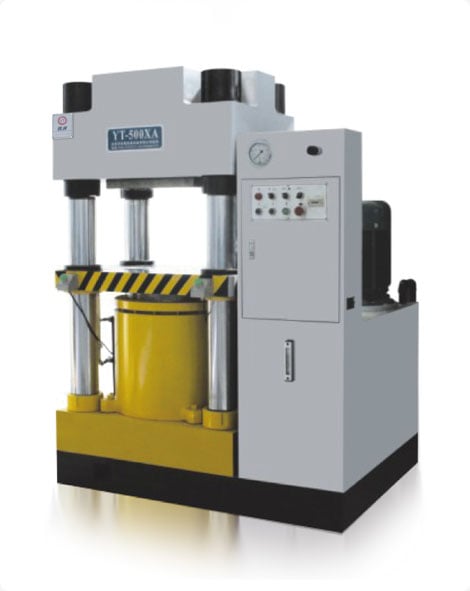
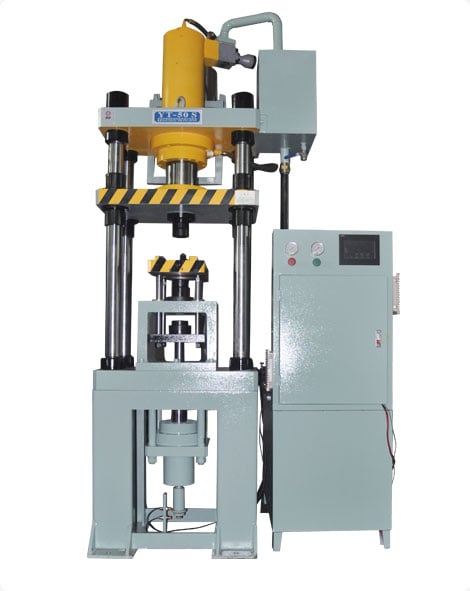
Though there are various types of hydraulic presses, all share some essential components. Most hydraulic presses include a pump, control valve and cylinder that holds hydraulic fluid; some models also include sensors or safety mechanisms that help avoid damage and protect operators.
Tonnage
Hydraulic presses are an integral component of many production processes, from shaping machine components and crushing waste, to creating fat-free cocoa powder. These machines use compressed fluids to generate mechanical force which is measured in tons; the higher their tonnage is, the more force can be exerted. When selecting the ideal tonnage for you, be mindful of both intended uses as well as available space at your facility.
Though there are numerous types of hydraulic presses, all rely on Pascal's law to generate force. This principle states that any change in pressure at one point in an enclosed, incompressible liquid is transmitted unchanged to all points throughout its container - an essential feature for hydraulic presses that use this energy into mechanical force by pushing against pistons or rams.
At its core, a hydraulic press consists of two connected cylinders connected by rods or tubes. One cylinder, known as the master cylinder, holds hydraulic fluid that serves as the source of force; another, called a slave cylinder, connects directly to it via its piston system to move and exert pressure against whatever it's pressing against.
Dependent upon its intended applications and type, hydraulic presses may come equipped with different control options. Most hydraulic presses are powered by motors which spin pumps that feed hydraulic fluid to their respective cylinders through hoses; then pistons or rams create mechanical force against items being pressed down upon.
Hydraulic presses offer more silent and precise operation compared to mechanical presses, making them better suited to form metal and other materials, like molded plastics and abrasive wheels. Hydraulic presses also produce more force than their mechanical counterparts while protecting tools from damage; however, this applies only if tools are of appropriate size and controls are utilized properly - otherwise the tools could become damaged due to overly pressure being exerted upon them.
Horsepower
Hydraulic presses are versatile tools used in numerous industries and applications ranging from metalworking to scrap baling. Their efficiency lies in their few moving parts and ease of lubrication with pressurized oil; producing enormous force at lower cost than mechanical presses of similar size; however, there may be certain drawbacks that must be considered before purchasing such an apparatus.
At first glance, they can be dangerous to operate, posing serious risks of crushing and pinching injuries. Furthermore, their operation requires electricity which poses electrical shock risks as well as fire risks. Finally, these machines tend to produce excessive noise which may cause hearing loss and headaches for workers.
Though they do have their limitations, hydraulic presses remain an appealing tool for manufacturers. These versatile devices can perform a range of tasks and are used across industries - metalworking, automotive manufacturing, manufacturing and construction are among those using hydraulic presses - including punching metal into different shapes or shearing metal into various sizes; punching holes into sheet material to form holes for welding; crushing objects into specific forms etc.
Pascal's law governs the hydraulic principle behind these machines. Pascal's law states that any pressure exerted in an incompressible fluid at rest will be distributed evenly through its system and act at right angles to its walls, which explains how hydraulic systems generate such massive forces while remaining compliant - it allows relatively small cylinders (ram and plunger) to generate such high amounts of pressure.
Hydraulic presses also offer more precise control of finished products by being able to deliver their full force at any point during pressing, unlike mechanical presses that must allow for reduced tonnage at the top of their stroke. This gives hydraulic presses more precise control than mechanical ones when pressing products like metal sheets or tiles.
Hydraulic presses tend to be easier and simpler to set up and maintain than mechanical ones, as well as being quieter - both factors which contribute to worker safety as well as reduced noise pollution in the workplace. Noise pollution is especially detrimental since excessive noise levels can cause stress as well as health issues like hearing loss or headaches, making hydraulic presses an attractive solution.
Control
Hydraulic press machines offer built-in overload protection. Once a press reaches its pre-set limit, when its pressure reaches that threshold, its release valve opens to relieve pressure quickly. This reduces the danger of catastrophic rupture while giving operators greater control over how forceful a 100-ton press exerts its force as its full power will only be transmitted at points in its stroke where control settings allow. Therefore a 100-ton press will exert exactly 100 tons - no more, no less. If banging noises during operation it could indicate too quickly increasing pressure; in such an instance it would be wise to inspect line cleanliness as well as wide openings in order to adjust controls accordingly and set controls accordingly.
Hydraulic presses rely on Pascal's Law, which states that any force applied to incompressible fluid in an enclosed system is evenly dissipated throughout its entirety and its surrounding walls. This enables relatively small cylinders to crush items that would be impossible otherwise.
If you want to observe this concept firsthand, check out YouTube's Hydraulic Press Channel. These videos demonstrate how a simple hydraulic press works by placing an object between two cylinders and applying pressure - the result being hydraulic force which will crush it before being taken back out for testing purposes.
An additional advantage of hydraulic presses is their flexibility: they can be programmed to run at any desired pressure level, minimizing production downtime and offering greater freedom when working on specific jobs. Also, as hydraulic presses can operate continuously over longer time frames than mechanical presses do, this machine may provide superior force applications than the latter option.
If you're shopping for a hydraulic press, be sure to conduct extensive research into potential manufacturers. There are plenty of reliable suppliers out there with high-quality products; to find them more easily consult industry-specific directories and marketplaces as well as search engines and trade shows. When your options have been narrowed down contact a few manufacturers directly and compare their stats, answers and reputation before selecting your ideal match for your company.
Link to this article: https://www.ihydraulicpress.com/nsn/5181.html
Hot Articles
-
How to Make an Electric Hydraulic Press
Hydraulic presses are useful metal-forming machines used in factories for fabrication, assembly and maintenance purposes. They use a pump to generat……
-
How to Make a Powerful Hydraulic Press
Hydraulic presses are powerful machines capable of crushing anything they hit with enough force, working according to Pascal’s law, which stat……
-
How Much Pressure Should a Hydraulic Press Have?
Hydraulic presses rely on Pascal’s law to effectively harness large amounts of force over short distances. They utilize two components ̵……
-
How to Make a Powerful Hydraulic Press
Hydraulic press machines are powerful industrial tools capable of crushing, shaping and forming various materials. Their operation relies on Pasca……
-
How to Make Rosin With a Hydraulic Press
Rosin is an extremely potent cannabis concentrate that can be easily made at home using relatively basic equipment and costs significantly less than……
-
Hydraulic Press YouTube Channel
Lauri Vuohensilta owns and operates a factory in Finland and decided to experiment with his hydraulic press on everyday objects, creating videos sho……
-
How to Make a Powerful Hydraulic Press With Syringes
Hydraulic presses are powerful machines that use fluids to produce mechanical force. Used across industries to shape machine components and material……
-
How to Make a Hydraulic Fruit Press
Due to the significant forces required for use, an ideal press should be constructed of wood that can withstand this pressure. Avoid nails or scre……
Latest News
-
How to Make a Hydraulic Press With Syringes
Hydraulic systems power many industrial machines, from lifts and jacks used to service cars and airplanes to metal presses found at manufacturing an……
-
How to Make a Hydraulic Shop Press
Hydraulic presses can assist with an array of metalworking projects, from fabrication, machining and auto mechanic shop projects. They’re indi……
-
How to Make a Tabletop Hydraulic Press
Hydraulic presses are machines that transmit pressure using hydraulic fluid. They’re often used to compress organic waste into briquettes that……
-
How to Make a Hydraulic Press With Syringes
Hydraulic presses are powerful machines capable of crushing materials quickly and with great force. While they are an invaluable asset in the shop……
-
How to Make a Homemade Hydraulic Press
Hydraulic presses can generate an incredible amount of force. Unfortunately, however, they require ongoing maintenance and are quite large and hea……
-
How to Make a Pizza With a Hydraulic Press
As part of any pizzeria or bakery operation, pizza dough press machines are necessary in creating irresistibly crispy crusts for pizzas. A powerfu……
-
What Is a Hydraulic Press?
Hydraulic presses are powerful machines that utilize hydraulics to produce enormous pressure, capable of flattening steel metal sheets, crushing bea……
-
How to Make an Electric Hydraulic Press
A hydraulic press is a large machine that leverages physics to crush objects, using fluid stored in cylindrical cylinders to generate mechanical f……