












Hot Articles
-
How Much Force Can a Hydraulic Press Apply?
Hydraulic presses produce massive amounts of force, making them perfect for use in a range of industrial applications. Their force generation reli……
-
Can You Make Manual Press Into Hydraulic Press?
Manual workshop presses are ideal for providing simple and economical workpiece processing solutions. Their straightforward designs have few parts t……
-
How to Make a Hydraulic Fruit Press
Hydraulic fruit presses exert significant forces when used to extract juice from crushed apples, so it must be made from strong material such as w……
-
How to Make an Air Over Hydraulic Press
An air over hydraulic press can be an economical and energy efficient alternative to full hydraulic presses. Air is forced into a cylinder before ……
-
How Much Pressure Does a Hydraulic Press Have?
There are various kinds of hydraulic presses designed to address various manufacturing processes. Each has a maximum pressure level at full tonnag……
-
How to Make a Hydraulic Press Brake
Hydraulic press brakes are industrial machines used to bend sheet metal using pressure. Their force depends on the size and thickness of material ……
-
How to Make Almond Oil With Hydraulic Press
Almond oil, produced from the seeds of the almond tree (Prunus dulcis), is widely believed to provide relief for skin conditions like eczema. Due to……
-
How to Make a Ring Using a Hydraulic Press
Hydraulic presses are indispensable tools in various manufacturing processes and come in all sorts of sizes to suit various manufacturing processe……
How to Make Manual Hydraulic Press
time:2023-06-26 views:(点击 1,219 次)
When mallets or hammers won't do the trick, hydraulic presses may be your go-to solution. These powerful workshop machines can apply an immense amount of force - perfect for metal forming applications.
Hydraulic presses utilize a pump that generates pressure at a set level to extend a smaller cylinder and replicate the results of traditional lever presses.
1. Frame
Manual hydraulic presses use hydraulic systems to compress materials. They're often found in laboratory settings where they're used for creating KBr pellets for FTIR/XRF analysis or general pellet samples for spectroscopy analysis - making this press an economical solution with few moving parts and an intuitive user experience.
Manual hydraulic presses also feature consistent pressure throughout their application, leading to more accurate and consistent results for metal shaping projects that require precision. This feature makes manual presses especially attractive.
There is a variety of hydraulic presses on the market today, both pneumatic and manual. Deciding which will best meet your workflow depends on several factors including tonnage, cost and maintenance; it is also important to remember that purchase price doesn't always reflect quality or durability of a press.
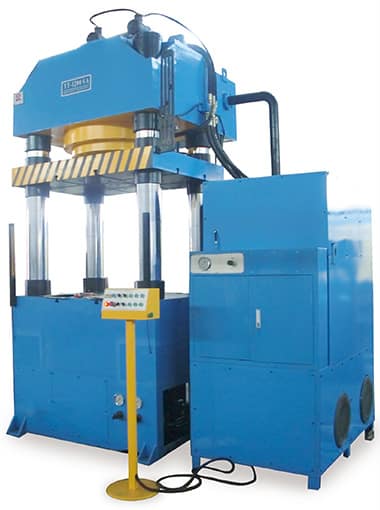
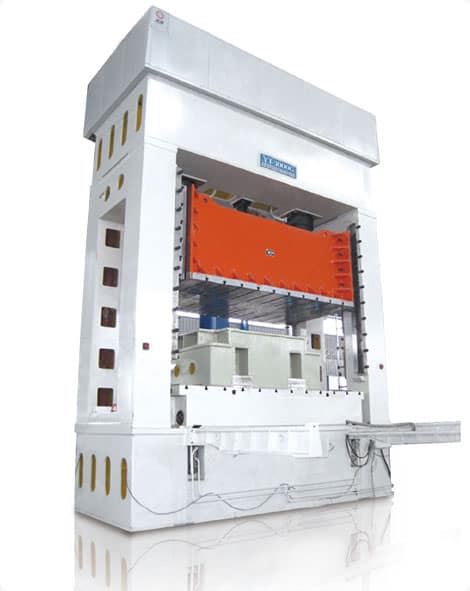
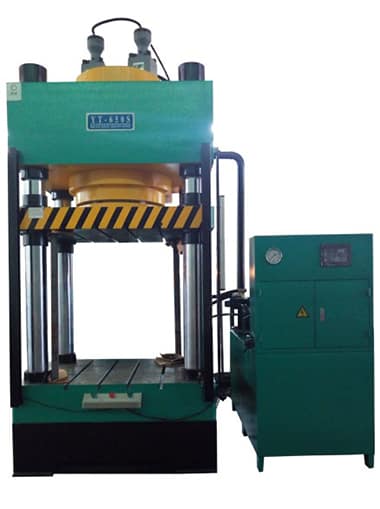
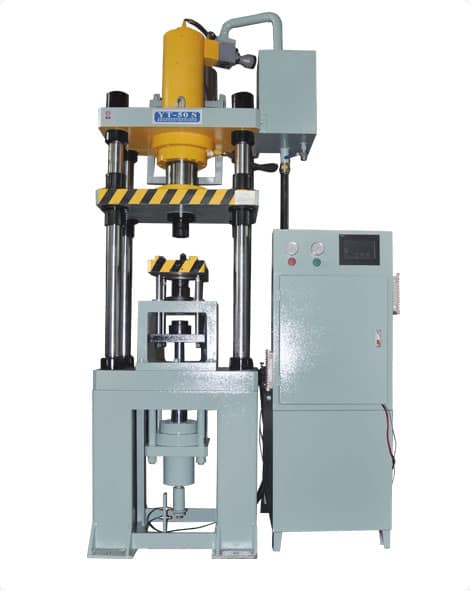
Manual hydraulic presses typically feature a heavy-duty steel frame that accommodates its ram, die and bolsters. A hydraulic oil-filled cylinder supplies force to drive piston movement; it is housed within the frame to avoid external damage; an overheat exchanger prevents overheating while other features may include piston rod, hydraulic accumulator and platen.
Hydraulic presses not only allow users to manage the amount of force applied, but they can also be programmed for automation of operations for maximum productivity - especially beneficial in high-volume production lines where human intervention would otherwise be necessary and efficiency levels decreased.
2. Cylinder
A cylinder is a geometric solid composed of two flat bases that are congruent with one another and one curved surface, often connected by one flat edge. Cylinders can be divided into different categories depending on their vertices; right circular cylinders, oblique cylinders, cylindrical shells or hollow cylinders and hollow cylindrical shells or hollow cylinders are examples. Cylinders can be found in everyday items like soup cans and water bottles.
Area and volume calculations for cylinders can be determined by multiplying its radius squared with its height, or more specifically, distance from center of base to center of surface curved surface. This formula is easy to remember since cylinders do not contain any vertices and their bases always congruent.
Hydraulic presses require full force throughout their stroke to avoid bottoming out and creating impact loads that damage parts or cause seal leakage. Engineers can achieve this by adding internal cushions or using proportional-valve technology to precisely control flow while safely decelerate loads at the end of each stroke.
Make your hydraulic press more effective by selecting top-quality components for its cylinder. When manufactured from inferior materials, cylinders can lose efficiency and produce excessive noise; selecting quality components ensures an effective and long-term lasting cylinder that reduces maintenance costs and boosts overall performance. Furthermore, well-designed cylinders may offer greater power or torque and operate at lower speeds than competitors' machines.
3. Ram
The ram is the component of a hydraulic press that exerts force upon materials, compressing or crushing them. Consisting of two cylinders connected by pistons filled with hydraulic fluid, its operation can be controlled either manually or via foot pedal. Hand or foot control allow users to vary pressure levels as well as movement direction - or can even be tailored specifically for certain lab needs; such as producing accurate tonnage throughout ram stroke or producing higher pressure throughout its entire movement cycle.
The smaller cylinder, known as the plunger, is used to apply pressure to material being compressed. This pressure is generated using hydraulic fluid by way of a pump that generates force output; its hydraulic system can be tailored specifically to meet lab's requirements for greater precision and repeatability.
Manual hydraulic presses have the advantage of operating quietly; pneumatic presses require an air compressor for operation and may produce louder results than their hydraulic counterparts.
No matter the size or purpose of your workshop or laboratory, we offer an impressive selection of hydraulic presses. From our basic Pikes Peak press that can handle up to 6 tons of pressure to our most advanced Longs Peak model that produces over 60% more pressure with our Automated Pressure Control system integrated, we have hydraulic presses of all shapes and sizes to fit every need.
4. Die
Hydraulic presses are highly versatile machines used in various industries and able to generate massive amounts of force. Hydraulic fluid moves a steel cylinder with piston into material to generate mechanical pressure which then can be used to compress, separate or bend materials as needed - as well as perform various other tasks.
While it is possible to purchase a high-quality hydraulic press, it's also easy to create your own for less money and with some effort. A hydraulic press consists of a strong steel frame into which a hydraulic ram is inserted and used to press one of two dies against another under pressure; creating the desired shape of material in this manner.
Hydraulic rams are powered by pumps which use hydraulic oil to push cylinders against material at a set force. Each pump comes equipped with a manual control valve enabling operators to change its force settings as desired, and height adjustments for accommodating various applications.
Additions that can enhance a hydraulic press's functionality include a relief valve for relieving excess pressure in the system, measuring gauge to monitor hydraulic pressure levels and limit switches which maintain constant gaps between press plates.
Upgraded work heads can further increase the functionality of a hydraulic press. Single acting cylinders work best for pressing, but double acting cylinders offer increased lifting power - ideal for applications requiring frequent lifting.
5. Hydraulic Pump
Hydraulic pumps are responsible for displaceing liquid volume from reservoir to actuator(s), via tubing system. Pumps come in various forms - bent axis pumps to gerotor and crescent pumps - but all positive displacement pumps provide equal amounts of liquid during every reciprocating cycle regardless of drive speed; their theoretical delivery rate and physical design influence how much fluid can be delivered per cycle.
Hydraulic presses are frequently utilized for metal forming as they provide precise and repeatable forces in an easily controlled fashion. Furthermore, these versatile machines can easily adapt to meet different production applications simply by changing dies, stroke length, or pressure settings - saving space and money when compared with purchasing various pieces of equipment separately.
Start optimizing your hydraulic press by checking to ensure all directional controls are set appropriately, as simple installation errors may cause them to be accidentally set backwards, leading to fluid flow problems. Also ensure the motor is turning in the correct direction and that all pipes have been correctly connected together.
One of the key signs that your hydraulic pump is about to malfunction is hearing loud banging or knocking noises emanating from within it. If this occurs, call in a repair technician as soon as possible in order to address it before your pump fails completely - early identification makes solving it much simpler, thus minimizing costly downtime and lost production. At XRF Scientific we offer both manual and automatic hydraulic presses designed specifically to prepare samples for XRF analysis - contact us now to discover their capabilities!
Link to this article: https://www.ihydraulicpress.com/nsn/3632.html
Hot Articles
-
How to Make a Small Hydraulic Press
If you’re searching for a hydraulic press, there are various models on the market to choose from; however, building your own for much cheape……
-
Hydraulic Press Channel – How Much Money Does the Hydraulic Press Channel Make?
The Hydraulic Press Channel (HPC) is a YouTube channel dedicated to showing videos of various objects being crushed using hydraulic presses. Estab……
-
How to Make a Coin Using a Hydraulic Press
Crafting gold and silver coins using a hydraulic press machine can be made much simpler, while simultaneously decreasing noise pollution levels an……
-
Rosin – How to Make Dabs With Hydraulic Press
Rosin is an environmentally-friendly cannabis extraction method created through pressing terpene-rich resin from flower or kief using a rosin press,……
-
How to Make a Small Hydraulic Press
The hydraulic press is a machine that uses mechanical pressure to compress and shape materials such as metals, clay or wood. Additionally, this pres……
-
Hydraulic Press Channel – How Much Money Does the Hydraulic Press Channel Make?
YouTube channel dedicated to crushing things with hydraulic presses has gained millions of views since being created by Finnish factory owner Laur……
-
Who Makes Black Widow Hydraulic Press?
There are various models of hydraulic presses on the market. While some models are much larger than others, others can be tailored for specific task……
-
How to Make a Hydraulic Press Machine
Hydraulic presses are easy to operate and take up less space than other machines, while having fewer moving parts, making repairs safer and more a……
Latest News
-
How to Make an Electric Hydraulic Press
A hydraulic press is a large machine that leverages physics to crush objects, using fluid stored in cylindrical cylinders to generate mechanical f……
-
How to Make Small Hydraulic Press at Home
Whether it be for strengthening concrete products or simply packing cardboard more compactly, a hydraulic press can be an ideal tool. However, in or……
-
Can a Hydraulic Press Make a Diamond?
Diamonds are naturally occurring minerals and one of the hardest substances on Earth, capable of withstanding all types of force without succumbin……
-
How to Make a Simple Hydraulic Press
Hydraulic presses are widely utilized tools that employ extreme amounts of pressure over an extended period or in quick succession, and are widely……
-
How to Make a Hydraulic Press Machine
Hydraulic presses can be invaluable tools for crushing large, heavy objects. Constructed to withstand high pressure levels, this tool can be utilize……
-
How Much Does the Hydraulic Press You Tube Channel Make?
The Hydraulic Press Channel is a YouTube sensation featuring Vuohensilta, a Finnish factory owner crushing everyday items with his hydraulic press. ……
-
How to Make a Powerful Hydraulic Press
Hydraulic presses are powerful machines capable of crushing anything they hit with enough force, working according to Pascal’s law, which stat……
-
How Much Does Hydraulic Press Channel Make on YouTube?
Lauri Vuohensilta and Anni began uploading videos of themselves crushing objects onto YouTube in 2015, quickly becoming popular after one video usin……