









Hot Articles
-
How to Make Hydraulic Press Pocket Super-Viral Videos
People find great pleasure in watching objects crumble – it’s entertaining, soothing and provides relief from stress and negative thin……
-
How Much Does a Hydraulic Press Weigh?
Hydraulic presses are powerful machines that utilize pressurized fluid to generate force. There are various kinds of hydraulic presses, each one o……
-
How to Make Rosin With a Hydraulic Press
Rosin isn’t limited to musical instruments – it can also be used in baseball pitching and ten-pin bowling to reduce friction between the……
-
How to Make a Hydraulic Heat Press Machine
Building a hydraulic press requires several key components in order to function. These include a frame and hydraulic ram as well as pumps and an acc……
-
How to Make a Hydraulic Press at Home
There are various kinds of hydraulic presses on the market today ranging from small hand operated models to industrial ones with hundreds of tons ……
-
How to Make a Tabletop Hydraulic Press
Hydraulic presses utilize hydraulic fluid to apply pressure, often used to extract pins, bearings and other items from their housings. Hydraulic pre……
-
How to Make a Hydraulic Shop Press
With hydraulic pressure applied directly, this machine applies extreme force to materials to bend, straighten, crush and shape them – an indis……
-
How Hydraulic Presses Work
Hydraulic presses have quickly become an indispensable asset in manufacturing industries due to their versatility and power. Capable of producing ……
How to Make a Tabletop Hydraulic Press
time:2023-09-29 views:(点击 1,159 次)Hydraulic presses utilize hydraulic fluid to apply pressure, often used to extract pins, bearings and other items from their housings.
Hydraulic presses come in all sizes from small tabletop models to massive machines that apply hundreds of tons of force. Their operation remains relatively unchanged; differences lie only in terms of the type of pump (hand, pneumatic or electric) or size of press.
Frame
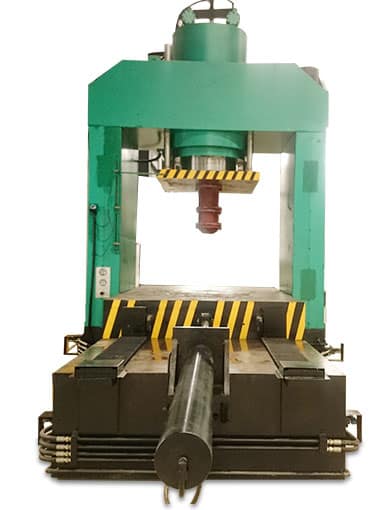
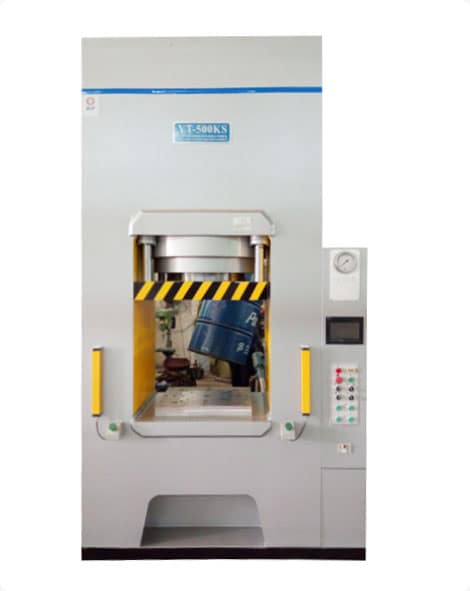
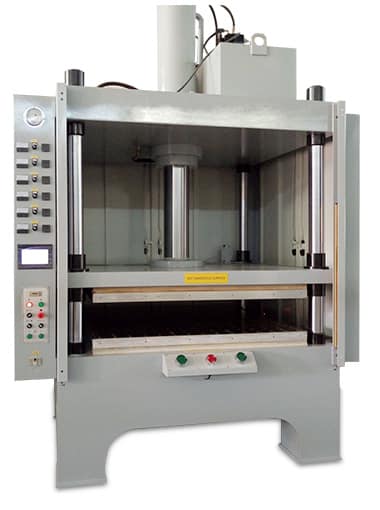
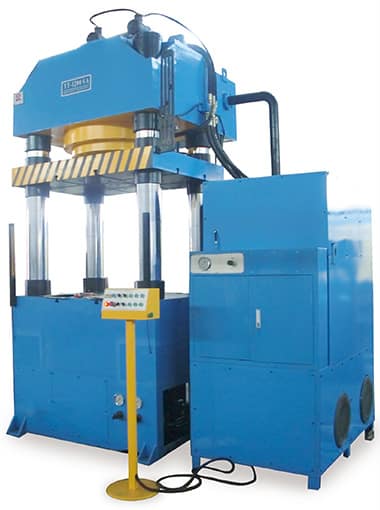
A hydraulic press's frame serves as the basis of its structure, housing equipment, motor and other components. This typically comprises metals such as steel or stainless steel cut to appropriate lengths and welded together in order to be both strong and durable. Cylinders are then added - usually metal pipes equipped with ports to allow input/output of hydraulic fluid - which provide key functionality of how a press works; their number depends on its design.
Cylinders in hydraulic presses generate compression force that pushes against an anvil or die in the press, compressing material against it. They're highly versatile pieces of equipment that can be tailored to suit virtually any task; applying pressure ranges from several tons up to several thousand tons depending on model and application.
To build a hydraulic press, the first step involves creating a frame from metal by cutting and shaping its parts to form its form. When this step is complete, a cylinder can be added on top of the frame for use with either an electric, manual, pneumatic or combination hydraulic pump depending on its size and power requirements.
Once connected to the cylinder, a hydraulic pump can be turned on and pressure will start building up quickly. You can control how much power is applied by changing pump size; or turn it completely off and use manual ram for low volume/force tasks.
Macrodyne offers hydraulic presses designed to deliver maximum force and precision for maximum productivity, built from durable material for long-term reliability and strength. Each frame style can be chosen based on customer specifications for maximum flexibility in meeting those demands.
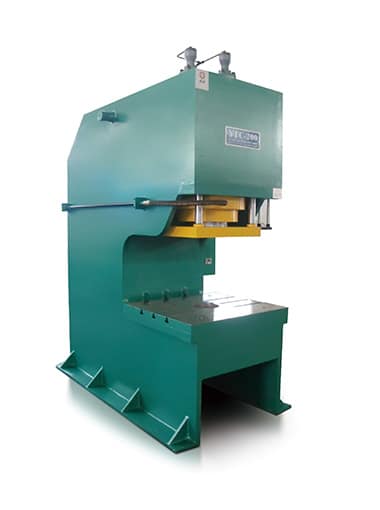
Hydraulic C-frame presses can be found across industries including aerospace manufacturing, appliance production, automotive production, ceramic production and food processing industries. Their use includes applications like forming, bending, straightening, stamping and trimming tasks which require significant force to complete successfully. They are commonly found used for applications including forming, bending, straightening stamping and trimming tasks that need to be performed accurately and in large volumes.
Platform
A hydraulic press uses pistons to generate pressure. Cylinders are mounted on its frame, and when power is turned on a plunger pushes against them. When activated the pressure exerted between plunger and ram crushes any object placed between them, such as drawing products out or demoulding molds; cutting metal; drawing products back out again etc. These presses often made of steel with an integral hydraulic fluid tank holding this liquid.
Hydraulic presses feature a sturdy frame made of welded metal to ensure both strength and durability, with a crossbeam of sufficient size and shape to avoid distorting under pressure, coated in an anticorrosive material for corrosion protection, as well as numerous springs to provide additional support - these may be attached directly to the top of a removable plate known as a "bolster," which holds tooling attached via bolted attachment, having T-slots or tap holes for easy attachment to tooling.
Hydraulic presses rely heavily on their hydraulic power unit (HPU). It serves as the central unit that pumps hydraulic fluid throughout its system, using multi-stage pressurization networks and temperature control devices for pressure creation, with temperature management features available as part of this component. HPUs may either be skid mounted or crown mounted for optimal functionality.
Hydraulic presses also rely on cylinders to create force, with many manual and electric models available on the market for this purpose. Your choice will depend on what application is needed; some cylinders allow for force adjustment while others use variable speed to maintain constant pressure output.
When selecting a cylinder, prioritize finding one with a high tonnage rating and double-acting design. This feature enables it to move in both directions simultaneously, increasing capacity and handling larger loads more effectively. Furthermore, look for one with extended stroke length and greater clamping height - these specifications determine how much pressure can be applied directly onto workpieces for safe and accurate operations.
Head
A hydraulic press relies on a pump, endplates and piston to generate force needed to form metal parts. Its power comes from a reservoir which stores hydraulic fluid under pressure before pumping it through to a cylinder containing a piston which moves up and down against anvil and die, creating compressive force against them both. The size and diameter of both these components determine the amount of pressure that can be generated; its system relies on Pascal's principle which states that total mechanical force applied will directly correlate to pressure generated.
Pump and cylinder assemblies can be an intricate part of a hydraulic press, so when selecting one it is wise to look for one with built-in safety features, such as emergency stop buttons and pressure gauge. In case of overpressurization it should also feature an automatic shut-off feature to prevent any potential damage to the machine and ensure reliable performance.
Hydraulic presses offer an alternative to hammers or mallets for smaller jobs, offering precise stroke control that's simple to use for marking leather, wood and other materials. The Dake 10-ton manual hydraulic press comes equipped with an easy-to-read pressure gauge so you can adjust force needed for marking as necessary.
Hydraulic presses not only allow users to control the amount of pressure applied, but they can also boost efficiency and productivity by speeding up marking processes when working with large sheets of material, as well as by eliminating human errors that would otherwise impede productivity.
Dependent upon the application, there are various types of hydraulic presses to select. While some employ manual processes, others can be automated to meet production needs more precisely and consistently. A programmable controller may help achieve more reliable and accurate results than manual or servo hydraulic presses.
Pneumatics
Pneumatics employs air to generate controlled energy and is found in many machines ranging from city bus doors to knife making presses used by journeyman smiths. Unlike electricity which must be run through motors and actuators to work, pneumatic systems can be assembled quickly using standard hardware with user-friendly controls for operation.
An air compressor draws ambient air in and stores it under high pressure before channeling it through valves and cylinders to produce controlled force that powers pneumatic machines. As with balloon inflation, more air must be compressed into small spaces than ever before in order for forceful action to take place - just as when blowing up balloons. However, this process generates considerable heat, making it important that leakage or corrosion occur within your system so as to remain functional and avoid creating heat build-up that leads to malfunction.
Once air is stored in a cylinder, it can be released when a valve is opened by opening a valve - this allows the air to escape at a much slower rate than initially compressed; thus enabling forceful applications over a longer period. Control of this process is easier than with electric motors and can be accomplished through standard valves, regulators, and flow controls.
Homemade hydraulic presses can be created from various cylinders. While stainless steel cylinders are the most commonly used material, aluminium or other types may also be suitable. Which type is selected depends on the task at hand; double-acting ones tend to work best for bending and clamping tasks.
Carbon dioxide gas may also be an economical source, and can be found in canisters designed for this use such as soda stream canisters or fire extinguishers. Unfortunately, however, its use in workshops is often frowned upon due to asphyxiant risks caused by improper ventilation, and freezing hazard due to cold temperatures.
Link to this article: https://www.ihydraulicpress.com/nsn/4802.html
Hot Articles
-
How to Make a Hydraulic Press Machine
Hydraulic presses are machines that use liquid to transmit force. Based on Pascal’s principle, which states that pressure applied to confined ……
-
Hydraulic Press Channel – How Much Money Does Lauri Vuohensilta Make From Crushing Things With a Hydraulic Press?
Lauri Vuohensilta of Finland gained internet notoriety as the creator of Hydraulic Press Channel by crushing random objects with his hydraulic press……
-
What Can I Make With a Hydraulic Press?
Just like children enjoy squashing play-doh, hydraulic presses allow users to compress and shape metal with incredible ease. They are used across nu……
-
How to Make Home Hydraulic Press
Hydraulic presses can be useful tools in your garage for performing multiple jobs. Composed of a frame fitted with hydraulic cylinder and pump com……
-
How to Make a Hydraulic Press Machine
Hydraulic presses can be invaluable tools for crushing large, heavy objects. Constructed to withstand high pressure levels, this tool can be utilize……
-
How Can You Make a Manual Press Into a Hydraulic Press?
Manual hydraulic presses come in all sorts of shapes, sizes and styles – H frames, C frames or with one or two cylinders and different beam qu……
-
Hydraulic Press Channel – How Much Does the Hydraulic Press You Tube Channel Make?
Lauri Vuohensilta of The Hydraulic Press Channel, with over 3.7 million subscribers, uses his family shop’s hydraulic press to destroy objects……
-
How to Make a Small Electric Hydraulic Press
Before pressing material, it’s crucial that the limit switch is properly adjusted in order to prevent machine malfunction and damage to mate……
Latest News
-
How to Make a Powerful Hydraulic Press
Hydraulic press machines are powerful industrial tools capable of crushing, shaping and forming various materials. Their operation relies on Pasca……
-

what is a C Frame Hydraulic Press
what is a C Frame Hydraulic Press C frame hydraulic presses are versatile metalworking tools that form a “C” shape around their bolster ……
-
How to Make Hydraulic Press Plates
Hydraulic presses are machines that use liquid pressure to apply pressure, often used to compress or shape metal. They may also be used to crush ite……
-
What Can I Make With a Hydraulic Press?
Hydraulic presses are indispensable tools in nearly all large scale industries and workshops often boast their own c-frame hydraulic press for use……
-
What Is a Hydraulic Press?
Hydraulic presses are powerful machines capable of exerting large amounts of force. Their design incorporates an elaborate system of pipes and cyl……
-
How to Make a 20 Ton Hydraulic Press
Hydraulic presses can be used for numerous tasks, including forming, clinching, moulding and punching. Furthermore, they can also be utilized for st……
-
How Much Does Hydraulic Press Channel Make?
One can find it strangely captivating to watch objects get crushed with a hydraulic press, as witnessed on YouTube channel of Lauri Vuohensilta usin……
-
How Much Force in Hydraulic Press?
Metalworkers rely on hydraulic presses for various industrial processes, such as pressing, shearing, clinching, crimping and flaring. These powerf……