










Hot Articles
-
How Much Pressure Can a Hydraulic Press Apply?
A hydraulic press takes advantage of Pascal’s law to intensify a small force into an immense one, enabling it to do work that other machines……
-
How to Make Almond Oil With Hydraulic Press
Almonds contain an abundance of oil that can be used for making numerous products. Unfortunately, most almond oil sold commercially has been refin……
-
What’s a Hydraulic Press?
Hydraulic presses are machines that compress materials. They’re commonly used in many industries, including cement manufacturing. The press re……
-
Hydraulic Press For Pressing Bearings
A hydraulic press is an indispensable tool in any automotive workshop. It can straighten or bend steel components, install gears, U-joints and other……
-
Hydraulic Press for Forming Metals
A hydraulic press is a machine that utilizes the pressure created in a confined fluid to form metals, plastics and rubber. It works on Pascal’……
-
How is Hydraulic Press Capacity Calculated?
Hydraulic presses can apply large amounts of force to mold metal parts. The amount required depends on both the material being formed and its ener……
-
Hydraulic Presses – What Hydraulic Press is Used For
Hydraulic presses are used for a variety of applications. They come in all shapes and sizes, so you can find the right one for your needs. They can ……
-
Hydraulic Press Troubleshooting
Hydraulic presses are essential tools in any machine shop. Not only do they make metal forming simpler and more efficient, but they can also lead to……
Forging Press Machines Use Hydraulics
time:2023-05-09 views:(点击 1,060 次)
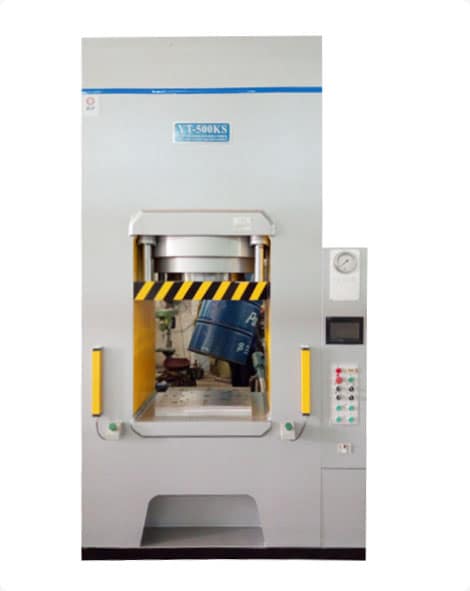
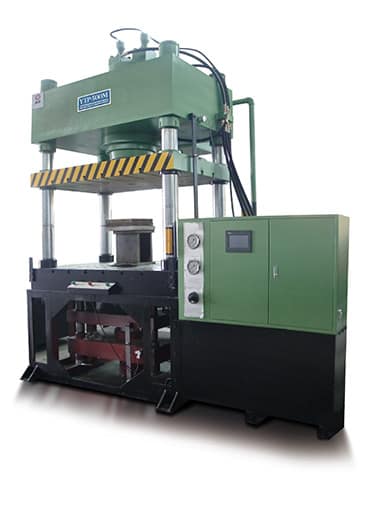
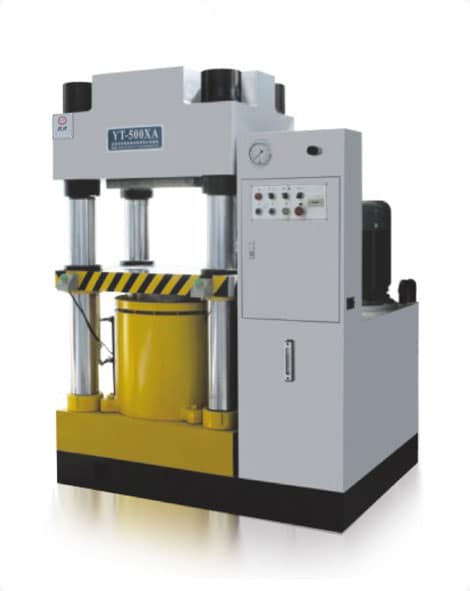
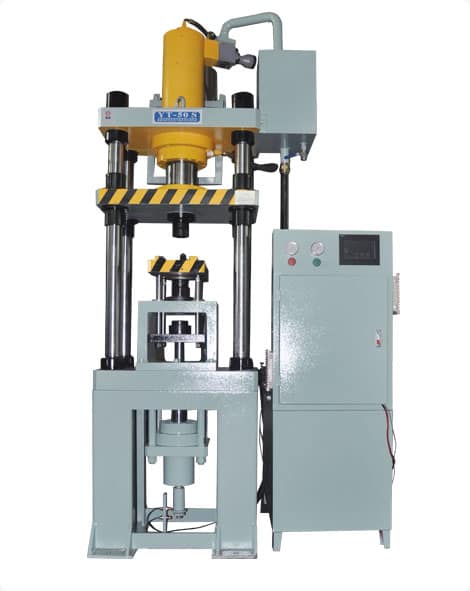
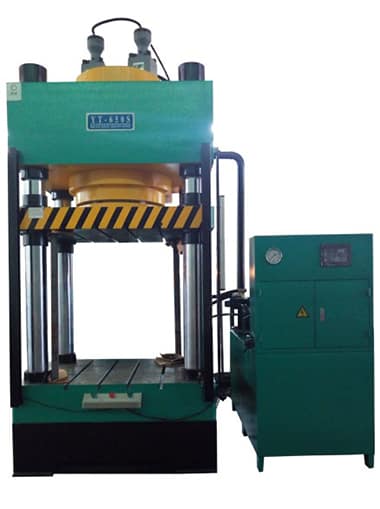
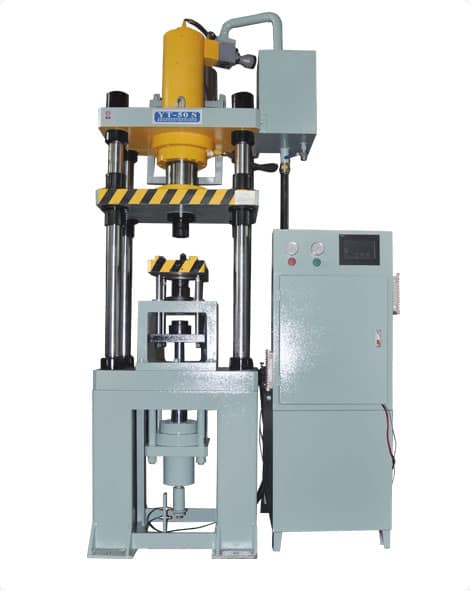
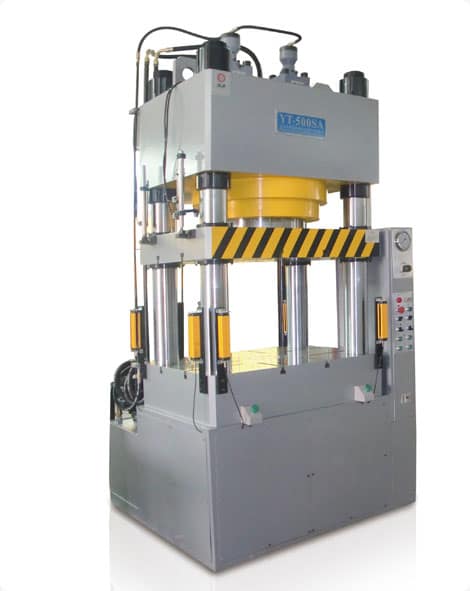
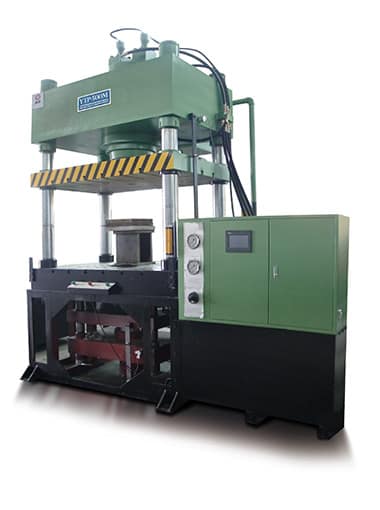
Forging press machines use hydraulics to apply gradual pressure to a die holding a work-piece, producing gradual plastic deformation of its metal to form its shape. This article details how these machines function.
Mechanical presses differ from forging hammers by being stroke-limited machines; if forging loads exceed the capacity of the press, complications such as fractured dies or excessive clutch wear could arise as a result.
The main ram
Mechanical forging presses rely on a flywheel to store energy, then transfer it through a crank mechanism to a ram. This ram can have up to 12,000 tons of force; however, unlike a hammer it works slower by manipulating metal by squeezing rather than impacting. This enables mechanical forging presses to forge all types of metal without risk of shattering from repeated impacts of hammer dies.
A screw press operates differently, using an energy source like a tandem flywheel and screw to power its operation. It drives its ram to descend for one full stroke before reverseing itself back up again at the top position, maintaining constant pressure over a longer duration and producing forgings like flanged shafts, cluster gears and wrench sockets. An upsetter press uses metal displacement technology to spread (or "upset") out the end of workpieces so they are easier to remove later.
The slide
A forging press machine uses hydraulic pressure to shape metal pieces into desired forms. This may involve squeezing, drawing, shearing or cutting openings into it for cold forming purposes - this method differs from hot forming which requires heat as its source of forming metal into shapes.
Hydraulic press machines come in various varieties. They can generally be divided into two categories based on which liquid they use to transmit pressure: oil presses and water presses.
Hydraulic forging press machines are widely used by manufacturers to create large parts with complex shapes. Their speed reduces production cycle times and increases productivity, and their hydraulic system ensures consistent force application to each piece produced. Furthermore, hydraulic presses offer greater versatility as they are quieter and safer than mechanical ones; pricing of hydraulic forging presses varies based on size and brand.
The auxiliary ram
Forging presses rely on hydraulic cylinders to generate force that shapes metal pieces. As opposed to mechanical or screw presses, which tend to compress metal with brute force, forging presses use hydraulic pressure instead, creating an incremental force. Furthermore, their slower movement means they squeeze instead of impact it, creating longer stroke lengths suitable for larger or thicker pieces of metal.
Mechanical forging presses are known as double or triple action depending on the number of strokes they can perform. Operating horizontally, they transfer energy from flywheel, air clutch and eccentric shaft directly to ram for forging process. Mechanical presses may be adjusted within certain parameters to meet each unique forging need.
A forging press can be configured to control both speed and pressure during each stroke, enabling it to mold metal into various forms for aerospace, automotive and manufacturing industries. They must be regularly lubricated, cleaned and inspected in order to work as intended and must also undergo regular maintenance procedures such as regular lubrication checks.
The frame
Forging press machines are designed to withstand enormous forces. This is made possible thanks to hydraulic systems which control how much force is applied to metal, as well as how quickly its ram moves back and forth.
This type of machine can help create various products. They're specifically designed to bend steel and other metals into various shapes while applying pressure at one specific point of contact.
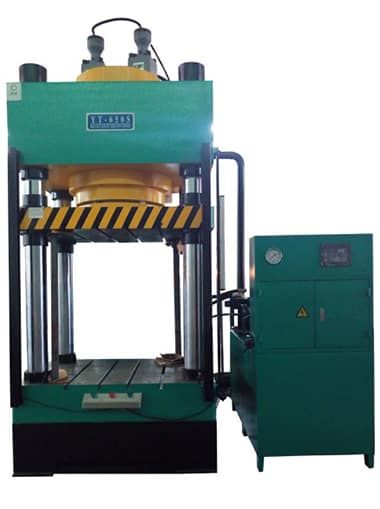
Forging press machines feature four long rods with threads and nuts on both ends that connect its members under compressive load. Hydraulic systems control ram movement; these can also be controlled remotely via computer for greater flexibility; for instance, dwell time can be set so the ram can remain at its bottom before being raised again.
Link to this article: https://www.ihydraulicpress.com/mk/2817.html
Hot Articles
-
Hydraulic Press for Essential Oil Extraction
Essential oils offer a healthy and organic alternative to many chemical-derived solutions. They are extracted from plants using methods tailored spe……
-
Hydraulic Press For Nut Oil Extraction
Hydraulic presses are ideal for pressing high oil crops such as sesame, peanuts, walnut kernel, pine seeds, tea seed and almond. Because these press……
-
How to Use a 10 Ton Hydraulic Press Safely
Hydraulic presses are powerful machines capable of compressing material for nearly every task imaginable, yet can cause severe injuries when opera……
-
How to Play Hydraulic Press
Watching things get crushed under hydraulic press can be extremely satisfying, leading to hundreds of channels on Youtube devoted to this activity……
-
A Hydraulic Press Pushing on Pregnant Belly Can Lead to Placental Abruption
Pregnant women have long been carrying babies, and their bodies have evolved to cope with the jostling and pounding that comes with pregnancy. Whi……
-
Hydraulic Press for Transmission Repair
Automotive repair shop owners know the value of hydraulic presses. Not only do they save you time and money when replacing bearings or U-joints, but……
-
How to Increase Speed of Hydraulic Press
Hydraulic presses are versatile machines used for numerous purposes, from shaping metal parts into sheets to compressing waste. Their ability to tr……
-
Why Hydraulic Press is Called Force Multiplier
Hydraulic presses are a type of machine that compresses and shapes objects, such as sheet metal. They are commonly used for industrial and commercia……
Latest News
-
Hydraulic Press For Pressing Bearings
A hydraulic press is an indispensable tool in any automotive workshop. It can straighten or bend steel components, install gears, U-joints and other……
-
Hydraulic Press For Fruit Juice Extraction
If you want to maximize the nutritional value of your fruit and vegetables, hydraulic presses are an ideal choice. They extract all of the beneficia……
-
How Hydraulic Press Works
A hydraulic press is a machine that uses liquid pressure to apply force on things, usually through two metal cylinders with hydraulic fluid contai……
-
Safety Tips When Using a Hydraulic Press
When operating a hydraulic press, it is essential to adhere to safety protocols. Neglecting to do so could result in serious injuries which are both……
-
Hydraulic Press for Composite Materials
Hydraulic presses in the composite manufacturing process can offer manufacturers several advantages. These include increased flexibility, lower oper……
-
How Do Hydraulic Presses Help With Building?
Hydraulic presses can bring many advantages to any workshop. Their straightforward design makes them simpler to maintain than mechanical presses, ……
-
Hydraulic Press for Hydraulic Pump Repair
Hydraulic presses are employed in a number of industries, such as car repair shops, agricultural equipment factories and food production plants. H-f……
-
Hydraulic Press For Glass
Hydraulic presses are mechanical devices that utilize compressed fluid to generate force. They’re commonly found in workshops and factories, w……