









Hot Articles
-
What Is a Hydraulic Press Used For in the Paper Industry?
A hydraulic press is a specialized machine that utilizes liquid pressure to generate mechanical force. This force, known as Pascal’s principle……
-
What is a Hydraulic Ram?
Hydraulic ram, commonly referred to as a Hydram, are water pumps that work by harnessing the momentum of moving water. They’re an ideal choice……
-
What is the Difference Between Hydraulic Press and Mechanical Press?
While each type of press provides unique benefits for businesses and jobs alike, ultimately choosing mechanical versus hydraulic presses comes dow……
-
Why Does Paper Explode Under a Hydraulic Press?
Paper might not seem like something that should explode under a hydraulic press, yet that is exactly what happened in this video from Beyond the Pre……
-
Hydraulic Presses
A hydraulic press uses an oil-filled cylinder to apply compressive force on a moving piston. This force is proportional to the amount of pressure ap……
-

Hydraulic Press For Knife Making
Hydraulic Press For Knife Making Hydraulic presses are indispensable tools for many metalworking tasks. ,and the Hydraulic Press For Knife Making is……
-
Hydraulic Presses in the Agricultural Industry
Hydraulic presses are widely used in a variety of manufacturing processes. Common uses for hydraulic presses include compacting, assembly, punching,……
-
Calculating Tonnage For a Hydraulic Press
Hydraulic presses are an indispensable tool for fabricating metal parts, taking up minimal space but providing plenty of force. A hydraulic press ma……
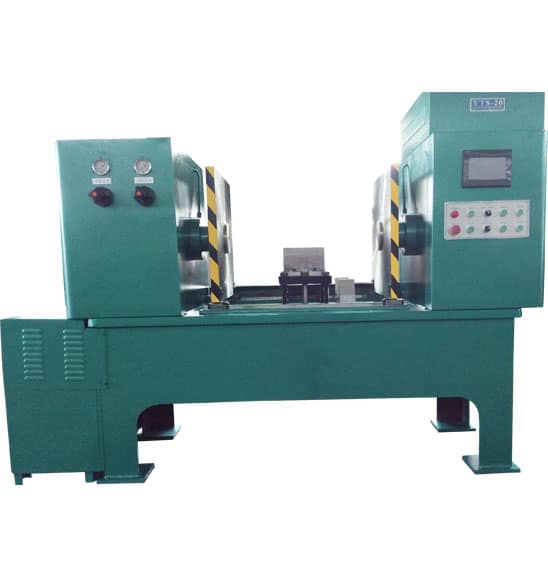
What is an Air Hydraulic Press?
time:2023-06-01 views:(点击 1,175 次)
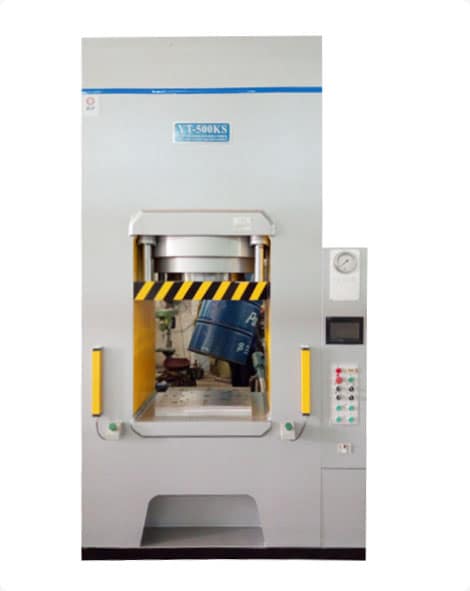
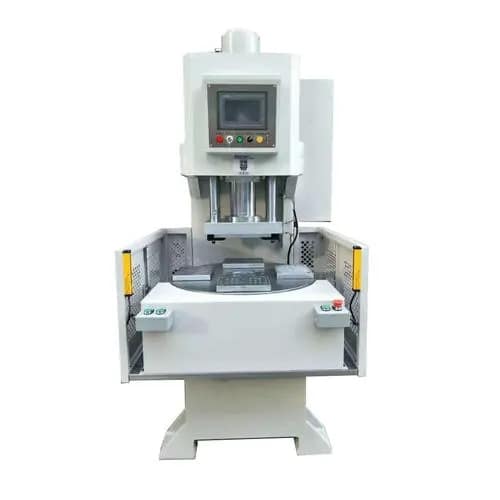
Air hydraulic presses (sometimes referred to as air over hydraulic or hydro pneumatic presses) feature fewer moving parts and consume less energy than fully hydraulic or pneumatic presses. When activated, compressed air pressure pushes downward on hydraulic fluid in a cylinder rod and extends it.
Pneumatic Presses
Pneumatic presses utilize compressed air to generate greater force than human muscles can, enabling the press to perform tasks requiring great amounts of pressure without exertion from its operator, such as stamping, drawing and forming. Available with various tonnage capacities these heavy duty industrial machines are often utilized within cleanroom environments to minimize particulate contamination levels.
Pneumatic press machines can be found in manufacturing and automotive shops, among other industries that need to flatten or impress raw materials or reshape objects. They typically include dies that allow users to eject molded parts into desired shapes of finished products; some presses may even be used to stamp metal sheets with desired thickness or punch holes through them.
Pneumatic presses use only air for their pressing action, eliminating reliance on hydraulic components or oil - making them less costly and more reliable than hydraulic models. Pneumatic presses also have lower maintenance costs because they run for long stretches with steady air from an air compressor; repairs for leakage issues are simpler since replacing damaged tubes or valves is usually enough.
Utilizing an air compressor to power a pneumatic press also reduces noise pollution in work environments that must remain quiet, making these presses ideal for stamping and other activities where excessive sound could disrupt workflow or cause discomfort for workers. Pneumatic presses come in all sorts of sizes, tonnages and configurations - gap-frame presses can even meet Class 100 cleanroom particulate standards!
While pneumatic presses may not offer as many versatility options as hydraulic models, pneumatic models are an ideal way to meet low and high volume stamping jobs that may not suit a hydraulic press due to pump drive or clutch heat issues. Pneumatic models can be configured for manual or semiautomatic operation and even feature dwell times between milliseconds and minutes for precise BDC positioning.
Hydro-pneumatic presses use an air-powered mechanism to combine the forces of hydraulic and pneumatic presses. They can apply up to 16 tons of force, featuring a trapped section of hydraulic oil inside their press cylinder which gets intensified by compressed air to provide faster approach and retraction than standard pneumatic presses. Furthermore, hydro-pneumatic presses offer greater precise control of their pressure for stamping or forming applications; making them suitable for high speed stamping applications where the speed of their ram is critical.
Hydraulic Presses
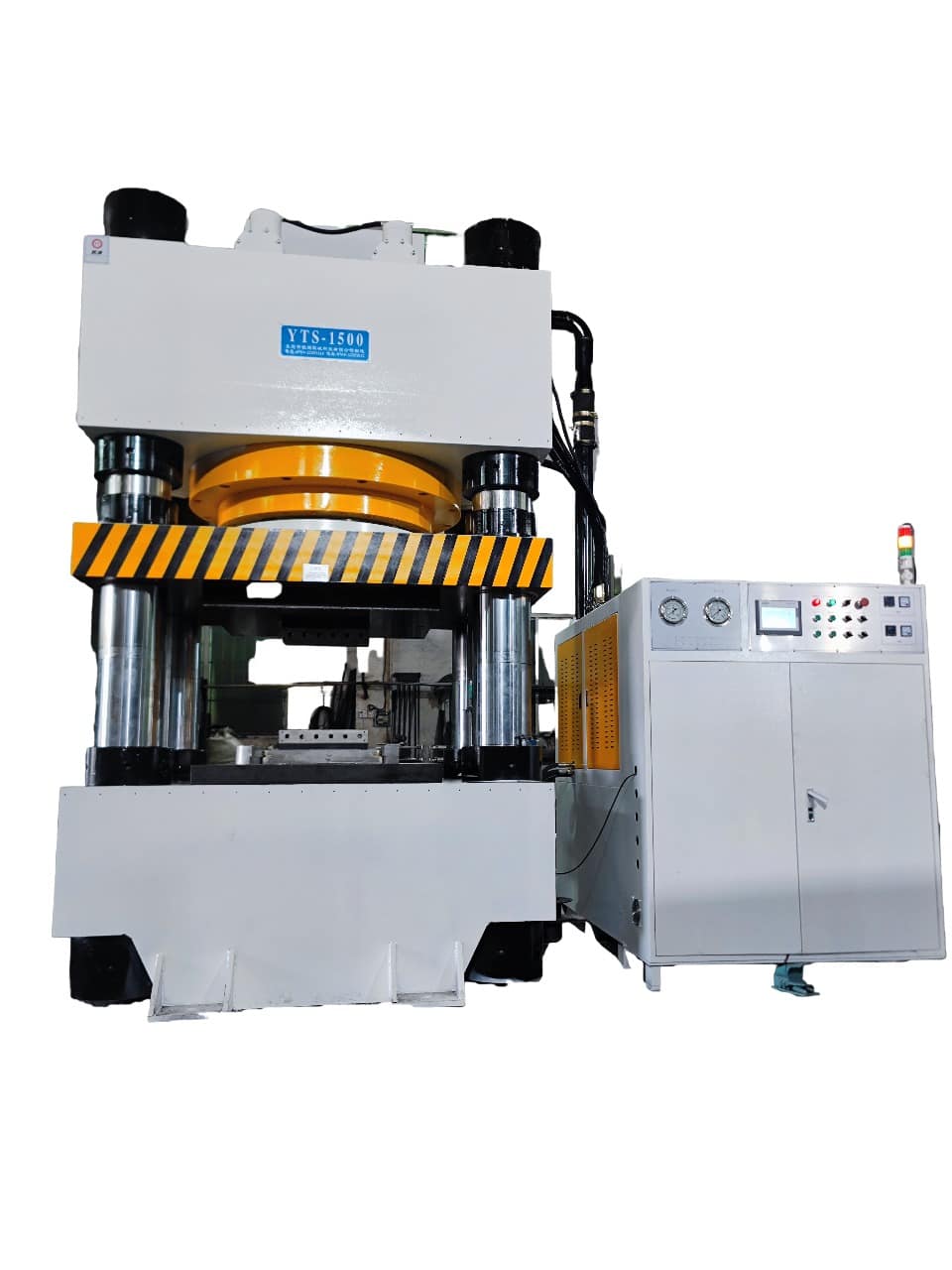
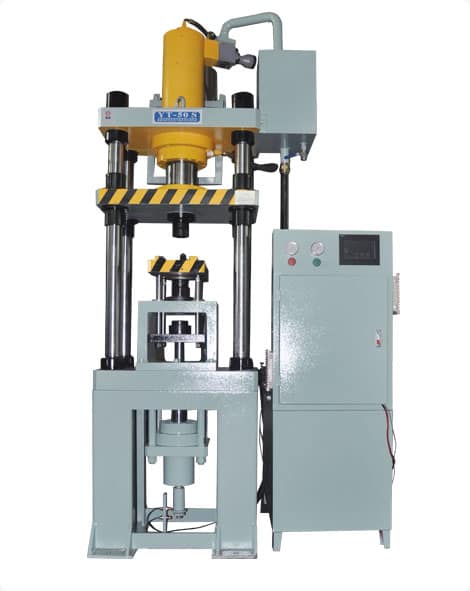
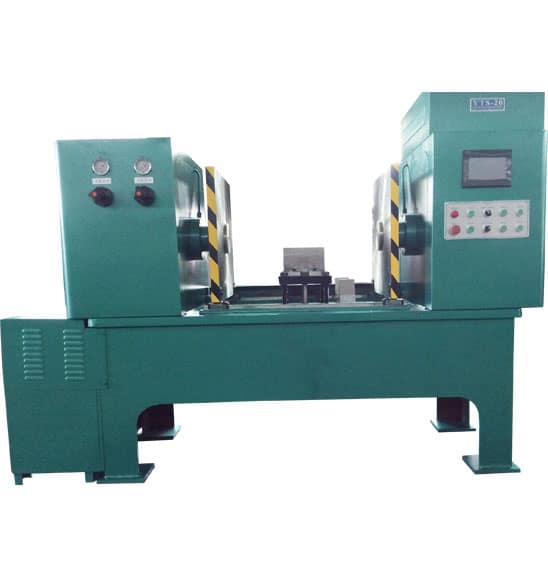
Hydraulic presses are powerful machines that use fluid pressure to create force that compresses or molds materials, such as automotive parts or aircraft construction. Hydraulic presses have wide applications across industries from automobile manufacturing to aircraft production.
Hydraulic presses can be utilized for an array of metalworking processes, including forging, stamping, cold extrusion, pressing, straightening and sheet drawing. Furthermore, these versatile devices have military as well as other uses.
These machines operate using a pump that produces hydraulic fluid and moves a piston to apply pressure to material via incompressible liquid, usually oil. Furthermore, these systems are designed to increase force applied per stroke - making them an excellent way to manufacture automotive and aerospace components with high degrees of precision and control.
Hydraulic presses are commonly utilized in the production of metal parts, including vehicle components like door frames, seat brackets and fenders for vehicles as well as aircraft landing gears, body panels and windshield wiper blades.
Other products made using hydraulic presses include weapons and armor. Swords can be formed using them. Military personnel also utilize them when loading shells into ammunition cartridges - virtually every navy ship and air force base have hydraulic shop presses specifically dedicated to this purpose.
Hydraulic presses demonstrate their versatility by being utilized in numerous laboratory settings. One such application is dissolution testing - an important pharmaceutical practice used to gauge drug effectiveness - which involves placing it in a dissolution vessel and subjecting it to mechanical stress through hydraulic pressing.
Hydraulic presses have numerous lab uses in addition to compressing powder mixtures into pellets for X-ray fluorescence spectroscopy, an analytical method that analyzes elements within samples without damaging them. Hydraulic presses come in all sizes and powers, from handheld pumps to industrial models that deliver significant force. Sometimes smaller presses may even be tailored specifically for certain tasks, like creating prototypes of microfluidic devices. Prototyping helps eliminate the need for expensive and delicate manufacturing equipment and allows the creation of quick, accurate prototypes in record time, which can then be tested to make sure that they function as intended before moving onto larger-scale production. Prototyping steps are particularly vital for medical and pharmaceutical companies - helping prevent costly mistakes from negatively affecting employee health and safety, downtime costs, repair expenses and repair needs - as well as helping save costs in downtime repair expenses and downtime repairs.
Hydraulic/Pneumatic Hybrid Presses
Pneumatic presses utilize air for performing tasks, often known as air press machines, making them an excellent solution when dealing with low forces and short hold times. These machines typically run off pressurized air from an air compressor, which draws in ambient air and compresses it into a cylinder before sending a piston or vane inside to perform pressing function. Once the piston reaches the bottom of its cylinder, it stops and releases any stored energy through exhaust valves. Mechanical springs then move the pump back upward. Pneumatic presses are easy to use and require minimal maintenance. Pneumatic presses use clean air that doesn't release particulates into the environment, unlike hydraulic machines which rely on oil as their driving mechanism. Therefore, if there's a leak with one of these presses only air escapes and this is easily cleaned up while in case of hydraulic machines there could be liquid released that are more difficult to eliminate.
Pneumatic/hydraulic hybrid presses combine speed, power and durability with maximum flexibility and speed for any task ranging from forming, riveting, bending and punching to riveting and riveting. Producing high forces using air pressure (7 bar), these hybrid presses are used for many tasks such as forming riveting bending punching as they require no hydraulic components or oil, thus being faster to setup and use faster while being less expensive and more reliable than their hydraulic counterparts. They have become a favorite choice among manufacturing industries due to their excellent performance providing similar performance while being more versatile compared with hydraulic presses in terms of speed power and durability compared with both forms.
Hydraulic presses may still have advantages over electric alternatives in certain cases, particularly when working with thick-walled parts that must be held for extended periods. But even here, some manufacturers argue that hydraulics aren't quite as superior. Boy Machines offers small two-platen hydraulic presses in various tonnage ranges and claims their newer machines save up to 50% less energy compared to older hydraulic models.
Presses are vital tools in many industrial processes, from small shops to telecom and defense industry giants. Most common press types include pneumatic and hydraulic versions; however, an increasingly popular choice is hydro-pneumatic hybrid presses. Janesville Tool offers hydro-pneumatic hybrid presses as a cost-cutting measure that saves both money and energy in the long run. Contact Janesville Tool today for more information on this exciting technology, as we carry a selection of hydraulic and pneumatic presses of varying sizes with options to customize to meet your individual specifications - not to mention dies and accessories to complete the experience!
Link to this article: https://www.ihydraulicpress.com/yn/3337.html
Hot Articles
-
How Hydraulic Presses Help Manufacturing
Hydraulic presses can quickly adapt to meet the production or assembly needs of any company or institution, by simply altering pressure or stroke sp……
-
What Is a Hydraulic Press Used For in the Paper Industry?
A hydraulic press is a specialized machine that utilizes liquid pressure to generate mechanical force. This force, known as Pascal’s principle……
-
Where to Buy Small Hydraulic Press Machine
Hydraulic presses are multifunctional tools, capable of performing a range of tasks. From bending, punching, stamping, and straightening metals to r……
-
Hydraulic Presses in the Recycling Industry
Hydraulic presses are indispensable tools in many industrial settings, from fabricators bent and forming metal to recycling companies crushing cars.……
-
Choosing a Hydraulic Press
Hydraulic presses can generate thousands of tons of force and are widely used in metalworking operations at many manufacturing plants around the wor……
-
Where to Buy Hydraulic Press Oil
Hydraulic presses play an integral role in many industrial processes. They shape metal components while also serving to crush waste material. Howe……
-
How Do You Calculate Tonnage for a Hydraulic Press?
Hydraulic presses are highly productive forming tools, capable of exerting thousands of pounds of pressure. Hydraulic presses offer versatility and ……
-
What Is a Hydraulic Press Used For in the Military?
Hydraulic presses use fluid pressure as their driving force. The most basic design involves two pistons of equal size connected by a tube filled wit……
Latest News
-
What is the Biggest Hydraulic Press in the World?
Hydraulic presses are machine tools that use static pressure to process materials such as metal, wood, plastic and powdered products. They’r……
-
Hydraulic Press Channel – What Broke The Hydraulic Press?
Lauri Vuohensilta and Anni run a family machining business, so their hydraulic press sees regular use. As evidenced in videos showing them crushin……
-
What Is a Hydraulic Press Used For in the Printing Industry?
Hydraulic presses are machines used to apply pressure to a work piece. They’re useful tools for many purposes such as part production, metal f……
-
What Happened to Hydraulic Press Channel?
Vuohensilta operates a family machining business using various machines such as hydraulic presses. Millions of viewers follow his YouTube channel ……
-
What is a Hydraulic Ram?
Hydraulic ram, commonly referred to as a Hydram, are water pumps that work by harnessing the momentum of moving water. They’re an ideal choice……
-
What Fluid is Used in Hydraulic Press?
Hydraulic presses play an essential part of many manufacturing and production processes, providing force transference by harnessing energy stored wi……
-
Where to Buy Hydraulic Press Pump
Hydraulics is a mechatronic technology that utilizes fluid pressure to multiply mechanical forces. Hydraulics is widely used to press, assemble, dra……
-

What Is a Hydraulic Press Cylinder?
Hydraulic presses are machines that produce compressive force at lower pressure to facilitate lifting heavy loads mechanically. Based on Pascal̵……