










Hot Articles
-
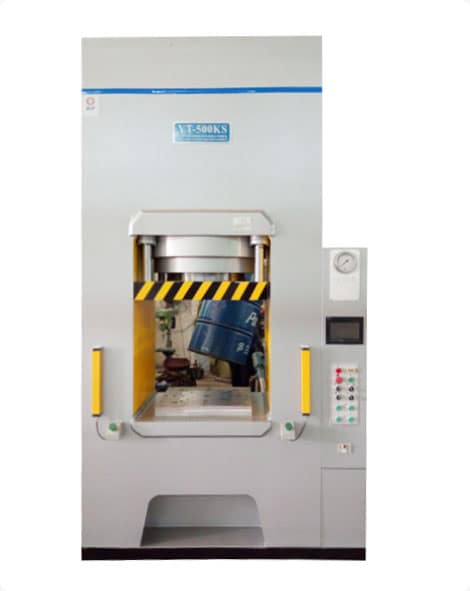
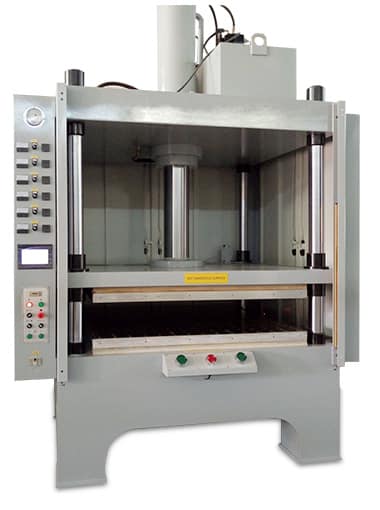
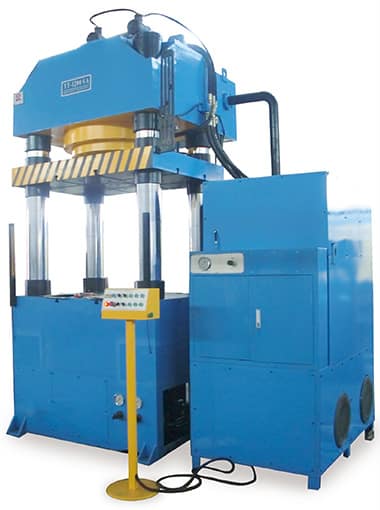
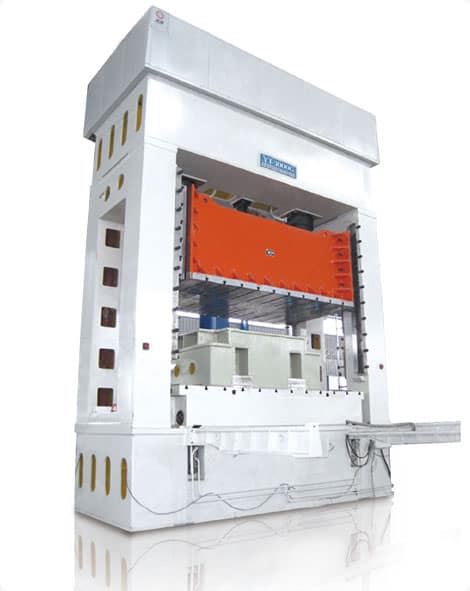
What Is a Hydraulic Hot Press?
Hydraulic hot presses are industrial machines that shape metal or other materials to a desired shape. They find applications in numerous manufacturi……
-
What to Do With a Hydraulic Press
Hydraulic presses may have become internet sensations by crushing things such as cheese and magnets, but this industrial tool is capable of much mor……
-
Watch a Hydraulic Press Smash a Box
Millions of viewers worldwide flock to YouTube every week to watch Finnish workshop owner Lauri Vuohensilta use his 150-ton hydraulic press to press……
-
Components of a Hydraulic Press
Hydraulic presses are industrial machines that utilize hydraulics to apply pressure in the form of force. They’re commonly used for bending, f……
-
What Is a Hydraulic Press Cylinder?
Hydraulic presses use only minimal force to produce much greater pressure than you could exert with your hands alone, thanks to Pascal’s law……
-
How Do You Calculate Tonnage for a Hydraulic Press?
Hydraulic presses are highly productive forming tools, capable of exerting thousands of pounds of pressure. Hydraulic presses offer versatility and ……
-
Why Do We Need Hydraulic Presses to Process Ceramics?
Most people mistake the creation of ceramics as an artisanal endeavor requiring dexterous hands; far removed from the massive power that hydraulic p……
-
The Benefits of a Heated Platen Press
A heated platen press is a versatile piece of equipment used for producing production parts requiring controlled temperature and pressure. It finds ……
Hydraulic Presses – Common Uses
time:2023-03-09 views:(点击 1,106 次)Hydraulic presses are widely used in a range of industries. They're commonly seen in manufacturing, construction, recycling and more.
They're also useful in laboratories for sample preparation, especially X-ray fluorescence spectroscopy (XRF). Their capability to maintain full pressure throughout the entire press stroke process ensures consistent results.
Compression
Hydraulic presses are commonly employed for compressing metal. This process involves a hydraulic fluid flowing through a small cylinder (plunger) and applying pressure on an adjacent larger cylinder (ram).
Presses apply pressure to metal until it takes the desired shape, which is commonly employed in sheet metal forming.
One common use for a hydraulic press is to compress powdered samples. This method of testing materials to assess their strength and durability can be highly effective.
Compression is an integral component of recycling specialty waste products. This technique helps repurpose items like oil filters, which can be compressed into convenient cubes for disposal.
Bending
Hydraulic presses are indispensable tools in many manufacturing processes, often employed to bend metal. They're used for fabricating truck beds, automobile parts and even roofs for houses.
Hydraulic presses have many uses, but all involve the use of a ram that can be controlled by an electronic controller. This enables trained operators to input information regarding bend angle, plate thickness and width into the controller for processing.
Making the decision to purchase a hydraulic press is an important one for businesses looking to boost production efficiency. But there are several factors to take into account before investing in one of these machines.
First and foremost, selecting a press brake with sufficient tonnage is essential. This will determine how much pressure the punch can apply during bending; higher tonnages are ideal for thicker metals while lower ones work best with thin materials.
Drawing
Hydraulic presses are indispensable tools in many manufacturing operations, from fabrication and recycling to stamping and bearing work. Fabricators utilize them for part production while recyclers compress specialty waste items like oil filters in order to reuse or discard them.
In addition to bending and forming, a press can also be employed for drawing part from a sheet metal blank. This process may be completed using either single-action or double-action draws.
The press can also be configured with a triple-action configuration, featuring punch or forming tool on the main draw ram, clamp ram in the middle and knockout cylinder and/or bed cushion on lower ram. This configuration can be tailored to your forming application and allows you to adjust tonnage throughout the forming process without worrying about wrinkles or tears.
Assembly
Auto manufacturers use hydraulic presses to fabricate large components such as body panels and smaller ones like brake pads. They also employ them in the production of other vehicle-related items like thermostat casings and light switches.
Another frequent assembly application of a hydraulic press is setting the heads on tank shells. This requires flaring and setting tools at both ends to maintain radial orientation of the two heads.
These machines rely on plant electricity, a servo motor/drive unit and hydraulic cylinder to move the press ram. They come in various pressures and sizes as "stand alone" pre-engineered units ready for part-specific tooling to be mounted onto the ram and platen.
Laboratory
Hydraulic presses are machines that utilize fluid pressure to generate force that can compress or mould materials. They're commonly employed in manufacturing and industrial settings.
Laboratory hydraulic presses are smaller versions of industrial hydraulic presses, often employed for research and testing purposes. Although they typically have a lower force capacity than their larger counterparts, laboratory hydraulic presses offer greater precision and control.
Hydraulic presses have many common laboratory uses, such as powder compaction, pharmaceutical development and spectroscopy. They may even be employed to produce KBr (potassium bromide) pellets for FTIR analysis or general sample pellets for XRF analysis.
Link to this article: https://www.ihydraulicpress.com/yn/1391.html
Hot Articles
-
What Size Hydraulic Press For a Forging Shop?
Blacksmiths have long used hammers to shape metal, but the hydraulic forging press offers them new possibilities. This book covers its basic operati……
-
What is an Example of a Hydraulic Press?
Hydraulic presses have numerous industrial uses. One such benefit is to shape or deform materials. They operate under Pascal’s Law, which stat……
-
Why Doesn’t a Hydraulic Press Defy First Law of Thermodynamics?
Hydraulic presses produce immense force, making them suitable for an array of industrial uses such as metalworking, car crushing and even creating p……
-
Hydraulic Stamping Press
Hydraulic presses are essential tools in manufacturing. They produce parts for a variety of industries. Hydraulic presses utilize a ram and plunger ……
-
Why is a Hydraulic Press So Strong?
A hydraulic press is a machine that employs Pascal’s principle to generate tremendous force. Consisting of two cylinders – one smaller t……
-
How Long Do Hydraulic Press Hoses Last?
Hydraulic hoses are composed of three main elements: inner tube, reinforcement layer and cover. When combined, these layers create a robust hose tha……
-
Where to Buy Hydraulic Press Plates
If your shop press is showing signs of wear and tear, it could be time for new plates. Instead of risking injury by opting for less durable options ……
-
What to Use a Hydraulic Press For
Hydraulic presses use extreme force to bend, straighten, crush and flatten materials; they can even pierce and punch materials. H-frame and C-fram……
Latest News
-
Hydraulic Press Juicer
Juicing is an excellent way to provide your body with essential vitamins and nutrients, aid bowel cleansing and potentially prevent many diseases.……
-
Blaise Pascal – What Did Blaise Pascal Use a Hydraulic Press For?
Pascal was a French mathematician, physicist, and religious philosopher renowned for advancing science during his lifetime. He created several pract……
-
Hydraulic Press Vs Pneumatic Press
Hydraulic presses and pneumatic presses both have their advantages, yet there are some key distinctions between them. If you’re in the market ……
-
Who Invented the Hydraulic Press For Cocoa Processing?
Cocoa processing is an integral component of chocolate manufacturing. From powder to bar production, this involves various steps involving multipl……
-
What Can I Use a Hydraulic Press For?
While you might have seen people use hydraulic presses online for amusement by crushing items like cheese and magnets, these devices can actually ……
-
Selecting the Right Hydraulic Press for a Forging Shop
The hydraulic press is an incredible machine capable of performing an array of functions. From crushing large objects and forging metal into shapes ……
-
Why Are Hydraulic Presses So Strong?
Hydraulic presses are machines used to exert intense pressure on objects, with applications including metalworking, plastics and composites manufact……
-
Who Created the Hydraulic Press?
Hydraulic presses are closed systems that use liquid under pressure. First created in 1795 by Joseph Bramah – creator of the flush toilet R……