











Hot Articles
-
How to Make a Hydraulic Briquette Press
Briquette presses are machines designed to make different sized briquettes that can be used as fuel for cooking and heating, and easily transporte……
-
How Much Pressure Can a Hydraulic Press Generate?
Hydraulic presses can be utilized for a range of tasks, from crushing powdered materials and making ceramic tiles to scrap metal baling and automo……
-
How to Make a Wooden Hydraulic Press
DIY Wood Hydraulic Press using Bottle Jack An obvious use for such a machine would be making briquettes for combustion-grade materials, which requ……
-
How to Make a Small Hydraulic Press
Most woodworkers, car enthusiasts and blacksmiths use hydraulic presses. These presses provide precise gluing solutions with both precision and symm……
-
How to Make a Homemade Hydraulic Press
Hydraulic presses can generate an incredible amount of force. Unfortunately, however, they require ongoing maintenance and are quite large and hea……
-
How to Make Hydraulic Press at Home
A hydraulic press is an efficient tool for performing various garage tasks. While not cheap, investing in one may save money in the long run. Have……
-
How to Make a Hydraulic Press at Home
A hydraulic press is an incredible machine that employs Pascal’s Law to generate immense forces. Consisting of two communicating cylinders &……
-
How to Make a Small Electric Hydraulic Press
Hydraulic presses play an essential part in numerous manufacturing processes, from shaping machine parts to crushing waste and compacting it. Their ……
How to Make Hydraulic Press Substitute
time:2023-12-01 views:(点击 1,160 次)Have you seen hydraulic presses crushing metal on YouTube? Such machines can cost an arm and a leg!
An alternative option would be a hydropneumatic press (also referred to as an air-over-oil press). These machines employ Pascal's Law (pressure in confined fluid magnifies any force applied) in order to achieve high levels of functionality.
Make the Frame
Utilizing a hydraulic press substitute is an economical and simple way to get work done without incurring the expenses associated with purchasing and maintaining an expensive hydraulic machine. Hydraulic presses use fluid pressure to generate powerful forces for metal forming projects; however, due to their complex designs and power sources they can be difficult to keep running smoothly and produce potentially harmful fumes that could compromise health and well being. To overcome these issues you can make your own simple hydraulic press substitute in your home workshop!
These alternatives to hydraulic presses typically consist of steel components that can be tailored to any project at hand. While smaller than their counterparts, they provide similar forces while having less moving parts to break or repair - not to mention being more cost effective options for many projects.
Sourcing junk or scrap steel for pieces of "U" channel or "IL", (which resembles an "L" when seen from its end). Four side pieces and two longer ones (depending on your hydraulic ram or jack height). They should each measure 6 or 7 feet for your frame.
Once you have assembled all the parts, assemble and weld them before setting aside to cool off. Mark the center of each bed substructure on both pieces using a center punch or drill o3mm; use these marks as guides for placing holes for holding onto them securely.
Once these threaded stock pieces are attached to two washers and nuts, tighten them securely using a wrench, to form your hydraulic frame. Now is also an opportune time to test for leaks or any issues during use; additionally this may be an ideal time for adding any extra features if desired.
Make the Ram
Hydraulic presses consist of a strong steel frame into which is installed an powerful hydraulic ram driven by hydraulic fluid power from a pump. Mechanical force and movement is converted to fluid power that drives this powerful hydraulic ram, pressing on any die or punch of your choice - either vertically or horizontally depending on how your press is configured; most commercial presses offer double action cylinders to enable pulling as well as pushing.
Pneumatic presses use compressed air to power their ram, which then applies pressure to the workpiece. A hydropneumatic press differs by using both pneumatic and hydraulic power sources in tandem to drive its ram. After activation, its rapid descent reveals a stage known as fast approach using low force before resistance is encountered and hydraulic power takes over to allow full force application from the ram before gradually retracting back at an adjustable pace until no resistance remains and then retracting at its usual pace again.
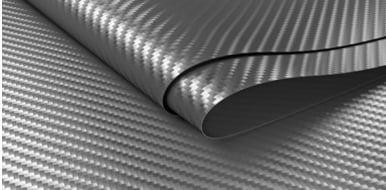
Hydraulic presses are utilized extensively in manufacturing for applications including forming, punching, impact riveting, flaring and staking. Additionally, they're utilized for clinching, molding and hot-forming metals as well as high force applications like RTM resin transfer molding, GMT glass mat transfer and carbon fiber molding.
An hydraulic press can be an invaluable addition to your workshop, not only offering handy benefits but also potentially lucrative ones. A properly maintained hydraulic press will deliver years of reliable service forming metal, bending glass and molding wood - providing maximum productivity with minimal effort on your part. In order to maximize its potential it's crucial that you fully comprehend its operation as well as perform regular maintenance checks on it.
Maintaining proper performance of a hydraulic press requires regularly testing its pressure. If it takes too long to build to required pressure levels, there could be one or more issues related to either its motor, pump or valves that could be hindering proper function of this machine.
To avoid such issues, it's essential that the pump and press motor be regularly lubricated. If you require assistance in doing this, consult a repair manual or professional technician for guidance.
Make the Platen
Heated platen presses are an adaptable press type used across industries for production of production parts. Their temperature and pressing tonnage capabilities range from traditional rubber molding and laminating applications, metal fabrication, wood products as well as testing environments - even laboratory environments! Heated platen presses can even be customized to meet specific part and material requirements for optimal use.
Heated Platen Presses are typically powered by light-duty hydraulic cylinders which extend through clearance holes at the top of their frame's crosshead and move the upper movable platen from an operating position close to and far from its lower counterpart, in response to instructions from a down-acting central hydraulic ram.
When the upper movable platen is in its operating position and pressed by a cylinder, its free end portion 42 engages with gate members 52, 56. With this downward driving force from the ram, its upper movable platen compresses mold 12 between gate members 52, 56 and against its fixed lower platen to create compression of mold 12.
While engaging the mold, the platen is held steady by bolster plates attached to a lower fixed platen. These bolster plates may feature T-slot reinforcement for mounting molds or other tooling components, cut-outs, grooves, T-slot reinforcement, drilled and tapped holes or any other features necessary for the specific forming process.
Most heated platen presses feature adjustable retract limit switches that allow users to limit the maximum retract distance of their ram in order to reduce cycle times and increase forming efficiency, typically located near or on the crosshead or near ram. Some platens also feature electrical heating from cartridge heaters or heat tubes which offer multi-zone temperature control - ideal for versatility across various applications and materials - along with sensors to ensure that an adequate amount of heat is applied per zone for error free parts production and rapid die changes. They may even feature adjustable stroke controls which enable fast die changes on board the press itself.
Make the Bracket
A hydraulic press is a machine that employs hydraulic cylinders to generate compressive force. It can be used for various metal forming and assembly projects, as it produces great amounts of pressure quickly in a relatively small space. Unfortunately, however, these presses can also be quite costly to purchase and maintain; many shop owners thus seek alternatives which offer similar levels of force at more reasonable costs.
Pneumatic presses (also called air presses) offer an affordable alternative to hydraulic presses for riveting and punching tasks, boasting up to 5,000lbs of force. You have easy control over force and speed settings and maintenance requirements compared to hydraulic presses; plus they are much cheaper. Pneumatic presses come equipped with air compression chambers for superior force transference. They can be much less expensive to purchase and operate as they require significantly less maintenance costs; plus pneumatic presses can even replace hydraulic presses in certain instances!
Hydro pneumatic presses or "air over oil presses," offer another viable alternative to hydraulic presses. These machines combine hydraulic oil and compressed air to generate powerful forces similar to most industrial hydraulic presses - but unlike hydraulic presses which draw on high voltage electricity for operation, hydro pneumatic presses use only factory compressed air; hence requiring significantly less energy, with much smaller reservoirs than their hydraulic counterparts.
Hydraulic presses are commonly used to straighten long lengths of metal. Additionally, they can compress sample materials like potassium bromide (KBr) into pellets for infrared spectroscopic analysis or provide materials suitable for further processing such as powdered ceramics or concrete compression testing.
Hydraulic presses are essential pieces of equipment in many shops and factories, providing essential flexibility in performing a range of tasks while remaining safe for operation. Unfortunately, their high voltage power requirements mean it's essential that proper safety precautions be taken in order to make sure that it operates as intended in your shop or factory.
Link to this article: https://www.ihydraulicpress.com/nsn/5568.html
Hot Articles
-
How to Make an Air Over Hydraulic Press
Air over hydraulic presses offer an energy-saving alternative to traditional hydraulic press systems, making them an invaluable asset for metalwor……
-
How to Make a Knife Using a Hydraulic Press
For anyone wanting to learn how to make knives using a hydraulic press, the American Bladesmith Society offers this video from journeyman smith Ka……
-
How Much Force Does a Hydraulic Press Exert?
Hydraulic presses rely on Pascal’s Principle to generate immense force, as this principle states that pressure applied to one part of a cyli……
-
How Much Money Does the Hydraulic Press Channel Make?
A hydraulic press is a powerful machine used for crushing objects. These powerful machines are commonly found in machine shops and factories, help……
-
Hydraulic Press Channel – How Much Money Does the Hydraulic Press Channel Make?
The Hydraulic Press Channel is a YouTube channel devoted to crushing things with hydraulic presses. Launched by Lauri Vuohensilta of his family mach……
-
Hydraulic Press Channel – How Much Money Does the Hydraulic Press Channel Make?
The Hydraulic Press channel on YouTube has become one of the most viewed, with videos featuring Finnish factory owner Lauri Vuohensilta using his ……
-
How Much Money Does Hydraulic Press Channel Make?
Lauri and Anni Vuohensilta launched their Hydraulic Press Channel in October 2015. Based out of Finland, this couple uses their hydraulic press to……
-
How to Make a Bottle Cap Hydraulic Press
In this video, a vlogger shows us how to make a bottle cap hydraulic press. With powerful cylinder and piston systems capable of crushing aluminum c……
Latest News
-
How Are Hydraulic Presses Used to Make Ceramics?
Ceramics have many applications in our everyday lives – from housings and switches found in switching stations, to thermostats that regulate……
-
How to Make a Hydraulic Fruit Press
Few things signal autumn like freshly-pressed apple cider. Mike Craghead shows us how to build a hydraulic fruit press using items found around yo……
-
How to Make Hydraulic Press Machine
The hydraulic press is a machine that utilizes liquid to generate force. Consisting of two interconnected cylinders, one larger than the other, it e……
-
How to Make a Small Hydraulic Hash Press
Pressing plant products through a hydraulic rosin press produces higher quality extractions with more consistent results, but purchasing one comme……
-
How to Make Your Own Hydraulic Jewelry Press
Hydraulic presses are powerful machines often employed for metal-forming. Comprised of a pump, endplates and hydraulic cylinder, these presses offer……
-
How to Make a Hydraulic Press Machine
Utilizing a hydraulic press machine in the workshop requires precision and care during assembly. All dimensions must be drawn up precisely and joi……
-
How to Make Small Hydraulic Press at Home
Whether it be for strengthening concrete products or simply packing cardboard more compactly, a hydraulic press can be an ideal tool. However, in or……
-
How to Make a Hydraulic Press Model
If you require tons of pressure, a hydraulic press may be just what’s needed. Its moving component follows steel guides which ensure horizon……