









Hot Articles
-
How Much Force Can a Hydraulic Press Apply?
A hydraulic press employs Pascal’s Law to magnify a small force into a significant one, effectively multiplying their forces according to th……
-
How to Make Hydraulic Press at Home
Every garage master knows when it is necessary to press out bearings, silent blocks or just pack cardboard more compactly; that is when a hydrauli……
-
How to Make a Hydraulic Briquette Press
Briquette presses are machines designed to make different sized briquettes that can be used as fuel for cooking and heating, and easily transporte……
-
Hydraulic Press YouTube Channel
The Hydraulic Press Channel is a YouTube channel created and managed by Lauri Vuohensilta of Finland, who uploads videos showing him crushing obje……
-
How to Make a Wooden Hydraulic Press Bed
Hydraulic presses can be invaluable tools in wood working. However, these expensive pieces of machinery may require considerable work or expense to ……
-
How Much Money Does the Hydraulic Press Channel Make?
Modern machine shops must keep production goals on schedule in order to remain profitable, yet any equipment malfunction could quickly put their o……
-
How to Make a Tabletop Hydraulic Press
Building a tabletop hydraulic press involves cutting metal parts and assembling them using welding skills; you could make one without welding as w……
-
How to Make Dies for Hydraulic Presses
Hydraulic presses use Pascal’s Law to generate massive forces. Fluid pressure pushes a smaller piston into a larger one and is used for comp……
How to Make a Tabletop Hydraulic Press
time:2023-07-03 views:(点击 1,147 次)
Hydraulic presses play an integral part of manufacturing and production processes, from shaping machine components to crushing waste or scrap. There are numerous uses for these pressing tools in manufacturing environments.
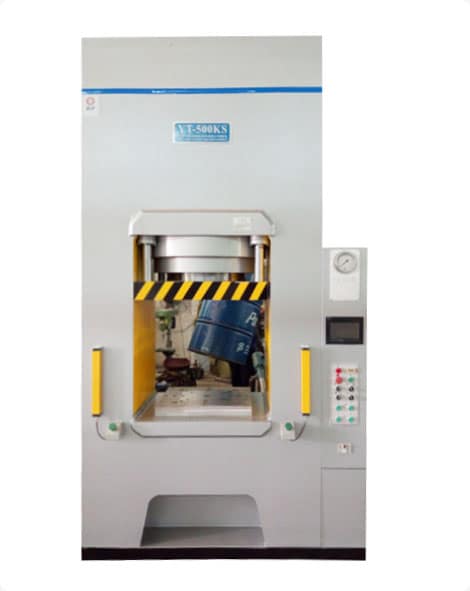
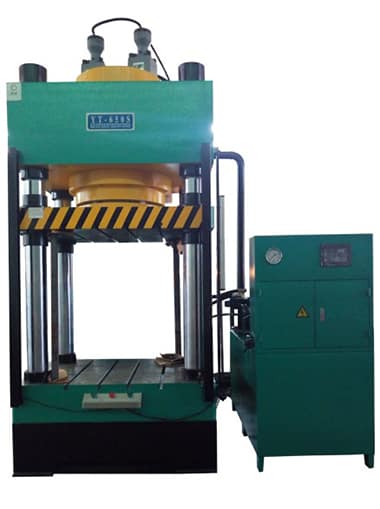
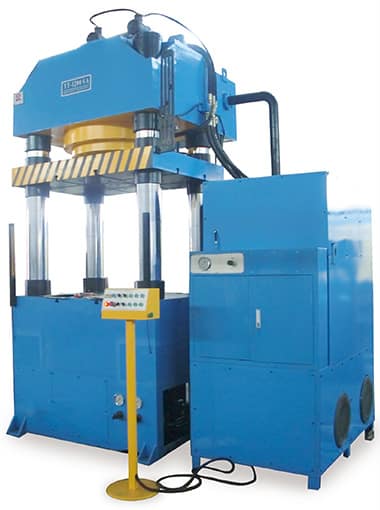
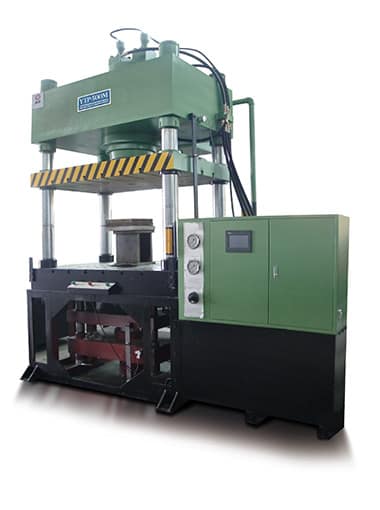
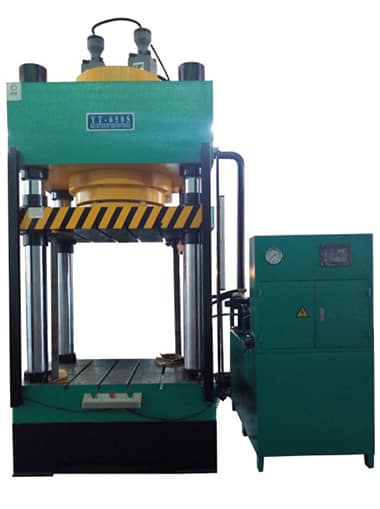
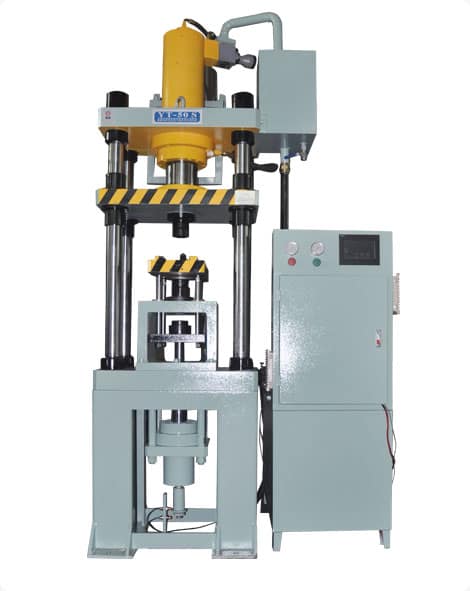
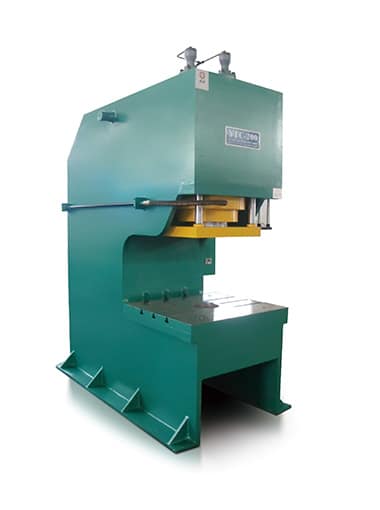
This 30-T hydraulic C-frame press features sturdy four-column construction, featuring a sturdy table and four-way guided ram plate with T-slots for mounting tools. Programmable pressure regulation provides full tonnage throughout its stroke for customization and flexibility.
Hydraulic Press
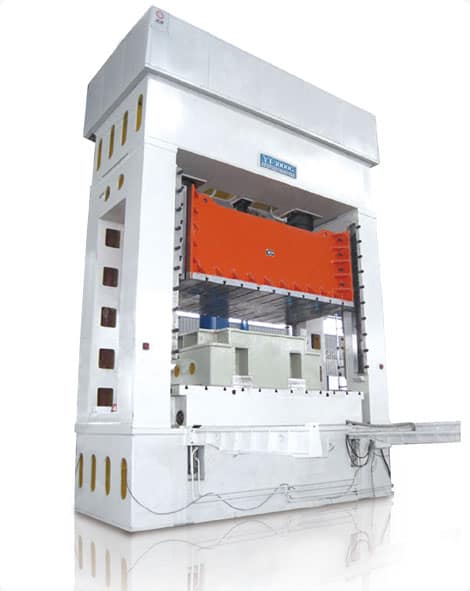
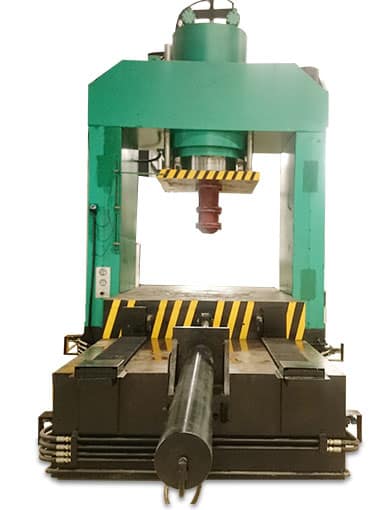
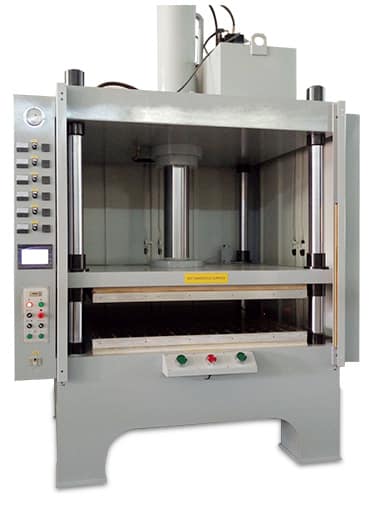
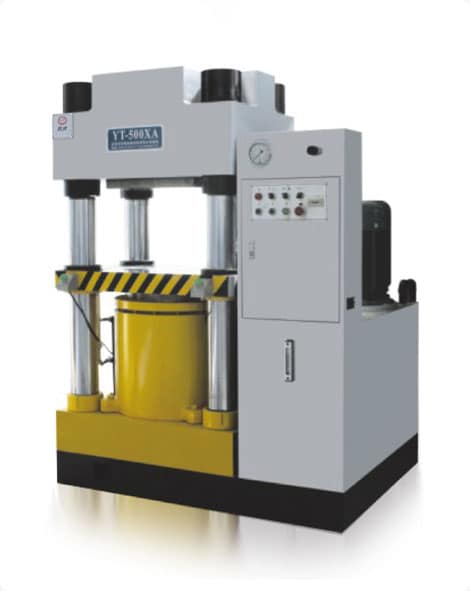
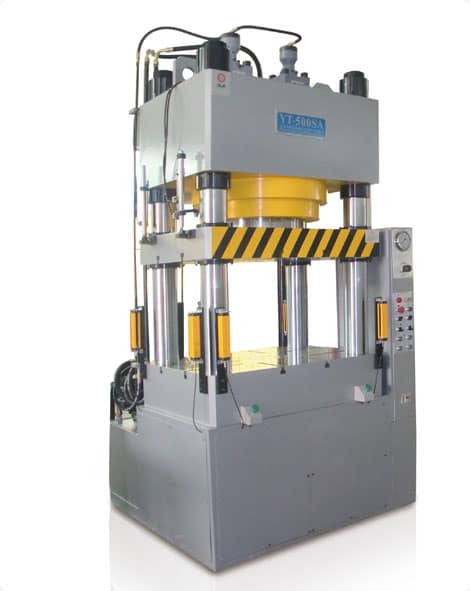
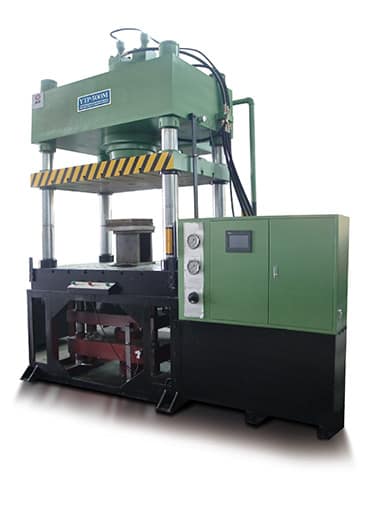
Hydraulic presses are integral components of many manufacturing processes that create parts and components used in consumer machines and products. By applying compressive force to metal billets, hydraulic presses can exert substantial compressive force which flattens, bends, shapes, stamps and forms them into various designs and shapes. Their process can easily be tailored to different production requirements by altering pressure settings, stroke speed or positioning of die.
H frame hydraulic presses are among the most ubiquitous models available today, featuring an H-shaped body and press cylinder that are commonly found in repair shops, maintenance buildings and assembly assembly lines. Hand pumps may be sufficient for low volume applications while air and electrical pumps offer more consistent operation; additionally they come in various tonnage capacities that enable operators to select one suitable to their force requirements when selecting an application model.
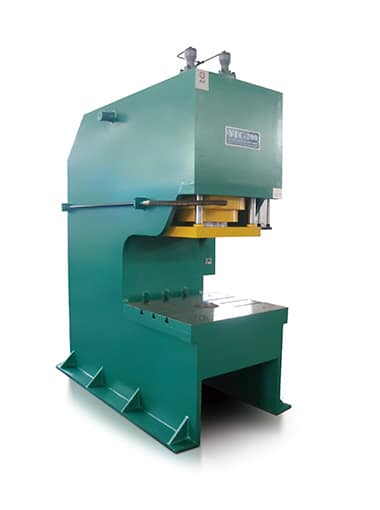
C frame hydraulic presses feature a single arm structure and offer superior rigidity, guide performance and speed - ideal for smaller operations with limited floor space. Furthermore, they're capable of reaching full tonnage across their full stroke for greater design flexibility in tools and workpieces.
Hydraulic C-frame presses are widely used for producing plastic molds and thermoforming. These presses can be run either manually or automatically with an easy to use lever and knob system, and feature a fixed table and four-way guided ram plate that facilitate quick tool changes at high approach, work, and return speeds, all while being simple to operate and maintain.
Hydraulic Cylinders
Hydraulic cylinders are widely utilized industrial tools used to generate force that push, pull or lift objects. Their linear motion provides mechanical force which can be utilized in applications as diverse as metal fabrication, woodworking and any industry that demands exceptional pressure.
Hydraulic cylinders consist of three primary parts: barrel, head and base. The barrel - made of seamless steel tube - holds fluid while being sealed to prevent leaks; while its head connects to its base via bearings that align the piston. Finally, these three pieces connect via either screwed or flanged connections - with screw connections being easier to unbolt than their stronger counterparts.
When creating a hydraulic cylinder, its barrel must be constructed of materials resistant to high temperatures and pressures, be drilled and threaded correctly for attachment purposes, and should be inspected for roughness and dimensions to ensure it falls within tolerance levels.
Comparatively speaking, hydraulic cylinders are more complicated and typically require release valves, pumps, motors and reservoirs in order to work effectively. Furthermore, they're susceptible to leaking oil that damages equipment around them and causes contamination. By contrast, pneumatic cylinders are simpler to manufacture and use because compressed air provides linear movement instead. Furthermore, their lower risk of fire or explosion make them the better option overall.
Plunger
Hydraulic presses are versatile machines, used in a wide variety of applications from cutting metal and shaping it for casting to creating molds for production parts. Understanding their workings and requirements to effectively utilize one is key for maximum success.
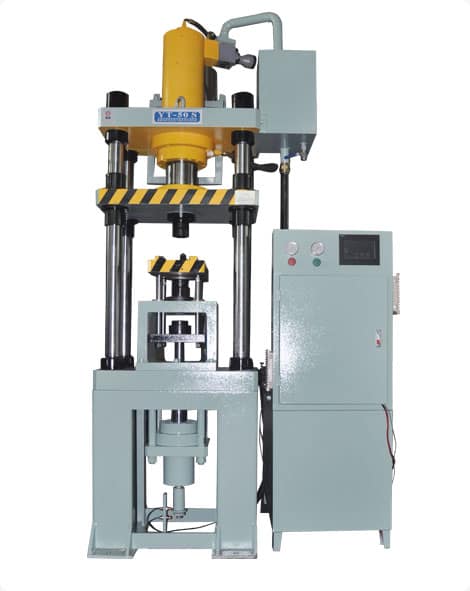
Hydraulic presses consist of two cylinders and a plunger as the core components, both metal pipes with two ports: one to accept hydraulic fluid input and output. Pascal's law dictates that any pressure applied to the plunger is transmitted equally across its entirety cylinder.
An HMI (Human-Machine Interface) controls the system and initiates press cycles, as well as monitoring press health, recording critical data and parameters of cycle parameters and recording critical press events. Heated plates may also increase efficiency by speeding up approach, work and return speeds for quicker production runs.
Hydraulic presses produce less noise during operation, making them ideal for manufacturing facilities where employee safety is of utmost concern. Furthermore, excessive noise levels may lead to serious medical and mental complications that lead to lost productivity and decreased work performance.
An easy and fun project for students of any age to build at home or in school settings is creating a simple hydraulic press. This type of project teaches them about hydraulic press functioning as well as fluid dynamics and forces. Furthermore, homemade presses may be utilized for compressing organic waste into briquettes that can then be burned as fuel for a stove or furnace.
Ram
Hydraulic presses offer greater capacity at minimal cost compared to pneumatic systems, and can adjust their tonnage/force throughout their stroke allowing for greater versatility than mechanical presses in terms of application forming applications - making this essential tool in any metalworking shop.
Hydraulic presses consist of two interlinked cylinders connected by interconnection rods: a fixed one called the Ram and an movable one known as the Plunger. The Ram is filled with hydraulic fluid, while when force is applied to the Plunger it pushes it beneath and distributes pressure evenly, lifting the Ram into position and crushing any material that comes between its sides.
Another advantage of hydraulic systems is their quiet operation, as their few moving parts produce minimal noise levels. Furthermore, hydraulics systems can easily be made more safe for operators by installing anti-tiedown and anti-repeat controls that make use safer for operators.
Home hydraulic press makers looking for an economical option will find that welding the frame together is often their go-to choice. To create one of these frames, pieces of metal called "U" or "IL" channel may be available at scrap and junkyard sales for very cheap - these pipes resemble U or L shapes when seen from the end and typically consist of steel with wall thickness of at least 1/4 inch.
Once you've divided the IL channel into four pieces, each pipe piece needs to be drilled with holes large enough for threaded stock fitting over top and bottom plates. You will also need some short pipe to fasten underside of platen in order to support fully extended ram.
Hydraulic Pump
As its name implies, a hydraulic press utilizes a hydraulic pump to convert mechanical energy into fluid power for lifting heavy loads. Its system transforms mechanical energy into relatively small amounts of pressurized fluid that can then be used to move large objects such as an engine or machine tool.
To accomplish this goal, the hydraulic system requires two cylinders each equipped with pistons; one will carry the ram while the other acts as an accumulator between it and the pump. Finally, these cylinders must be filled with hydraulic fluid which flows in an orderly fashion through both to produce thrust force.
Hydraulic pumps come in various configurations, each using its own mechanism to generate pressure and flow. Gear pumps use meshing gears rotating in opposite directions to generate chambers that expand and contract as fluid flows in and out, thus creating fluid pressure and flow. Vane pumps use spring-loaded vanes that move in and out of a rotating center, also producing fluid pressure and flow. Piston pumps are considered among the most efficient models as their piston moves back and forth within a cylinder creating chambers of different sizes with various chambers sizes drawn in and compressed as fluid flows in and out for pressure generation.
Manufacturers of hydraulic pumps must take the operating specifications of their customers into account when designing their products, such as maximum and minimum operating pressures, horsepower requirements, operating speeds, etc. Additionally, they must determine what source of driving force the system will utilize: electricity from an AC source compressor or even engine as the prime mover.
Link to this article: https://www.ihydraulicpress.com/nsn/3902.html
Hot Articles
-
Hydraulic Press Channel
The Hydraulic Press Channel (HPC) is a YouTube series about crushing objects with hydraulic presses. Launched in October 2015 by Finnish factory own……
-
Can a Hydraulic Press Make a Diamond?
Diamonds are widely known for being extremely hard, yet their toughness depends on how much pressure is applied against them – this can be mea……
-
How to Make an Electric Hydraulic Press
An electric hydraulic press is an invaluable tool for compacting materials. Junkyards often utilize this piece of equipment to crush cars, machine……
-
How to Make a Hydraulic Press Machine
Hydraulic presses are machines that utilize compressed fluid to apply force. They’re commonly found across a range of manufacturing and prod……
-
How to Make a Homemade Hydraulic Press
Homemade hydraulic presses can be useful tools for recycling organic waste into briquettes that can be used to heat stoves. This device utilizes a b……
-
How to Make a Ring Using a Hydraulic Press
Richard shows how to use a hydraulic press to craft beautiful jewelry pieces. Additionally, he discusses its operation principles as well as safety ……
-
How to Make Manual Hydraulic Press From an Ordinary Jack
If you wish to create a manual hydraulic press from an ordinary jack, it is necessary to first create a drawing of it and consider which tasks it wi……
-
How to Make Rosin With a Hydraulic Press
Rosin is an extremely potent cannabis concentrate that can be easily made at home using relatively basic equipment and costs significantly less than……
Latest News
-
How to Make a Hydraulic Press With Cardboard
Hydraulics can be utilized in numerous applications, from hydraulic cylinders and arms, to presses. Hydraulic systems operate under the principle ……
-
How to Make a Homemade Hydraulic Press
If you require large amounts of pressure in your garage, consider building your own hydraulic press – this project is relatively straightfor……
-
How to Make a Hydraulic Shop Press
Hydraulic shop presses produce tremendous force, capable of bending even strong concrete and metal materials with relative ease. Their versatile u……
-
How to Make a Bottle Cap Hydraulic Press
Bottle cap hydraulic presses are essential tools in beer brewing, helping meet production deadlines while saving labor costs. Their flexible desig……
-
How Much Pressure Can a Hydraulic Press Produce?
Hydraulic presses use Pascal’s principle to generate enormous forces. Consisting of two cylinders – a smaller slave cylinder and larger ……
-
How to Make Simple Hydraulic Presses at Home
Hydraulic presses use fluid under pressure to push a piston. This piston is then used to shape metal, form it into desired forms or stamp out item……
-
How to Make Rosin With a Hydraulic Press
Making rosin can be accomplished in several different ways; your decision of method will depend on how much human intervention and result quality ……
-
How to Make a Hydraulic Press Machine
Hydraulic presses are machines that utilise liquid pressure to generate large amounts of force, with many uses including cutting metal sheets into s……