










Hot Articles
-

What Broke the Hydraulic Press on Hydraulic Press Channell?
Hydraulic presses are powerful machines capable of crushing everything from motorcycle batteries to packs of beer, yet their reliability may wane wi……
-
Hydraulic Press Heated Plates
Hydraulic presses are mechanical tools that use compressed fluids to generate force. They’re often employed in the production of car component……
-
Where to Buy Hydraulic Press
A hydraulic press is a type of shop tool that uses fluid pressure to form and modify metal objects. These presses use working cylinders filled with ……
-
Hot Press Machine For Doors
Hot press machine is a type of woodworking machinery used for lamination decorative material onto furniture panels, building partitions, wooden door……
-
What Gauge of Metal Works Best For Hydraulic Press Silver Jewelry?
Hydraulic presses enable users to emboss, texture, bend thin or thick metal accurately while shaping it into 3D forms. Most machine shops and metal ……
-
What Is a Hydraulic Hot Press?
Hydraulic hot presses are industrial machines that shape metal or other materials to a desired shape. They find applications in numerous manufacturi……
-
What is Hydraulic Power Press?
Hydraulic power presses can help your business compress, assemble, draw, punch and trim materials more efficiently than mechanical presses do R……
-
What Hydraulic Oil For Truss Press?
An individual worker lays each member of a truss on beds of presses arranged in the desired pattern, using companion plates 20 to operate both press……
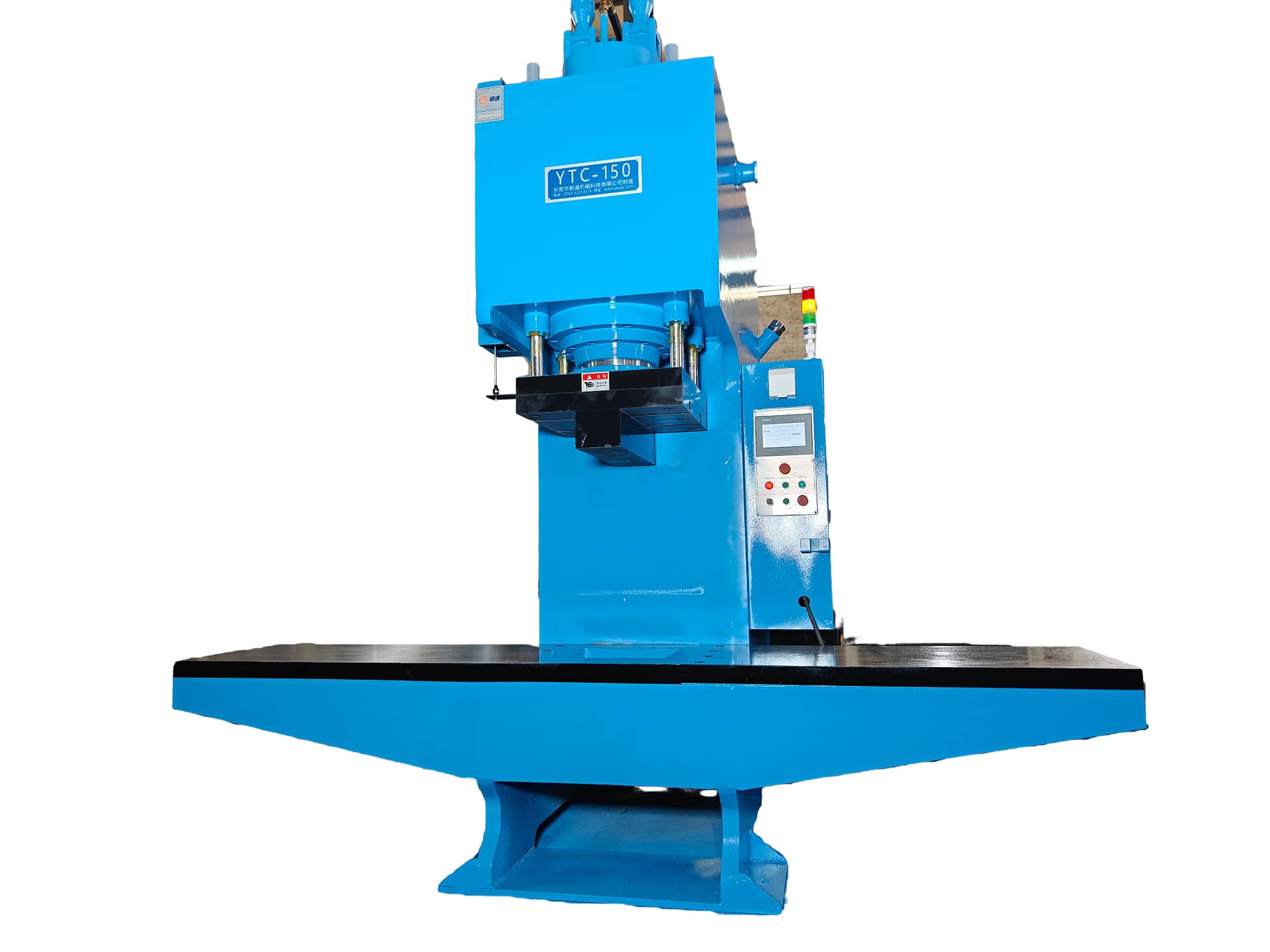
What Size Hydraulic Press For a Forging Shop?
time:2023-06-02 views:(点击 1,085 次)Blacksmiths have long used hammers to shape metal, but the hydraulic forging press offers them new possibilities. This book covers its basic operation, safety concerns and tooling needs as well as projects which can be completed using it.
A strong and long-lasting shop press designed with your needs in mind; this model boasts a capacity of 25 tons and allows users to switch dies during forging for faster setup times and automation purposes. Furthermore, this press is 100% American made.
Hydraulic Cylinder
Hydraulic cylinders are at the heart of every hydraulic system, responsible for applying unidirectional stroke force and can be used for lifting, jacking, pulling, pressing, holding and lowering operations. There are countless designs of hydraulic cylinders to meet specific applications or industries' needs and features such as wall thickness, material type and operating pressure can have significant effects on performance; for those exposed to harsh environments may require an added nitrocarburized surface treatment for greater corrosion protection.
Engineers take multiple factors into account when creating cylinders to ensure long-term performance, such as rod seal sensitivity. A hydraulic cylinder's rod seal can often be the most vulnerable component; it must withstand high levels of pressure variation and spikes without scraping or pitting, and should match its application's environment - for instance a cylinder operating in freezing temperatures requires seals that won't melt or crack over time.
Other elements that can influence the performance of a hydraulic cylinder include its stroke length and bearing loads on the piston rod, both of which will affect rod buckling strength and ultimately overall power envelope. Furthermore, operating temperature plays an integral part in hardness or softness of metal parts as well as integrity of sealing mechanisms.
Hydraulic Pump
Professional quality hydraulic presses can be formidable machines, but those of professional grade quality are designed for peak performance & longevity. Their hi-lo pump utilizes High Flow at Low Pressures when the cylinder extends or retracts but then switches over to Low Flow High-Pressure cycle when pressing forces increase substantially - with tonnage determined by your choice of ram bore size.
Drive input style is also crucial; most commonly this involves keyed or flanged drive plate input. Pumps may be powered by muscle power, air from a compressor, electrical current or even diesel or fuel engines acting as prime movers.
As with the other components of a forging press, its wheels and bearings must also be durable. Common materials used are stainless steel or aluminum that can withstand repeated pumping pressure; additionally they must also accommodate for the fluid used during this process - typically oils and chemicals like polyalkylene glycols, esters or butanol.
These systems can be quite complex, consisting of pumps, valves, a network of hoses and control lines as well as many control lines - each connected by pump or valve to an entire array of dies that must remain perfectly in their condition or else they can quickly stop functioning when unseasoned or cracked dies cause the entire system to stop with just the depressing of a safety door or limit switch.
Hydraulic Oil Tank
Forging metal requires immense pressure, but the press must also have the capacity to release this pressure when necessary. A hydraulic tank stores the oil that allows this to happen; its capacity should match that required by your system.
Welded steel tanks are frequently utilized for this purpose, as they are strong, durable, and easy to work with. Furthermore, stainless steel adds further corrosion resistance while offering exceptional weight-to-strength and density-to-strength ratios.
These tanks must be capable of dissipating heat that could compromise the performance of a hydraulic system, using diffusers or similar cooling mechanisms to distribute it more evenly throughout the hydraulic fluid reservoir. Furthermore, each tank should feature an oil return line filter for easier monitoring of oil levels.
Hydraulic tanks must also feature high-quality seals and hose fittings that can prevent leakage around their connections, or leaks may form around these points if maintenance and replacements are neglected. Leakage around these connections can degrade hydraulic oil quality and damage equipment as well as expose workers to injury risk; to minimize leakage issues it's recommended that regular checks of this system take place as well as having new oil pumped as required to replace old stock. To keep leakages at bay the hydraulic system should be regularly inspected with oil being replenished when needed to prevent these incidents happening - inspection should take place allowing oil changes as necessary - in order to minimize leakage issues arising around these connections.
Hydraulic Hoses
Hydraulic system hoses are essential components to its operation. They must contain fluids during transmission while also protecting them from outside contaminants, so hose failure could have dire repercussions for efficiency as well as damage to other components. Before assembly, each hose must be clean, prepped, lubed or greased and appropriately sized for its task at hand.
Ideal, your shop should include a dedicated hose station equipped with an electric-over-hydraulic crimping press featuring multiple dies for each size hose and an inventory of hose. Dial calipers, thread-pitch gauges and assembly lube may also come in handy.
Hoses typically fail when equipment they're attached to is under stress, such as exposure to temperatures that surpass their rating or coming into contact with vibratory components that significantly shorten their useful lifespan. Hoses may also be exposed to external abrasion and physical strain that reduce their lifespan, so monitoring for leaks regularly is the only sure way to know they'll outlive other stresses that threaten them. Any leaks discovered must be repaired promptly in order to protect equipment damage and worker injuries. Leaks in hydraulic systems may occur around fittings, hose abrasion or around ram areas. Overheating also degrades oil quality and leads to seal damage. A leaky hydraulic hose could prove disastrous for both your equipment and workers using it.
Hydraulic Valve
Forging presses are massive machines with enormous pressure that operate under extreme circumstances. Misuse could result in shattering, breakage or even injury to someone using it improperly - therefore their use should always be approached with extreme care and safety considerations taken into account.
This complete metal forging press kit designed to run on 240 Volt Single Phase features a 3.7Kw motor with hi-lo pump for maximum power in home shops and can produce up to 26 Tons of force.
The hydraulic system features both high and low pressure pumps working in concert to raise and lower the ram. They're powered by a large oil tank, which supplies its contents via multiple hoses to reach its target destination - usually the ram.
Control valves play an integral part in hydraulic systems and have several positions. Starting in neutral mode, which blocks both supply and return paths; when moved right or left it allows flow from one cylinder while blocking it from another; or set to high for higher pressure cycles when used during up-down movements of rams resulting in very high tonnage capacities with slower up/down speeds.
Safety Devices
Forging is an integral component of machine shops, yet requires considerable force to work metal. Thanks to advances in controls and automation, forging can now be done more efficiently, improving production, quality, and price. For instance, hydraulic presses now use servohydraulic technology that defines each forging cycle/stroke accurately within 0.01 inches forging precision.
Forged metals are more resilient and defect-free than machined parts due to their uninterrupted grain structure. Furthermore, forging increases strength and ductility. The process can be carried out using presses, furnaces or hammers; though presses tend to work best on larger projects. It is vitally important that proper ventilation be available when working with forges or gas forges as they release harmful toxic gas emissions which could adversely impact human health if inhaled for long periods.
Forging is used widely across industries including automotive, aerospace, agricultural equipment, oilfield equipment and tools and hardware production. It can be completed with open or closed dies to produce different shapes and sizes by compressing metals in forming dies; performed either using a forging press or drop forge and with either adjustable speeds or controlled releases to keep ram in contact with die for extended period of time than other forming methods.
Link to this article: https://www.ihydraulicpress.com/yn/3369.html
Hot Articles
-
Hydraulic Press Heated Plates
Hydraulic presses are mechanical tools that use compressed fluids to generate force. They’re often employed in the production of car component……
-
What Is a Hydraulic Press Used For in the Military?
Hydraulic presses use fluid pressure as their driving force. The most basic design involves two pistons of equal size connected by a tube filled wit……
-
Hydraulic Press Cylinder
Hydraulic presses are indispensable tools in many industries, helping operators fit, bend and assemble sheet metal parts, bearings and equipment. Pu……
-
What Do You Need to Use a Hydraulic Press?
Hydraulic presses produce massive amounts of force to assist facilities with fabrication and assembly processes. Hydraulic fluid (usually oil) tra……
-
Why Does Everyone Dislike Hydraulic Press Videos?
An introduction paragraph is an integral component of any essay, engaging readers to discover more of your argument while simultaneously establishin……
-
Where to Buy Hydraulic Press Juicer
Juicing can be time-consuming and messy. Your chute size and whether or not your ingredients need to be chopped, peeled or cored will determine the ……
-
What Is a Hydraulic Press Used For in the Printing Industry?
Hydraulic presses are machines used to apply pressure to a work piece. They’re useful tools for many purposes such as part production, metal f……
-
What is Meant by Hydraulic Press?
Hydraulic presses use hydraulic cylinders to transmit force and power, with control available via different pump types for creating more or less f……
Latest News
-
What Is a Hydraulic Press Capacity?
Hydraulic presses are an indispensable element of production and assembly processes, offering great versatility while helping minimize their footpri……
-
What is the Difference Between Hydraulic Press and Mechanical Press?
While each type of press provides unique benefits for businesses and jobs alike, ultimately choosing mechanical versus hydraulic presses comes dow……
-
What Gauge of Metal Works Best For Hydraulic Press Silver?
If this is your first experience pressing silver, you may be uncertain of what to expect. Metal thinner than 16 gauge often tears, krinkles or crimp……
-
What Is a Hydraulic Press Used For in the Oil and Gas Industry?
Hydraulic presses utilize liquid that moves under pressure to generate mechanical power. At its most basic, two cylinders with pistons on top of eac……
-
What Is a Hydraulic Press?
Hydraulic presses offer great versatility; they can be adjusted and customized to fit into any production or assembly operation seamlessly. Auto m……
-
What’s the Biggest Hydraulic Press As Far As Tonnage?
If you’re shopping for a hydraulic press, certain factors must be taken into account when making your selection. These include tonnage, cylind……
-
What Can Survive a Hydraulic Press?
Hydraulic presses are integral pieces of machinery used in various industries. While their many specialized and general uses make them useful tools,……
-
What is Stock in Hydraulic Press?
Hydraulic presses are powerful machines capable of exerting significant pressure on materials. Their main component, hydraulic fluid, generates and ……