










Hot Articles
-
What is the Difference Between a Hydraulic Press and a Pneumatic Press?
Hydraulic and pneumatic presses are widely used throughout the industrial world for a variety of purposes. They’re commonly found in repair, a……
-
Hydraulic Press Channel – What Broke The Hydraulic Press?
Lauri Vuohensilta and Anni run a family machining business, so their hydraulic press sees regular use. As evidenced in videos showing them crushin……
-
What Is a Hydraulic Press Used For in the Printing Industry?
Hydraulic presses are machines used to apply pressure to a work piece. They’re useful tools for many purposes such as part production, metal f……
-
What is a Hydraulic Press and Column Press?
Hydraulic presses are industrial tools that deform and shape materials by means of a fluid-filled cylinder. This cylinder connects to an engine unit……
-
What Is a Hydraulic Power Press?
Hydraulic presses are an invaluable machine for applying force to objects under intense strain. Based on Pascal’s principle, which states th……
-
What Is a Hydraulic Power Press?
Hydraulic presses are one of the most useful and versatile machines on the market today, utilizing hydraulic power to generate mechanical pressure t……
-
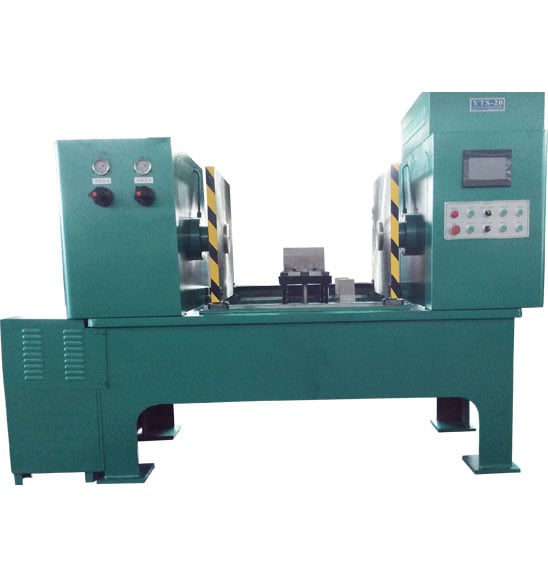
Hydraulic Press For Knife Making
Hydraulic Press For Knife Making Hydraulic presses are indispensable tools for many metalworking tasks. ,and the Hydraulic Press For Knife Making is……
-
Where to Buy Hydraulic Press Juicer
Juicing can be time-consuming and messy. Your chute size and whether or not your ingredients need to be chopped, peeled or cored will determine the ……
Why Doesn’t a Hydraulic Press Defy First Law of Thermodynamics?
time:2023-05-31 views:(点击 1,305 次)
Hydraulic presses are powerful machines that use hydraulic fluid to convert mechanical force. They feature an open frame structure with power systems designed to produce hydraulic pressure.
Machines used by factories to transform liquids into powders. Chocolate manufacturers make use of it to produce fat-free cocoa powder; cosmetic companies utilize the machine for creating face powders and tablets for medicinal use.
Pressure
Hydraulic presses are machines that utilize hydraulics to generate an immense amount of pressure. This is achieved by pumping oil into one cylinder of the machine and forcing it against an opposing cylinder using metal rams or pistons - this creates up to 20 times the force a user could apply manually; this force can then be used to crush or form material being pressed. Hydraulic presses have many industries where they're found; for instance, junkyards use them to crush cars while others utilize them in creating fat-free cocoa powder production or modern blacksmithing; powered either manually or automatically by control systems based on either manual or automatic control systems.
While hydraulic presses can generate high amounts of force, their use does not violate the law of conservation of energy. Instead, this machine evenly disburses this force throughout its cylinder without incurring any energy losses - thanks to Pascal's law which states that the pressure increases proportionately with each area where force has been exerted on it.
Fluid mechanics is at the core of why hydraulic presses are so effective. When an operator pushes down on the Plunger, equal pressure is exerted on both sides of the cylinder which then spreads throughout and causes it to rise; raising its Ram as a result crushes whatever material comes between its surfaces.
An additional important feature of hydraulic presses is their low noise output. This feature is especially advantageous in industrial settings where excessive noise levels may lead to stress and mental issues that lower productivity, and also help protect workers from accidents or injuries caused by loud machinery.
Hydraulic presses are significantly cheaper than other forms of machinery for forming materials, due to omitting costly gears, brake systems and motors which add complexity and increase costs of the machine. Furthermore, no vibrations occur with this method which could damage other parts of equipment and increase wear-and-tear costs.
Temperature
A hydraulic press is an extraordinary machine that utilizes liquid to generate massive amounts of force, making it perfect for many industrial applications. This force is transferred directly to the material being pressed via pistons connected to a master cylinder and works on Pascal's theory for pressure on liquids which dictates equal amounts of force are exerted at every point within its system - making hydraulic presses suitable for metalworking, crushing objects and many more applications.
The press itself is powered by hydraulic fluid that flows from a pump through multiple cylinders. These cylinders vary in diameter, creating compressive forces which drive anvils and dies. Furthermore, the master cylinder fills up with hydraulic fluid, creating high levels of pressure which are then applied by means of the ram connected to these cylinders to the workpiece with leverage levers used to increase or decrease it as desired.
Though both the ram and master cylinders are filled with hydraulic fluid, this does not violate the first law of thermodynamics; thermal energy that causes expansion of fluid is offset by pressure applied to the ram. This same principle also explains how leverage works - more energy must be expended to move its long end than short end; yet this still conserves overall energy resources.
Hydraulic presses can be used to crush and shape materials such as metal, plastic, stone, concrete and wood. Furthermore, they are versatile enough to form products, test their strength/tensile properties as well as prepare samples for chemical analysis. Utilising such presses to crush and shape metal can increase manufacturing efficiency by decreasing cycle times while improving part quality.
Hydraulic presses have many applications for production of powdered materials. Food manufacturers utilize hydraulic presses to turn liquid chocolate into fat-free cocoa powder; pharmaceutical companies use hydraulic presses for pill preparation; while also using them to test the tensile properties of set concrete and adjust its formula accordingly.
Volume
A hydraulic press is a machine used for compressing and deforming metals using Pascal's principle to generate mechanical force via liquid transference. This machine has applications in manufacturing, construction and automotive sectors as well as plastic and composite formation applications.
The hydraulic press operates using an interconnected network of pipelines and cylinders to transfer pressure and force. Powered by a pump that pushes oil into one of its cylinders, generating pressure that pushes against a smaller piston within its system and generates force that transfers to a larger piston that ultimately exerts force against whatever material being worked upon.
Note that hydraulic presses do not violate the law of conservation of energy. This is due to their use requiring more energy when moving over long distances than for short ones, as force exerted is proportional to velocity squared (force divided by time).
One of the main advantages of hydraulic presses is their ability to deliver large amounts of force quickly and consistently, which enables parts to be formed more rapidly, leading to reduced energy waste and faster throughput. Furthermore, their versatile nature means they can transfer force in any direction without losing pressure, making them perfect for working on thin or flat materials.
Hydraulic presses are versatile machines used for various purposes, eliminating the need for complex gears and braking systems that add complexity, costs and reduce efficiency. Their simple design reduces costs by cutting out unnecessary expenses like gear changes. Their ability to produce smooth force production makes them ideal for high precision work while setting them to operate within specific load capacity settings prevents overworking the equipment thereby saving money by prolonging its lifespan.
Mass
Hydraulic presses use hydraulics to produce enormous mechanical forces for use in various industrial applications, making them one of the most flexible and adaptive machines available today. Utilizing high-pressure hydraulics, this machine creates energy which can be used to deform and form materials such as metal and raw materials for manufacturing or other mechanical purposes.
This machine uses Pascal's Law to apply force and compress materials. Comprised of two cylinders - with one carrying the plunger - both filled with hydraulic fluid, an operator can control how much pressure is being applied by using their plunger.
As soon as the plunger is pushed down, hydraulic fluid between the ram and plunger begins pushing against material to shape it in its desired shape. You can control pressure applied by both parts at any one time so as to only apply specific amounts of force at any one time.
Hydraulic presses can create precision parts and assemblies quickly. Their versatility means they can adapt to meet the demands of any production or assembly task with a quick change to die, pressure or stroke speed - the hydraulic system can also be programmed for noiseless operation.
One reason why hydraulic presses don't violate the first law of thermodynamics is that energy doesn't remain constant - rather it is transformed from one form into another, such as turning into heat in friction between cylinder and material - to mechanical energy by means of hydraulic press.
The machine does not convert thermal energy to other forms, since it is an internal closed system which extracts it from a long-lived source and transfers it elsewhere for consumption. This differs from perpetual motion machines which rely solely on solar energy to produce work without ever running out of energy - which physicists don't consider to be perpetual motion machines.
Link to this article: https://www.ihydraulicpress.com/yn/3299.html
Hot Articles
-
What is Inside Hydraulic Presses?
A hydraulic press is a highly-versatile piece of equipment, used across numerous industrial settings from scrap baling to configuring metal into p……
-
Hydraulic Presses in the Aerospace Industry
Hydraulic presses are widely used to fabricate products such as airplane body panels and wings. In the automotive industry, they’re employed f……
-
What Is a Hydraulic Press Used For in the Medical Industry?
Hydraulic presses are used to shape materials into desired shapes. They’re commonly used in medical, dental and pharmaceutical fields. Hydraul……
-
What is the Principle Demonstrated by a Hydraulic Press?
Hydraulic presses are pieces of industrial machinery that use hydraulic cylinders to produce massive compressive force, often used in manufacturin……
-
What Is a Hydraulic Power Press?
Hydraulic presses are an invaluable machine for applying force to objects under intense strain. Based on Pascal’s principle, which states th……
-
What is the Difference Between a Hydraulic Press and a Forging Press?
What is the difference between a hydraulic press and a forging press? Forging presses provide pressure to shape metal into desired shapes with eithe……
-
What Kind of Gauge Does a Hydraulic Press Have?
Pascal’s Law allows a hydraulic press to produce incredible forces, making it ideal for metalworking, manufacturing and automotive application……
-
The Hydraulic Press
A hydraulic press is a machine that utilizes the pressure generated in a fluid to compress, laminate or cut metals. This principle relies on Pascal&……
Latest News
-
Hydraulic Press Channel Becomes YouTube Star
This Finnish factory owner has quickly amassed an international following thanks to videos showing him crushing various objects with his hydraulic p……
-
Where to Buy Hydraulic Press Juicer
Juicing can be time-consuming and messy. Your chute size and whether or not your ingredients need to be chopped, peeled or cored will determine the ……
-
What is the Biggest Hydraulic Press in the World?
Hydraulic presses are machine tools that use static pressure to process materials such as metal, wood, plastic and powdered products. They’r……
-
What is a Press Brake Machine?
Press brake machines can bend metal in two ways: bottom bending and air bending. Both methods are highly accurate but require specific tools in or……
-
Why Are Hydraulic Presses So Strong?
Hydraulic presses are machines used to exert intense pressure on objects, with applications including metalworking, plastics and composites manufact……
-
Hydraulic Presses
A hydraulic press uses an oil-filled cylinder to apply compressive force on a moving piston. This force is proportional to the amount of pressure ap……
-
Who Invented the Hydraulic Press For Cocoa Processing?
Cocoa processing is an integral component of chocolate manufacturing. From powder to bar production, this involves various steps involving multipl……
-
What Happens When You Put Adamantium in a Hydraulic Press?
Marvel fans are familiar with Wolverine’s claws being coated in indestructible metal alloy adamantium – but is this really the strongest……