













Hot Articles
-
How to Shim a Hydraulic Press Flat Sheet
Shimming refers to adding weight under certain sections of a bottom die to raise it during bending, an error-prone trial-and-error process. Hydrau……
-
How to Make a Powerful Hydraulic Press
Hydraulic presses are powerful machines capable of exerting huge forces. Used for metal sheet forming processes like stamping, punching and cuttin……
-
Can Diamond Be Broken by Hydraulic Press?
Diamonds are an incredibly hard mineral, often used in engagement and wedding rings due to their strength. However, diamonds are not indestructible.……
-
How to Assemble a Harbor Freight 20 Ton Hydraulic Press
Important Safety Information: Please be aware that this shop press is heavy and should only be mounted onto solid surfaces. Before beginning assem……
-
How to Release Hydraulic Press
Hydraulic presses play an essential role in fabrication and assembly, shaping metal components and installing bearings. To ensure consistent opera……
-
Hydraulic Presses – What Hydraulic Press is Used For
Hydraulic presses are used for a variety of applications. They come in all shapes and sizes, so you can find the right one for your needs. They can ……
-
Fidget Spinners Assembled With a Hydraulic Press
Three-inch twirling gadgets that have taken over schools and offices have quickly become the latest craze toy craze. Stores can’t keep enoug……
-
How to Use a Hydraulic Press Effectively
Hydraulic presses have many applications in various industries. This blog post will explain how they function and provide tips for effective usage o……
How to Use a Hydraulic Press Brake
time:2023-05-22 views:(点击 973 次)
Hydraulic press brakes are an invaluable asset in any metal fabrication shop, yet many experienced metal workers fail to properly comprehend how this machine operates.
To maximize their use of a press brake, users should understand its fundamentals as well as how to read drawings and understand basic capacity charts.
Getting Started
At first, it is important to familiarize yourself with the capabilities of your press brake. A press brake capacity chart may be available online that provides options such as steel thickness and v-die opening size - these charts will assist in calculating an appropriate tonnage for your job so as not to use too little or too much force and damage the machine.
Next, it is necessary to decide on an acceptable bending method and tooling. Engineering professionals can learn much by visiting the shop floor and speaking to press brake operators about what they should expect from the machine. They could even collect information on punches and dies so they can design parts around what the press brake can accomplish.
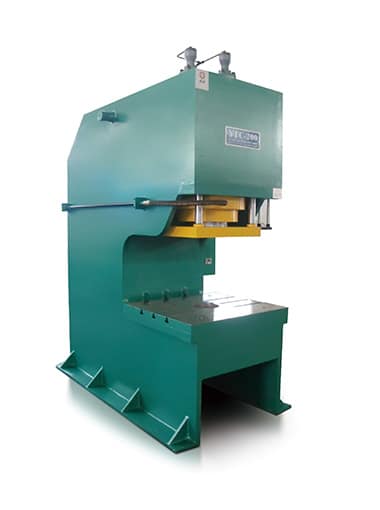
Press brakes are constructed using a C-shaped frame with left and right upright plates attached to a worktable (or bed), as well as an uprightly moving vertical ram constructed of whole steel plate that connects to hydraulic piston rods for power supply on either side of hydraulic oil cylinders on each axis.
Setting the Tooling
Prior to using a press brake, its tooling must first be assembled. This step can be time-consuming and costly if improper setup procedures are utilized; good setup procedures can make a big difference here.
By using tools with identical height specifications, it can reduce the time taken to set them up between jobs - saving precious billable hours that would have otherwise been spent waiting on a technician to arrive and fix your machine before getting it running again.
Hydraulic press brakes are C-shaped structures with vertical plates on either side, a worktable (bed), and connecting supports, each fitted with hydraulic cylinders on both sides to control its ram part used to bend metal. Springback monitoring tools may also be included as springback is the tendency for bent material to return back to its original straight shape after being bent by punch.
Loading the Material
No one can produce the ideal press brake bend, but an experienced fabricator can come close. To achieve success, avoid short cuts and follow a series of steps carefully that involve checking, adjusting, and rechecking both the machine, its tooling, and material being bent.
Understanding the required bending force is also crucial when undertaking any job, with higher tonnages being optimal for thicker metals while lower ones work best with thinner materials. If unsure, mechanical crowning systems can assist by automatically determining how much tonnage should be added or retrofitted onto existing machines.
Hydraulic press brakes come in manual or automated varieties and come in sizes that range from 50 tons to 300 tons. Electric models have become popular as an efficient way of cutting maintenance costs while helping the environment by using less hydraulic oil for their operation. Even so, regular inspections and weekly cleaning should still be included as part of a good press brake maintenance regimen.
Keeping the Machine Clean
Press brake operators must regularly clean touch screen controls, back gauges and other surfaces used during their shift to avoid operational errors resulting from hand oil and grease build-up on them; this may affect safety lasers that must be free from dust or debris in order to operate effectively.
An important practice when operating a press brake is cleaning its ram rod surface regularly in order to remove dirt or debris that might damage seals, potentially leading to oil leakage. Furthermore, its electrical cabinet should also be thoroughly inspected regularly in order to ensure airflow remains unobstructed and that its emergency stop button works efficiently.
Finally, an operator should double-check that their machine is level and secured before tightening all bolts on it. A service technician should also be brought in annually for more thorough examination of mechanical and hydraulic circuits not easily accessible by operators.
Link to this article: https://www.ihydraulicpress.com/mk/3083.html
Hot Articles
-
How to Install Pressure Gauge on Hydraulic Press
Pressure gauges are an invaluable asset when troubleshooting fluid power structures; their narrow range enables accurate readings that will reveal……
-
How Many PSI Can a Hydraulic Press Put Out?
Hydraulic presses can produce massive forces, making them suitable for a range of industrial applications. Their hydraulic pump uses pressured oil ……
-
How to Build a 20 Ton Hydraulic Press
Hydraulic presses are one of the premier tools for metal shaping and deformation, due to their immense force and versatility that allow it to meet……
-
How Much Force Is Applied to a Hydraulic Press?
Hydraulic presses use a straightforward process to generate force. Pressure generated within an enclosed fluid space multiplies with the ratio bet……
-
Hydraulic Press for Aluminum Can Recycling
For aluminum can recycling businesses, hydraulic presses are essential equipment. This machine allows you to efficiently process waste aluminum cans……
-
How to Calculate Tonnage of Hydraulic Press Machine
If you’re shopping for a hydraulic press machine, it is vital that you understand its force capacity. Tonnage needs will vary depending on t……
-
How Does a Hydraulic Press Crush an Anvil?
A hydraulic press is a machine that utilizes Pascal’s laws to generate high mechanical pressure, which then transfers onto an anvil and crus……
-
How to Build a Hydraulic Rosin Press
Rosin is a solvent-less concentrate that can be produced at home with relatively basic equipment. Many producers opt to build their own hydraulic ……
Latest News
-
How to Make a Mini Hydraulic Press Machine
A hydraulic press can produce considerable force with minimal power consumption. This machine works by connecting two interlinked cylinders that c……
-
How to Make Hydraulic Press
A hydraulic press is a machine that produces pressure by using liquid as its medium. It was invented by Joseph Bramah in 1795. Hydraulic presses are……
-
Hydraulic Press for Small Parts Assembly
Hydraulic presses are ideal for small parts assembly. Due to their few moving components, they’re cost-effective to purchase, operate, and tro……
-
How to Make a Hydraulic Press With Syringes
Hydraulic presses can be utilized in numerous production and assembly processes, saving space while offering accurate force management. As part of……
-
Hydraulic Press For Molding
Hydraulic presses for molding are commonly employed to manufacture parts for medical, military, and automotive industries. With the press, SMC mater……
-
How Does the Hydraulic Press Work?
Hydraulic presses are employed for a variety of tasks. Auto manufacturers rely on them to manufacture body panels and brake pads. They’re also……
-
How Strong is a Hydraulic Press?
A hydraulic press is a machine that efficiently produces force using Pascal’s law as its foundation. Hydraulic presses are widely employed in ……
-
Hydraulic Press Applications
The hydraulic press is a device that compresses materials by exerting pressure on fluid in a chamber. It operates under Pascal’s law, which st……