












Hot Articles
-
Hydraulic Press for Laboratory Testing
If you’re in the industry and need to test and analyze material samples, hydraulic presses can be a great asset. Not only do they exert consid……
-
How Do Hydraulic Presses Help With Building?
Hydraulic presses can bring many advantages to any workshop. Their straightforward design makes them simpler to maintain than mechanical presses, ……
-
Can Coal Be Made Into Diamonds With a Hydraulic Press?
Hydraulic Press Channel on YouTube is well known for their series of videos in which various objects are subject to pressure from hydraulic presse……
-
How Hydraulic Press Works
A hydraulic press is a machine that uses liquid pressure to apply force on things, usually through two metal cylinders with hydraulic fluid contai……
-
What is Three a Billion Ton Hydraulic Press?
Hydraulic presses are large-scale metal fabrication tools that rely on Pascal’s principle: pressure in closed systems is constant. This enab……
-
How to Calculate Tonnage of Hydraulic Press Machine
If you’re shopping for a hydraulic press machine, it is vital that you understand its force capacity. Tonnage needs will vary depending on t……
-
How to Fix a Hydraulic Press
Hydraulic presses are essential tools in many industries. From car makers to heating, ventilating and air conditioning firms, presses play an integr……
-
How to Use a Disc Cutter on a Hydraulic Press
People frequently utilize hydraulic presses for making jewelry and crafts, while auto manufacturers also employ them for shaping and assembling ca……
Hydraulic Press for Small Parts Assembly
time:2023-03-08 views:(点击 1,046 次)Hydraulic presses are ideal for small parts assembly. Due to their few moving components, they're cost-effective to purchase, operate, and troubleshoot compared to other machines.
The press works by exerting pressure between two double-acting cylinders and a plunger, which is then transferred onto the larger cylinder and ram, pressing material into shape.
Cost
Hydraulic presses are an integral part of manufacturing operations. They shape and configure machine components from wiper blades to gear housings with ease.
A hydraulic press works by forcing hydraulic fluid into a small double-acting cylinder and pushing it through another, creating pressure.
The press then applies this pressure to an anvil, baseplate or die which deforms the material to create the desired product. With thousands of tons of force at its disposal, this machine can exert incredible influence.
Costs for hydraulic presses differ based on the size and type. Generally speaking, smaller presses are more cost-effective than larger ones.
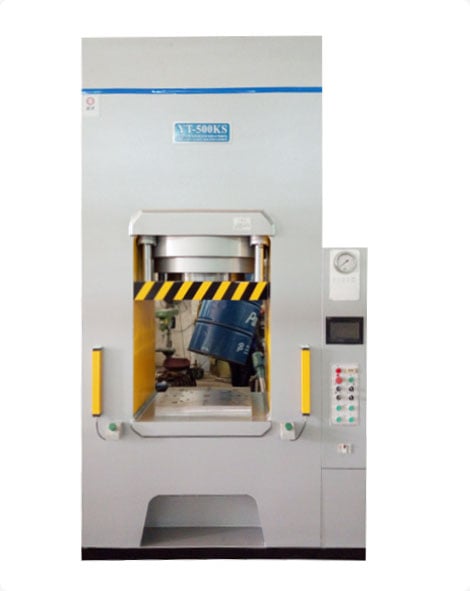
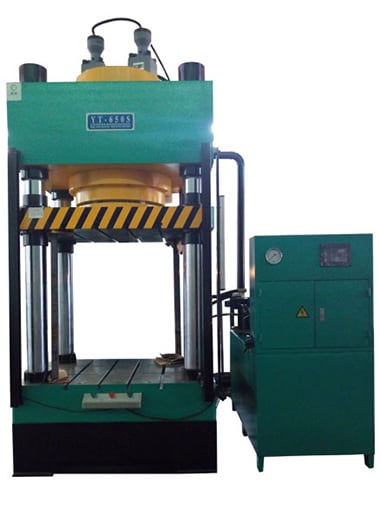
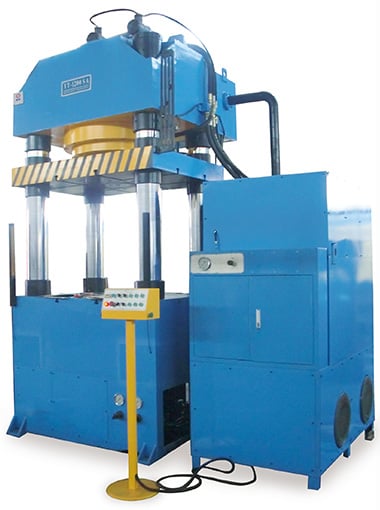
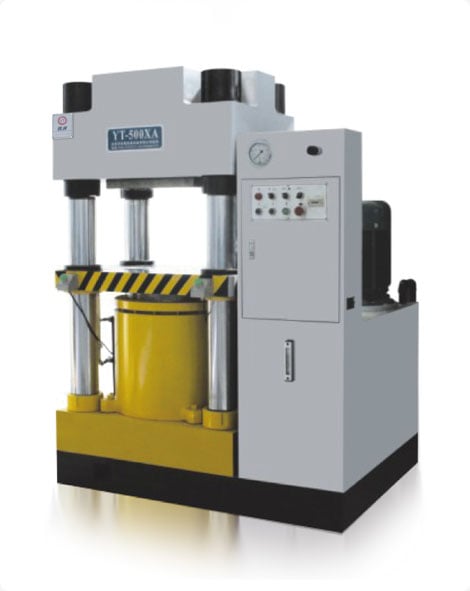
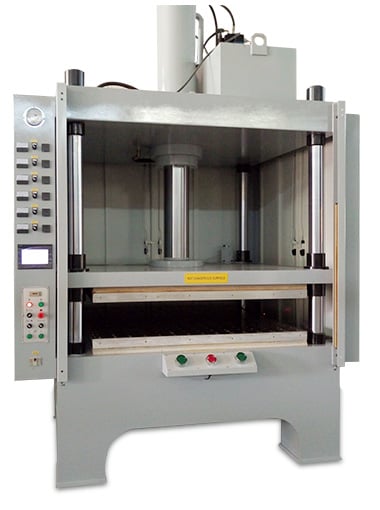
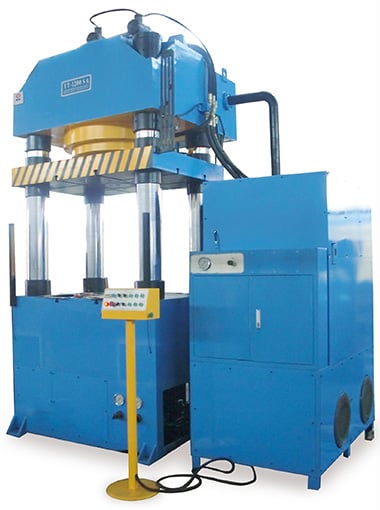
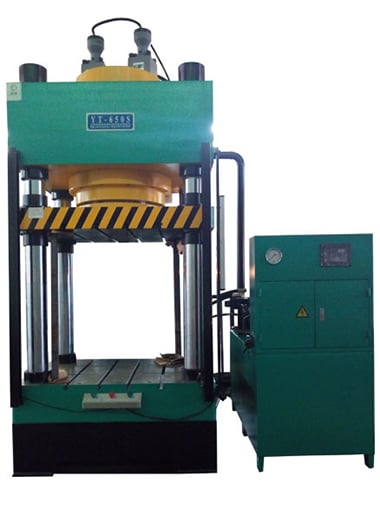
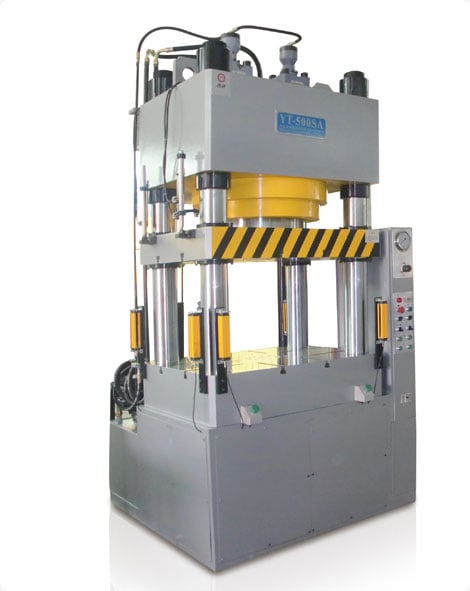
A four column hydraulic press is an ideal tooling and die cutting solution. It also has the capacity to stamp, deep draw and other forming processes.
Precision
The hydraulic press utilizes liquid pressure to form parts. This forming process is commonly employed in industries such as fire extinguishers, oil cans, fan housings and aerospace duct-work.
These presses are an economical choice for manufacturers as they need less upkeep, parts and power than other industrial processes. Furthermore, they're user-friendly to operate and can be tailored according to application needs.
A quality press should also provide various quality monitoring options, such as load cells, linear transducers and external part sensing. This helps guarantee high levels of consistency from part to part.
Depending on your location, industry or specialty, there may be various safety standards that must be abided by for the press to run safely. These may include OSHA or ANSI guidelines.
Safety
Hydraulic presses are massive machines used to compress, cut or punch, drill, straighten and mold objects through pressure. They're commonly found in automotive manufacturing plants as well as other industries that demand the capacity to create large components with heavyweights.
A hydraulic press can be tailored to meet the demands of many operations, such as production and assembly of small parts. By altering key parameters like pressure, stroke speed or process position, users are able to reorient the machine from producing large, massive items to producing precise miniature ones.
Safety is of the utmost importance in machine manufacturing. Workers must adhere to proper practices and equipment safeguards, such as anti-tiedown devices, machine guarding and electronic safety devices. These measures ensure everyone stays protected from any unexpected circumstances like human error or machine malfunctioning.
Maintenance
Hydraulic presses are essential pieces of machinery in machine shops. They compress parts and separate them into smaller components, as well as separate rusted and bent components.
However, a hydraulic press is not infallible and requires regular maintenance to extend its lifespan and function properly. Common issues include oil leaks, strange noises and loss of pressure.
To prevent these issues, inspect seals and hoses regularly. Make sure they're tight, and clean the fluids in the hydraulic system to avoid damage or accumulation of dirt.
Be sure to inspect the body of a hydraulic press for cracks that could cause it to malfunction or stop working altogether. Pay special attention to any unusual noises or vibrations when using the press; these could indicate an even more serious issue. Doing this ahead of time can save money in the long run by avoiding expensive repairs down the line.
Link to this article: https://www.ihydraulicpress.com/mk/1351.html
Hot Articles
-
How Expensive Are Hydraulic Presses?
Hydraulic presses are powerful machines that use hydraulic fluid to produce force. Their many benefits include low operating costs and maximum upt……
-
Hydraulic Press for Turbine Repair
A hydraulic press can be the ideal solution for many turbine repair jobs due to its straightforward mechanical operation and cost-effective setup ti……
-
What is Hydraulic Press in Physics?
Hydraulic presses are machines that utilize pressure to compress material. They’re commonly employed for forging, clinching, stamping and blan……
-
Can You Crush a Diamond With a Hydraulic Press?
Diamonds may be one of the hardest materials on Earth, yet they can still be broken by even standard hammers if hit hard enough. The Hydraulic Pre……
-
Can You Make a Diamond With a Hydraulic Press?
Diamonds may be one of the hardest natural materials on Earth, but that doesn’t make them indestructible. Diamonds can be damaged through vari……
-
What Can Beat a Hydraulic Press?
Processing materials requires the use of a hydraulic press, an incredibly powerful tool. Hydraulic presses use Pascal’s law to generate high f……
-
Hydraulic Press for Car Dismantling
If you are working on your car yourself or own an auto repair shop, a hydraulic press can make the job much simpler. They are great for straightenin……
-
Hydraulic Press for Generator Repair
Hydraulic presses are versatile machines that help compress materials such as metal, plastic and concrete. Hydraulic presses can also be utilized fo……
Latest News
-
Hydraulic Press Applications
The hydraulic press is a device that compresses materials by exerting pressure on fluid in a chamber. It operates under Pascal’s law, which st……
-
How to Make a Hydraulic Press at Home
Hydraulic presses are machines that utilize a cylinder to generate high levels of force. They’re commonly employed for metal forming and bendi……
-
Hydraulic Press for Olive Oil Extraction
To begin the production of olive oil, the first step involves grinding olives with a stone mill. This paste then gets spread onto woven mats –……
-
How to Build a 20 Tons Hydraulic Press
A 20 tons hydraulic press is an invaluable asset to metalwork projects requiring plenty of power. You can mold, bend and stamp metals with its pow……
-
Hydraulic Press For Can Crushing
Hydraulic presses are essential pieces of industrial equipment. They’re often employed to crush metal objects, thin glass and even produce pow……
-
How Hydraulic Press Works
A hydraulic press is a machine that uses liquid pressure to apply force on things, usually through two metal cylinders with hydraulic fluid contai……
-
Hydraulic Press For Glass
Hydraulic presses are mechanical devices that utilize compressed fluid to generate force. They’re commonly found in workshops and factories, w……
-
How to Make an Air Over Hydraulic Press
An air over hydraulic press combines the force of a full hydraulic system with compressed air for more cost effective and energy efficient results……