











Hot Articles
-
How to Make a Hydraulic Press Model
Hydraulic presses use fluid pressure to compress, assemble, draw, punch and stamp materials for various applications. They rely on Pascal’s ……
-
Hydraulic Press Channel – How Much Money Does Lauri Vuohensilta Make on YouTube Crushing Things?
Hydraulic presses are essential tools in manufacturing businesses, used to break apart clocks, fruit, golf balls and much more. Lauri Vuohensilta ……
-
Hydraulic Press Channel – How Much Does the Hydraulic Press You Tube Channel Make?
The Hydraulic Press Channel on YouTube publishes videos showing various objects being crushed using hydraulic presses. Established by Finnish fact……
-
Hydraulic Press Channel – How Much Money Does the Hydraulic Press Channel Make?
YouTube channel dedicated to crushing things with hydraulic presses has gained millions of views since being created by Finnish factory owner Laur……
-
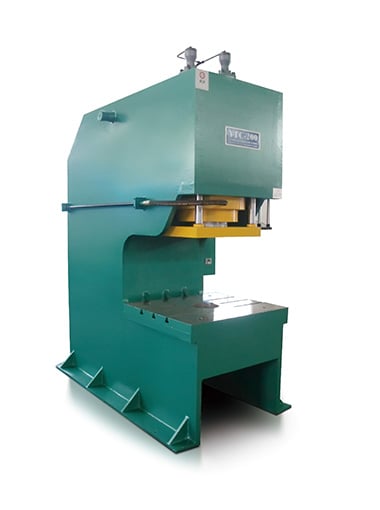
Boost Your Manufacturing Processes with C Frame Hydraulic Presses: A Complete Overview
Image Source: Pexels As a manufacturing professional, you may be on the lookout for ways to improve your produ……
-
How to Make a Tabletop Hydraulic Press
Hydraulic presses are highly effective tools for bending, forming, flagging and stamping metal parts. In addition, they can compress organic waste s……
-
How to Make a Homemade Hydraulic Press Out of a Jack
Making your own hydraulic press from an old jack can save considerable money. Its effectiveness depends on an accurate unit diagram and quality co……
-
How to Make a Mini Hydraulic Press Machine
Hydraulic presses are great tools for exerting massive forces onto something, using Pascal’s law and transferring fluid pressure from a smalle……
How to Make Manual Hydraulic Press
time:2023-11-02 views:(点击 1,207 次)When a hammer simply isn't enough, this 10-ton hydraulic press provides all of the force you need. Easy to use and reliable results every time are guaranteed with this versatile machine.
Hydraulic presses utilize an oil-filled hydraulic cylinder to generate pressure on a piston, then apply this force directly to workpieces.
Frame
Manual hydraulic presses require strong frames in order to function effectively, as the jack will press against them from both directions at once and pull them from below. Furthermore, high pressure requires steel construction which is both hard and durable - alternatively a bolt together model can also be created but its strength may not match.
In most instances, frames consist of an I-beam that has been cut to size for use as the base of mounting, with metal pieces cut and cut out as sides for further welding together - with all joints needing to be absolutely even and square at every vertice for optimal results.
Once the frame is assembled, it is important to create the movable platform which will accommodate the working cylinder. This should be made from either channel or professional pipe with a center piece welded in place specifically to hold up jack rod heads; steel strips must then be cut according to platform width for guides.
To create the guide, you will first need to drill holes into both top and bottom plates that are large enough for a threaded stock to pass through easily. For optimal results, its length should correspond with that of an extended hydraulic ram's height; washers and nuts should then be secured at either end.
Bed
The bed of a manual hydraulic press is where a jack with pressing component is housed. This component compresses workpieces or already turned parts to conform to specific dimensions or shapes, based on which tasks it was intended for; design of its bed depends on this factor as its main requirement should be high deformation resistance.
Steel cane height-adjusting clamps are designed to meet the height needs of mobile platforms, including those on wheels. Welded to each guide rail on either side and secured by bolts welded directly into its base, their height depends on workpiece thickness, jack rod height and base height - and should ensure safe working conditions.
Bed is any flat surface on which someone can lie, such as a mattress, couch or other piece of furniture. Additionally, "bed" may refer to a type of printing press where text forms are laid in final stage production of newspapers, magazines or books - or even just the bed where curry is served!
Start from the foot of your bed, selecting one corner as your starting point, and pull the sheet draping from this corner up toward the mattress at an acute 45-degree angle (it should look like a triangle). Tuck the lower drape underneath your mattress before bringing over your top sheet to cover it completely. Repeat these steps on all corners for added depth by pulling each taught and straight. Adding pillows further enhances these hospital corners!
Platform
When traditional mallets or hammers simply aren't sufficient, a manual hydraulic press can make short work of marking leather and other materials. Utilizing hydraulic pressure, this handy device crushes plastics, metals and wood quickly with ease - with adjustable settings providing exactly the amount of force required.
Manual hydraulic presses are pieces of machinery that utilize a hand-operated pump to supply hydraulic oil to a piston, which then slowly rises up as an application of force against materials being crushed. The amount of hydraulic oil consumed depends on both piston diameter and the amount used - the more oil consumed, the more force that will be generated by this press.
One of the key advantages of a manual hydraulic press is its ability to be operated without mechanical parts, making it more cost-efficient and cost-effective than other forms of equipment. Furthermore, its maintenance and repair costs are far lower.
Manual hydraulic presses offer more than efficient operations; they're also known to produce superior-quality parts and components. This is because their design eliminates many of the factors that cause defects, like vibration. Therefore, this device makes an ideal choice for manufacturing various industrial and medical devices.
XRF Scientific provides a selection of pressing equipment, such as a manual hydraulic press that is suitable for preparing KBr samples for XRF analysis. Designed for portability with minimal physical effort needed from its operators, the manual hydraulic press is ideal for low force applications that do not demand precision and repeatability.
Jack
Hydraulic presses are powerful tools for performing various tasks in your workshop, yet purchasing one can be prohibitively expensive. Instead, build your own manual hydraulic press from scrap metal. To create one effectively you will require a steel frame, plate to place workpieces upon and jack to generate force; all must be of high-quality construction for safe use; any malfunction could lead to serious injuries.
Hydraulic presses are widely utilized in laboratories to test materials' strength and durability. Additionally, they're frequently utilized during manufacturing processes such as forging, clinching, moulding, and deep drawing. Being manually operated makes these hydraulic presses safer to use than their mechanical counterparts - they can even be modified for various applications requiring precise control and repeatability!
Hydraulic presses differ from mechanical presses in that their forces don't diminish over time, enabling them to compress metal at its full potential. Furthermore, these devices take up only half as much space. In order to create your own home-made hydraulic press you will first need to cut all necessary metal parts; after welding these together into a movable platform ensure it aligns with guide rails for added safety.
To use a hydraulic press, it requires pumping hydraulic oil into its cylinder before placing your workpiece onto its movable platform. After placement, turn the leadscrew to apply pressure before finally releasing it once you are happy with its results.
Leadscrew
A leadscrew is the mechanism that raises the upper die in a press, comprising three main components: its shaft, threads and nut. Many lead screws are coated with engineered composite materials to improve their coefficient of friction while decreasing thermal and chemical resistance and protecting them against harsh environments - thus eliminating the need for lubrication and increasing screw lifespan - with polytetrafluoroethylene (PTFE), polyether ether ketone (PEEK) or Torlon being amongst the more commonly used coatings.
Thread profile and helix angle of a lead screw are important determinants of its performance. Helix angle determines how much force can be applied to surfaces while profile dictates friction generated as well as speed of torque application. Furthermore, number of starts and pitch have an impactful role to play - threads with more starts tend to be more efficient but require higher amounts of torque for driving purposes.
Instead of following a straight geometry like bolt threads do, lead screw threads are formed using cold forming as opposed to thread whirling for strength and durability. Cold forming produces stronger and more durable threads while still offering smooth surfaces for gripping purposes.
To use a leadscrew, first place the workpiece in a press and adjust its height until it reaches its proper place. Next, use the handle to pump hydraulic oil into a jack cylinder that raises piston by pumping hydraulic oil via hand pump cylinder which raises it upward. When your load reaches desired levels, release valve back down for return of piston back to original position, repeat process until your desired force level has been achieved.
Link to this article: https://www.ihydraulicpress.com/nsn/5325.html
Hot Articles
-
How to Make a Hydraulic Press With Syringes
Hydraulic presses are formidable machines capable of exerting massive forces. They’re ideal for industrial use in metalworking – bendi……
-
How to Make an Air Over Hydraulic Press
Air over hydraulic presses offer an energy-efficient and quieter alternative to full hydraulic presses, and are easier to maintain with fewer part……
-
How to Make a Hydraulic Press for Knife Making
Hydraulic presses are essential tools for many blacksmiths. They allow them to shape patterned-welded steel billets into eye-catching damascus bla……
-
How to Make a Hydraulic Heat Press Machine
Machine presses use hydraulic pressure to reshape wood or metal work-pieces using automated through-feed systems. Heavy, industrial-sized hydrauli……
-
How to Make an Air Over Hydraulic Press
Air over hydraulic presses offer an energy-saving alternative to traditional hydraulic press systems, making them an invaluable asset for metalwor……
-
How Much Pressure Is in a Hydraulic Press?
Hydraulic presses produce immense force, making them the ideal solution for numerous industrial uses. But before using one yourself, it’s cruc……
-
How to Make Electric Hydraulic Presses
Electric hydraulic presses offer all of the power and versatility of traditional mechanical press machines for much less money, saving on both gas……
-
How to Make Hydraulic Press Substitute
On YouTube, hydraulic presses can often be seen crushing items. These powerful machines feature various force capabilities for assembly, deep drawin……
Latest News
-
How to Make Hydraulic Press Substitute
Have you ever watched a hydraulic press deform something with extreme force? These machines are incredible but may prove costly for smaller manufa……
-
How to Make a Simple Hydraulic Press
Hydraulic presses are widely utilized tools that employ extreme amounts of pressure over an extended period or in quick succession, and are widely……
-
How to Make Hydraulic Press Substitute
Have you seen hydraulic presses crushing metal on YouTube? Such machines can cost an arm and a leg! An alternative option would be a hydropneumatic ……
-
How to Make a Bottle Cap Hydraulic Press
Be it homemade beer brewing or home brew brewing, bottle caps will be necessary to secure your beverages. A capping machine can help speed up this……
-
How to Make a Hydraulic Press
Hydraulic presses are versatile tools with many potential uses. Consisting of two cylinders – a smaller slave cylinder and larger master cyl……
-
How to Make a Tabletop Hydraulic Press
Hydraulic presses are machines that transmit pressure using hydraulic fluid. They’re often used to compress organic waste into briquettes that……
-
Hydraulic Press YouTube Channel
Lauri Vuohensilta never imagined his Hydraulic Press Channel would become such a hit – yet it did! When he launched it in October 2015, Laur……
-
How to Make a Hydraulic Press With Syringes
Hydraulic presses can be used in numerous applications to quickly bind materials or bend metal parts. With their ability to generate immense force……