











Hot Articles
-
How to Make a Hydraulic Press Juicer
Hydraulic juicers provide the easiest, most nutritious solution to cold-pressed juice production. Crushing your produce thoroughly before applying t……
-
How to Make a Hydraulic Tincture Press
Tinctures are an effective and straightforward way to store and administer herbal extracts. Their creation can take minimal time, while lasting an……
-
How to Make Rosin With a Hydraulic Press
Rosin extraction processes have an enormous effect on the quality of concentrate produced. An efficient extraction requires expertise in managing te……
-
How Much Does a Hydraulic Press Cost?
Hydraulic presses utilize Pascal’s Law to generate force from exerting pressure on confined fluid. It’s an efficient method that can b……
-
How to Make a Hydraulic Bearing Press
Hydraulic bearing presses are indispensable tools in workshops and garages. With their ability to exert considerable pressure, these presses can str……
-
How Much Does a Hydraulic Press Weigh?
Hydraulic presses are machines that utilize static pressure to shape metal and other materials into shape using various manufacturing processes su……
-
How to Make a Hydraulic Press Machine
Hydraulic presses can be invaluable tools for crushing large, heavy objects. Constructed to withstand high pressure levels, this tool can be utilize……
-
How to Make Electric Hydraulic Press Machines
Hydraulic presses use fluid pressure to compress, assemble, punch, draw, trim, stamp, shape and crush materials more precisely than traditional mech……
How to Make a Hydraulic Press Brake
time:2023-08-27 views:(点击 1,178 次)Press brakes are essential machinery in metal fabrication, with their tonnage and bending length determining how much sheet metal they can bend. There are various kinds of press brakes on the market; each offers unique benefits.
Hydraulic press brakes offer superior motion control and are not susceptible to thermal fluctuations like traditional mechanical machines do. Their hydraulic system comprises several components, such as the control panel and back gauge.
Hydraulic system
Hydraulic press brakes are machines used to bend metal using hydraulic power, with models available ranging in sizes and power levels from small to large and can be found used for various operations ranging from stamping to forming. Furthermore, their vibration-free designs make them suitable for applications such as forming and stamping and they can be operated either manually or computer controlled; furthermore they can even be adjusted for different bending angles.
Press brake hydraulic systems consist of two pistons submerged in an incompressible fluid such as oil. When pressure (P1) is applied on one piston, it is evenly transferred across to both others allowing this hydraulic press brake to produce high force with relatively lower power requirements.
Hydraulic systems consist of several key components, including the hydraulic pump, control valves and actuators. Each component needs connections that contain and direct hydraulic fluid without leakage or loss of pressure; typically these connections consist of rigid tubing or flexible hoses with ports sized according to how much of it will flow through them.
Hydraulic systems serve a critical function, transferring force between cylinders. Furthermore, these systems control ram position and bend angle adjustment - as well as their maintenance needs - ensuring a safe machine experience for users. Proper maintenance will help avoid damage or injury during use. It's crucial that a good hydraulic system be selected and properly maintained so as to prevent potential accidents during operation.
Selecting the proper material is paramount for completing any task, as various materials have different strengths, ductilities and load capacities. Always read up on manufacturer guidelines when selecting materials as well as any bending requirements that pertain to your workpiece.
For optimal product quality, it's advisable to wear safety glasses and gloves while working with a hydraulic press brake. Furthermore, keep a tidy workspace, regularly inspect your press brake for wear-and-tear signs, follow all operating instructions, and do not bypass any safety features.
Hydraulic cylinder
Hydraulic cylinders are at the core of every press brake. Their purpose is to transmit force onto sheet metal and bend it into shape. Their design determines how much pressure can be exerted on material as well as which types can be bent. In addition, hydraulic cylinders control oil flow rates: faster flow rates can speed up operations while slower flows lower risk to hydraulic systems.
There are various kinds of hydraulic cylinders, but the most widely-used type is double-action cylinders, which consist of two piston rods that extend and retract simultaneously, providing four times greater linear force than their single-action counterparts while lifting up to 12,000 pounds with ease. They come with various stroke lengths for increased performance while some models even allow customization according to specific system needs.
Other cylinders are specially-made for various tasks, including pulling, pressing and holding. Some can even rotate in place allowing for greater bend ability than is possible with single cylinders alone. Your choice will depend on both application and environment - for instance nitrocarburized surface treatments can offer improved corrosion protection making them suitable for harsh environments.
Ram cylinders are specialized hydraulic cylinders designed specifically to push instead of pull, often used in high-pressure applications or positioned centrally within systems to minimize vibration. They have larger cross sections than their regular counterparts and should always be placed centered in order to minimize vibration.
Ram cylinders may also feature sensors to track the position of the piston within its tube, providing feedback to a controller who then adjusts its movement accordingly. This feature helps reduce cycle times and enhance accuracy, as well as lessening damage risks to both piston and hydraulic system.
Hydraulic pump
Hydraulic pumps are at the core of every hydraulic press brake, providing power that drives its ram to perform folding and bending sheet metal operations, such as folding or bending sheet metal to perform folding/bending operations, controlling workpiece pressure, as well as helping control it. Each type of hydraulic pump offers different advantages and disadvantages. When selecting one for yourself, pay particular attention to its torque rating - higher torque means more power in your hydraulic system! You can calculate required torque by comparing similar tasks done on other machines or models that perform similar tasks by comparing similar models or models which perform similar tasks in terms of torque rating when selecting.
Hydraulic pumps work on the principle that force can be multiplied by piston area. A simple circuit showing this effect includes one piston five times larger than another; this allows it to produce 50lbs of force with only half of its stroke, dissipating any surplus energy as heat.
Hydraulic motors are electric motors that utilise hydraulic systems to deliver power. This type of electric motor is more energy-efficient and resistant to stress than its counterparts; additionally, wear-and-tear is less likely to affect its operation; making the hydraulic motor an ideal choice for many different applications such as clearing tanks of waste material, loading/unloading cargo containers or providing power to equipment.
Fixe-displacement pumps are another popular type of hydraulic pump, operating at constant speed and providing full power regardless of load demands. Although this form wastes energy, an additional circuit must be implemented to prevent excess pressure buildup by returning high-pressure fluid back to the tank when reaching its relief setting.
Variable displacement models of inline hydraulic pumps feature a swashplate which moves within a movable yoke, changing its angle as you adjust its location to increase or decrease piston displacement based on various controls such as reaction rings for eccentricity regulation or servo valves that regulate pressure.
Fixed-displacement hydraulic pumps offer numerous advantages. Not only can they easily adapt to changing demand, they can be configured to run at variable speeds for increased energy efficiency. Furthermore, discharge sensors allow manufacturers to measure and track discharge pressure levels for improved forecasting capabilities and potential mechanical failures.
Control panel
Hydraulic press brake control panels allow users to easily manage machine settings and monitor bending operations, with features including error message system and digital display showing current bending position, forming angle, error messages, etc. Their user-friendly interface makes operation and maintenance of this machine straightforward.
Press brakes are an indispensable component of metal fabrication, used to bend and shape metal sheets into various structures or products. As this machine requires knowledge of different materials and bending angles to operate optimally, its maintenance must also be conducted effectively for peak performance and to avoid costly repairs that lead to production line downtime and lost income. A poorly maintained or malfunctioning press brake could potentially damage its equipment leading to costly repairs and production line disruptions.
Mechanical, hydraulic and electric press brakes can all be found on the market today, each type boasting its own set of advantages and uses. Mechanical press brakes utilize a flywheel to gain energy for driving the ram powered by a motor; they tend to be cheaper than their hydraulic counterparts but lack precision, force control and precise measurements.
Hydraulic press brakes offer high levels of automation, making them an attractive option for many manufacturers. Their reliability exceeds that of mechanical presses, as they can bend thicker metals more reliably while simultaneously accommodating multiple angles without repeating the bending process each time around.
Utilizing hydraulic power from a piston, hydraulic press brakes create significant amounts of force to fold metal, providing higher tensile strength and better workpiece quality. Furthermore, this allows a wider variety of shapes to be created using just one set of punch and die - eliminating additional trials while cutting costs significantly.
Hydraulic press brakes are an ideal addition to any small workshop, as they offer flexibility and accuracy in performing a range of tasks with ease and accuracy. From sheet metal bending and heavier bar stock bending for brackets and similar projects to hydraulic servo control enabling two cylinder synchronization and an international standard grating ruler system providing full closed-loop control, hydraulic press brakes are an invaluable addition.
Link to this article: https://www.ihydraulicpress.com/nsn/4358.html
Hot Articles
-
How to Make a Powerful Hydraulic Press With Syringes
Have you seen those videos on YouTube where hydraulic presses crush sponges, rubber bands and crayons with hydraulic pressure? Lauri Vuohensilta run……
-
How to Make Your Own Hydraulic Brake Press
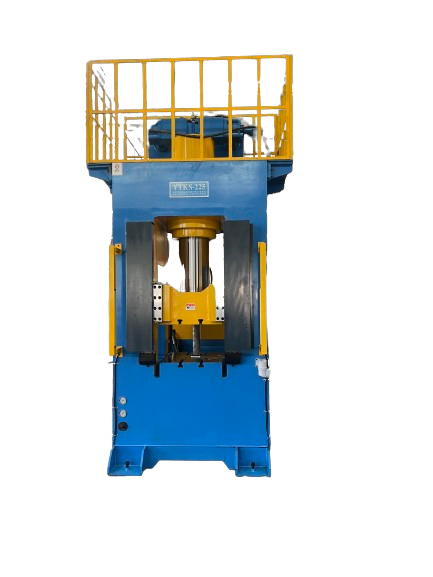
Hydraulic press brakes rely on a complex hydraulic system to achieve up and down movements of their ram during bending processes, by pumping oil th……
-
How to Make Small Hydraulic Press at Home
Every garage master knows that having access to a press can be invaluable when repairing bearings, silent blocks or simply packing more compactly. W……
-
How to Make a Mini Hydraulic Press Machine
Hydraulic press machines use static pressure generated by pistons within cylinders filled with hydraulic fluid to exert mechanical force on differ……
-
How Can Make a Small Hydraulic Hot Press?
Hydraulic presses can be invaluable tools for both home and shop repairs, offering significant cost savings over traditional tools. Small presses ma……
-
How to Make a Small Hydraulic Hash Press
Pressing plant products through a hydraulic rosin press produces higher quality extractions with more consistent results, but purchasing one comme……
-
How to Make a Mini Hydraulic Press Machine
An hydraulic press can be an invaluable asset to any master who works from home. Building one yourself may take more time than renting or buying one……
-
How Can Make a Small Hydraulic Hot Press?
Hydraulic presses offer powerful force that cannot be rivaled by other material shaping techniques. Hydraulic presses come in all shapes and sizes……
Latest News
-
Who Makes Black Widow Hydraulic Press?
A black widow hydraulic press is a machine that utilizes fluid pressure to generate force, used primarily to compress and shape materials as well ……
-
How to Make Hydraulic Presses
Hydraulic presses are powerful tools designed to crush objects. Anyone with basic knowledge of hydraulic engineering can create one. Hydraulic pre……
-
How to Make a Hydraulic Press Juicer
Hydraulic press juicers are two-step machines designed to crush and press raw produce for juice extraction, and are popular among wellness enthusias……
-
How to Make a Knife Using a Hydraulic Press
Hydraulic presses are powerful machines that offer tremendous value to both independent knifemakers and large manufacturers alike. From crushing o……
-
How to Make a Hydraulic Press for Forging
Hydraulic presses play an integral part in many manufacturing and production processes, used to shape, form, and fabricate various machine parts. ……
-
How to Make a Hydraulic Press
Hydraulic presses are multipurpose pieces of equipment that can be used for many different tasks. Constructing one at home using standard parts is s……
-
How to Make Almond Oil With Hydraulic Press
Almond oil is an organic alternative to vegetable oils, providing essential lipid support for skin barrier function and repair. Rich in linoleic a……
-
How to Make a Hydraulic Press for Knife Making
The Press is an extra heavy duty hydraulic device used for creating eye catching damascus steel knives. Built like a tank, its super heavy duty hy……