










Hot Articles
-
Advantages of Hydraulic Press Automation Systems
Are you searching for ways to increase production speeds, cut maintenance expenses or enhance machine efficiency? Hydraulic press automation systems……
-
The Advantages of Hydraulic Press Automation Systems
Hydraulic presses are essential tools in many industries that require precise control and accuracy. Unfortunately, the failure of a hydraulic pres……
-
Common Hydraulic Press Problems
Hydraulic presses are powerful machines in any fabrication shop. Without regular inspection and upkeep, these machines may experience various malf……
-
How to Integrate Hydraulic Press Automation Systems Into Assembly Systems
As presses become more deeply embedded into larger assembly systems, it is becoming increasingly essential to collaborate with an automation speci……
-
How to Maintain Hydraulic Press Tooling
Hydraulic presses are powerful tools that compress material and shape it into the desired form. They have many uses, from forging metal swords to ……
-
Advantages of Using Hydraulic Presses in Manufacturing and Industrial Applications
Hydraulic presses in manufacturing and industrial settings offer numerous advantages. They’re versatile, efficient, and secure – ideal……
-
Common Hydraulic Press Failures
Hydraulic presses can be particularly vulnerable to failure. Not only can it damage the machine, but it may also injure workers. Fortunately, ther……
-
Industrial Hydraulic Press
Hydraulic presses are essential mechanical devices in many industries for fabricating, shaping or compressing materials. They use synthetic, water……
How Can a Hydraulic Press Be Used For Wheel Bearing Recycling?
time:2023-06-07 views:(点击 2,241 次)Hydraulic presses use hydraulic pumps to produce immense force using Pascal's Law, and use this force to form metal or push against objects against it.
Replacement of a Gen 1 wheel bearing (also called cartridge-style bearing) can be one of the more challenging tasks in automotive repair, requiring you to dislodge and secure its hub from its spindle before supporting its inner race with a large socket or metal drift.
Hydraulic Presses
Hydraulic presses are essential pieces of equipment in many industries. Their various uses range from straightening, bending and forming metal components to testing quality control measures and maintenance tasks - perfect for shops, factories and repair buildings alike! Available with manual hydraulics as well as air and electric options they come in an assortment of sizes and capacities that cover various sizes and capacities for maximum versatility.
Hydraulic presses use a plunger to exert pressure on a fluid in a chamber, then the force created from this pressure is transferred through an arm to a master cylinder for application to pressing plates underneath it. Pascal's theory of pressure in liquids states that when pressure is applied to liquid, its force can travel unimpeded through incompressible medium and be transferred elsewhere - this principle underlies all hydraulic press designs.
Hydraulic presses typically consist of multiple cylinders which generate compressive force that drives the plunger. As larger cylinders generate greater compressive force, more force can be applied to objects being compressed under the ram. Each cylinder connects with an inlet/outlet valve enabling its operator to alter how much pressure is being applied to materials being pressed.
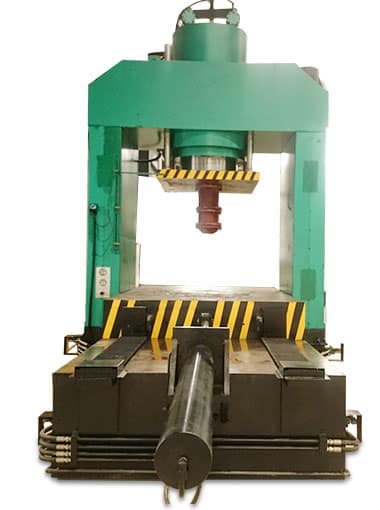
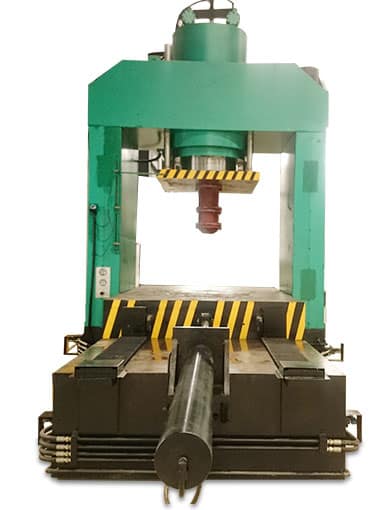
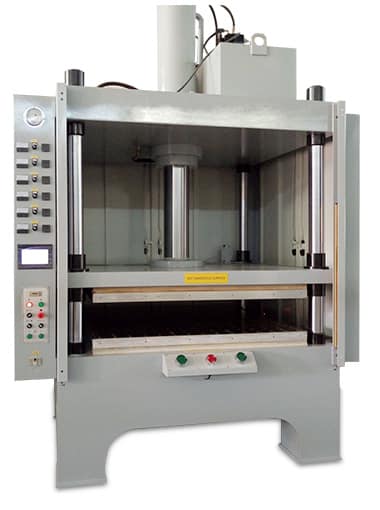
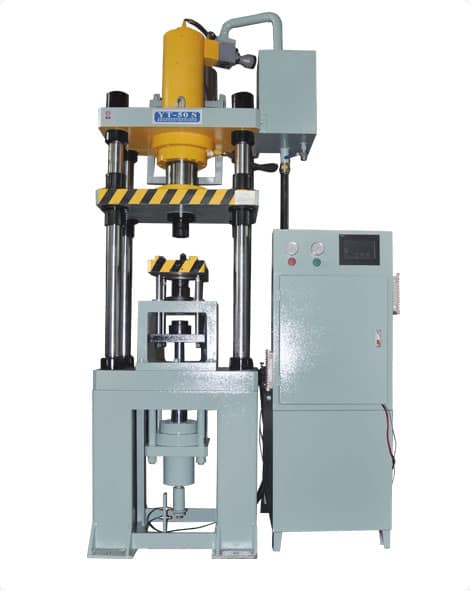
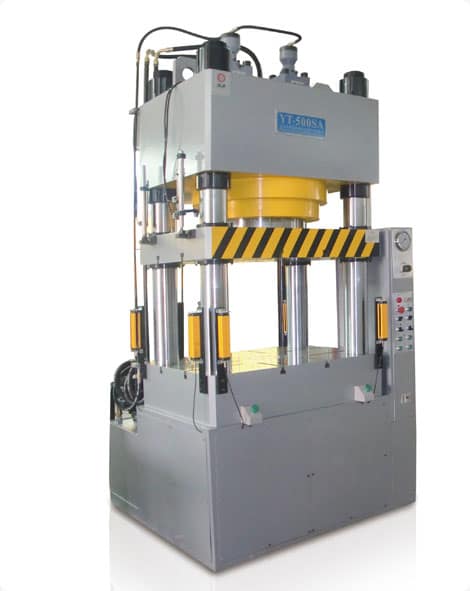
H frame hydraulic presses are one of the most frequently used hydraulic presses, featuring an H shaped frame and press cylinder. They're often found in shops, repair buildings and production assembly lines, offering high capacities, speeds and precision levels of performance.
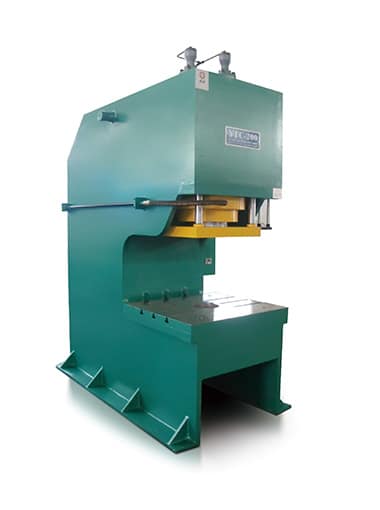
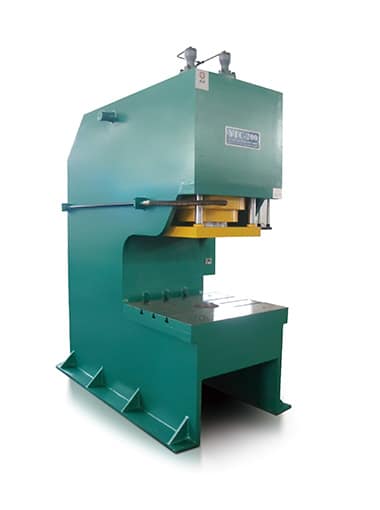
C-frame and X-frame hydraulic presses offer another type of press solution, featuring one column and offering less capacity than H frames. Commonly found in smaller shops such as auto mechanics' garages, these presses are easy to navigate and possess an intuitive design, making them suitable for operations with limited floor space.
Many of us are familiar with watching videos showing everyday objects like sticky notes and plastic toys being crushed in a hydraulic press, but you may not realize this equipment also serves important industrial uses, including fixing wheel bearings on cars and trucks.
Agriculture
A hydraulic press is an industrial machine that utilizes hydraulic cylinders to generate massive compressive force, making them extremely versatile machines used across numerous industries. Hydraulic presses can be found anywhere from junkyard car crushing systems and creating fat-free cocoa powder production, to modern blacksmithing. You'll even find them used in construction industry fabrication of refrigerator parts and dishwasher components fabrication; aerospace engineering; automotive manufacturing; ceramics food processing & pulp and paper industries as well as aerospace engineering!
Hydraulic presses are generally quite straightforward devices. Their basic construction comprises two interconnected cylinders - with one larger than the other filled with hydraulic fluid - connected by hydraulic lines and linked together by pistons. When activated by pump power, a pressure gauge measures out tons of force applied against any material placed between it and die; when this pressure builds up sufficiently enough, cylinders extend, compressing them against whatever object may have been put there between it and die and forceful crushing by the hydraulic power from pump.
Hydraulic presses are built with great durability in mind, and their manufacturers carefully select materials for them. As they will be subjected to incredible amounts of force, manufacturers utilize stainless steel parts which are strong, durable and corrosion resistant as well as high quality welded frames designed specifically to handle hydraulic systems pressures.
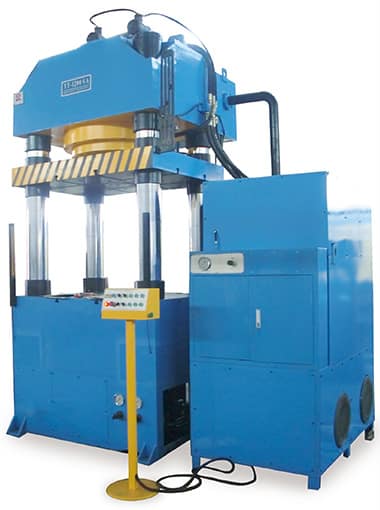
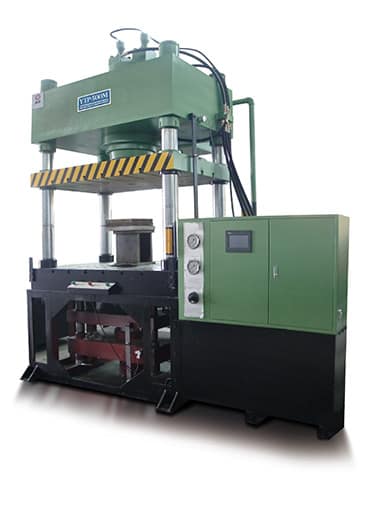
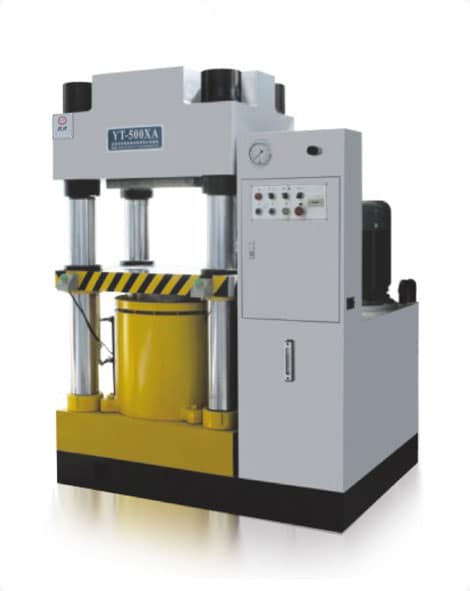
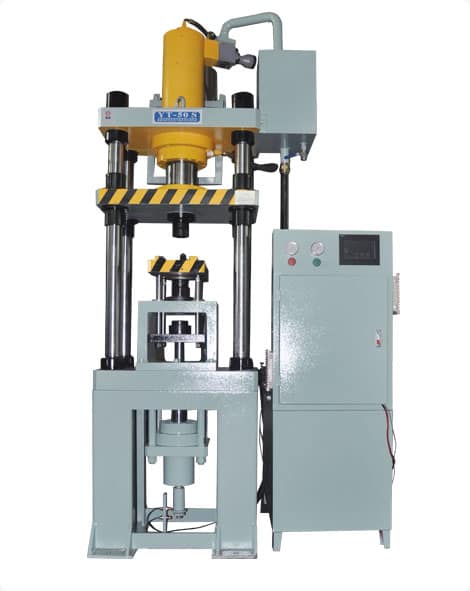
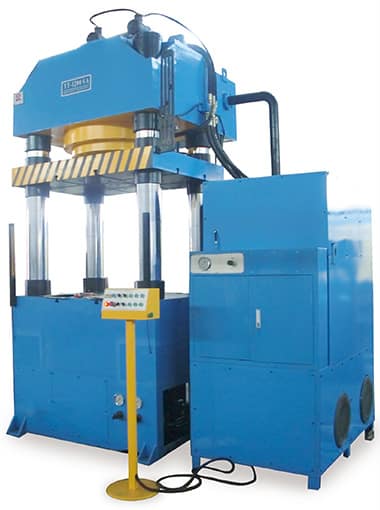
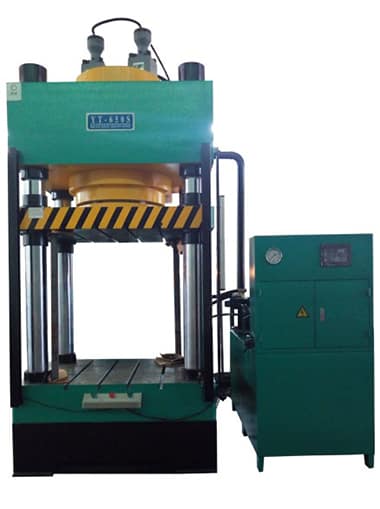
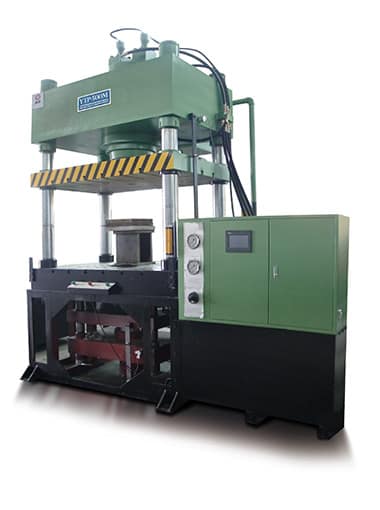
There are various kinds of hydraulic presses, from H-frame hydraulic presses and four-post presses to gib-guided presses that specialize in handling large forces without losing precision, with features varying depending on which press you purchase and its intended application. Gib-guided presses may offer superior features.
Hydraulic press machines are great solutions for many different applications because of their quick setup time and user-friendliness, including being quiet without producing loud noises like other machinery may do. Furthermore, these presses are easy to maintain and repair by being disassembled and cleaned frequently - providing safety to workers by not producing as much vibration or shock when operating them.
Food Industry
Hydraulic presses are machines that use hydraulic systems to generate compressive force. They operate under Pascal's Law, which states that exerting force upon liquid causes a force in another area that's equal to the ratio between their areas involved. Hydraulic presses consist of two interconnected cylinders filled with hydraulic fluid; the larger cylinder, known as the Master Cylinder, connects directly with one of these smaller ones called Plungers which connect via pipe. When the plunger is pushed down by an external source, it forces hydraulic fluid through its pipe into the Master Cylinder and creates pressure which is then utilized by Ram to press down on whatever may be in between it and Plunger.
Food industry companies make extensive use of hydraulic presses for various reasons, including food formation and press. Furthermore, it can form metal components and produce products like hammers and punches.
Farmers often utilize hydraulic presses to repair their equipment. For instance, they use them to separate rusted parts and straighten bent ones, as well as crush unneeded materials.
Hydraulic presses are often employed by manufacturers of concrete to test its strength. Manufacturers will often employ this tool prior to using set concrete in construction projects in order to assess whether any surprises arise when building with it, and to ensure that their final product will be strong enough for its intended purpose.
Blacksmiths can also use hydraulic presses as more efficient means of their craft than using manual hammering alone, since their hydraulic cylinder can strike steel repeatedly with equal power without exerting too much physical strain from themselves - this allows them to produce complex works more quickly while saving both time and energy in their labors. Furthermore, hydraulic presses enable blacksmiths to press metal into shape without the need to heat it up first in a forge.
Recycling
If you plan to recycle your wheel bearings, be sure to take the necessary steps in removing them from the hub assembly properly. This will ensure that any new bearing is installed without any problems with lateral runout or seal contamination, ensuring proper pressing in for proper seating of its new bearing. During removal make sure all seals and inner races remain free from contamination as part of this process.
An effective snap bore gauge allows you to rotate the bearing in its bore and observe any distortion, which could lead to premature bearing failure. Furthermore, check all surfaces contacting the inner race such as flanges or surfaces coming into contact with it - any damage or corrosion could prevent proper seating of the bearing and affect pre-load.
To press out a failed bearing, use a metal drift or large socket which fits tightly over its outer race. Next, pump up your hydraulic jack to force the bearing from its spindle; when complete, you should hear an audible "pop".
As soon as a failure occurs, it is vitally important to inspect both hub and spindle for signs of damage or cracks. Furthermore, new wheel bearings should be tested to make sure that they fit securely within their hub assembly, matching inner and outer races to ensure an identical setup.
When an outer race is improperly installed, it can alter the air gap between itself and a wheel speed sensor resulting in irregular or lost signal codes. To avoid this happening, it is recommended that using either a wheel bearing puller or hydraulic press to seat it properly.
Hydraulic presses come in an assortment of sizes and types to meet the needs of individual businesses and industries, such as machining or food processing. Operating one is straightforward, providing maximum pressure with minimum energy use - an advantage over mechanical alternatives that has been demonstrated through decades of use.
Link to this article: https://www.ihydraulicpress.com/ht/3592.html
Hot Articles
-
Maintenance Requirements For Hydraulic Presses
Hydraulic presses are essential tools of the trade in any machine shop, but they require regular upkeep to stay productive. Doing so can result in y……
-
What Are the Different Types of Hydraulic Press?
Hydraulic presses come in a range of styles and applications to suit different needs. Knowing this information helps you select the correct press ……
-
Disadvantages of Hydraulic Press Automation Systems
Hydraulic press automation systems are an invaluable asset to stamping manufacturers. They make it simpler and faster to produce parts with higher q……
-
Hydraulic Presses – What Are the Different Types of Hydraulic Presses?
Hydraulic presses are heavy-duty manual or semi-automatic machines used for various jobs. They feature an open frame, moving slabs, and exposed ge……
-
What Are the Different Types of Hydraulic Presses?
Hydraulic presses are machines that utilize fluid pressure to shape or form objects. Hydraulic presses are commonly employed in metal forming and ……
-
Hydraulic Press Automation System Problems
When it comes to hydraulic press automation systems, there are a variety of issues that may arise. Some are straightforward fixes while others req……
-
How to Find Hydraulic Press Tooling Repair Services
Hydraulic presses are vital pieces of machinery in many manufacturing facilities. They assist operators in fitting, bending and assembling sheet m……
-
Hydraulic Press Tooling Repair Cost
Operators of hydraulic presses must always double-check their tooling, particularly its back gauge and stop finger accuracy, for quality assurance p……
Latest News
-
Can Diamond Be Broken by Hydraulic Press Under Extreme Pressure?
Diamonds are well-known as one of the hardest materials found naturally. But this doesn’t make them indestructible – one bad blow at an ……
-
What Is a Small Hydraulic Press?
A small hydraulic press is an efficient tool that uses pressure to compact powdered materials. It has many uses, such as scrap baling and ceramics m……
-
Hydraulic Press Automation Benefits For Manufacturing
Hydraulic press automation is an innovative, adaptable form-finishing solution that offers numerous advantages to manufacturing companies. From incr……
-
Safety Procedures For Using a Hydraulic Press
When working with hydraulic presses, there are some essential safety protocols that all employees should abide by. These include knowing the machi……
-
Can a Nokia 3310 Break a Hydraulic Press?
Popularity of phones often depends on how well they pass or fail the “bend test.” The Nokia 3310 stands out as being one of the most rob……
-
Advantages of Hydraulic Press Tooling
Hydraulic press tooling enables users to perform an array of operations. These include cutting, bending, forming, drawing, punching, coining and p……
-
When to Rebuild, Retrofit Or Replace a Hydraulic Press
When deciding whether to rebuild, retrofit or replace an old hydraulic press, there are many factors to take into account such as your budget and ……
-
Advantages of Using a Deep Drawing Hydraulic Press
Advantages of Using a Deep Drawing Hydraulic Press A deep drawing hydraulic press is an incredibly versatile forming machine used for producing meta……