










Hot Articles
-
How Does a Hydraulic Press Brake Stay Synchronized?
Metals are malleable, making them suitable for shaping into various forms. Press brakes use hydraulic cylinders to regulate force on their ram and……
-
How to Release Hydraulic Press
Hydraulic presses play an essential role in fabrication and assembly, shaping metal components and installing bearings. To ensure consistent opera……
-
How Are Hydraulic Presses So Strong?
A hydraulic press is a machine that uses liquids to create pressure. This pressure is then used to shape and compress materials. The pressure of the……
-
How Does a Hydraulic Press Crush an Anvil?
A hydraulic press is a machine that utilizes Pascal’s laws to generate high mechanical pressure, which then transfers onto an anvil and crus……
-
How to Build a Hydraulic Press
Many manufacturing processes use hydraulic presses to form or fabricate materials. Jeremy Neil from Macrodyne Technologies; Josh Dixon from Beckwo……
-
How to Build a Hydraulic Press Machine
Hydraulic presses are powerful tools for crushing and shaping metal. Their straightforward design makes maintenance simple. Furthermore, you can c……
-
Why Hydraulic Presses Exert So Much Power
Hydraulic presses use hydraulic fluid to transmit force from a small piston into a larger cylinder, using Pascal’s law, which states that an……
-
Hydraulic Press For Pipeline Repair
Hydraulic presses are machines that utilize the static pressure of a liquid to generate compressive force. They can be employed for structuring, dis……
How Can Make a Small Hydraulic Hot Press Machine?
time:2023-05-11 views:(点击 1,092 次)
Hydraulic hot press machines employ a pump and an accumulator to supply high-pressure working fluid. Their drive system is simple in structure, and their pressure can easily adjust according to work required force, thus decreasing power consumption.
These machines are commonly employed in manufacturing, agriculture and construction industries to perform operations such as forging, clinching, moulding, drawing, punching and metal forming.
Hydraulic Pump
From tabletop models to massive hydraulic presses delivering hundreds of tons of pressure, there is a hydraulic press machine designed for every metalworking process imaginable. Manufacturers offer custom designed hydraulic presses with many options for material design, load limits and configuration to meet every application imaginable.
Hydraulic presses operate more quietly than mechanical presses, which may produce excessive noise pollution. This feature can be invaluable for businesses that must abide by government noise regulations or address employee health and safety concerns.
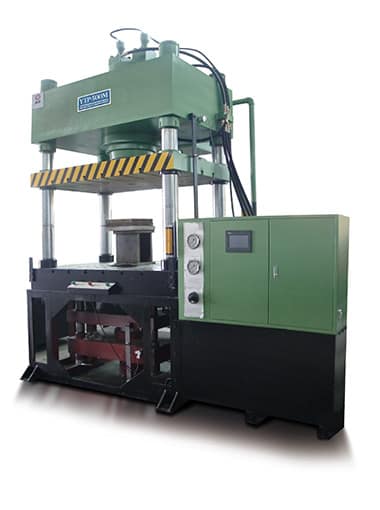
Hydraulic press machines come in many varieties, yet most rely on a straightforward system for power delivery. This typically consists of a master cylinder, small cylinders filled with hydraulic fluid and pistons moving within them - each filled by its own separate hydraulic pump that continuously pumps fluid into an accumulator, ready for release when the ram needs to move.
Cylinder
The second element of a hydraulic press is its cylinder. Comprised of two pistons within a small chamber filled with hydraulic fluid, its plunger exerts pressure against it to generate force that's then applied by its master cylinder to press down on work pieces using Pascal's theory of pressure on liquid. Pascal's theory ensures consistent pressure throughout its entire machine.
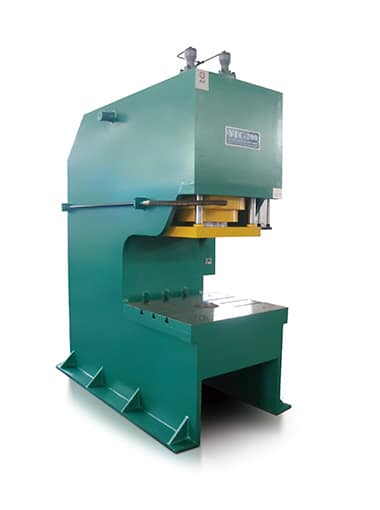
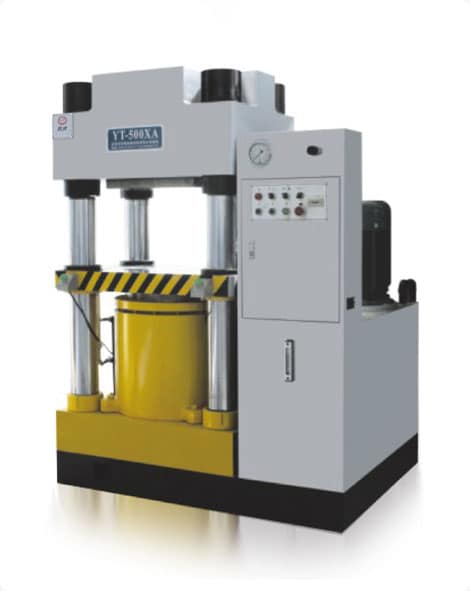
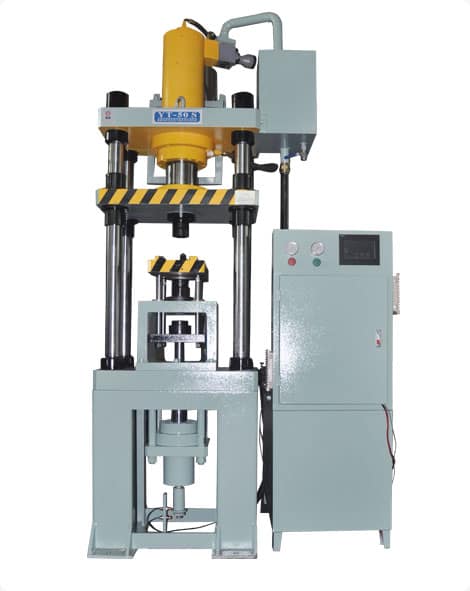
There are various kinds of hydraulic presses, from table top models to massive ones capable of applying hundreds of tons of pressure. They are used for metal forming, straightening, punching drawing and other operations that require both force and precision.
Hydraulic presses differ significantly from their mechanical counterparts in that they don't produce excess noise, an important advantage as excessive noise levels can lead to physical and mental health problems for workers as well as increases production costs. Therefore, hydraulic presses have become popular choices among manufacturers who must comply with stringent government noise levels regulations.
Plunger
Hydraulic presses offer many advantages to both independent workers and large manufacturers alike. Their easy use makes for greater control over pressure application; in addition, these reliable machines rarely break.
There are various kinds of hydraulic presses, each classified according to how it is powered. An air over hydraulics model, for instance, uses compressed air and oil as forces in creating force; other options for hydraulic presses include electric and manual models.
These machines can be used for an array of tasks, from molding and clinching to flanging, punching and deep drawing - as well as metal forming. Their capabilities can be tailored specifically to each task by changing dies, pressure settings, stroke speed and process position settings; however they may encounter problems, with one common complaint being inability of press to build pressure - this can be caused by loose packing nuts or worn piston packing material.
Ram
Hydraulic presses use hydraulic fluids flowing between two connected cylinders to generate mechanical force that drives an anvil against a plane slug to deform it, creating the ability for various processing applications including forming, bending, stamping, coining, blanking and punching to take place.
An efficient hydraulic system typically includes a reservoir to store hydraulic fluid, a pump that generates mechanical energy to move it through its pipe network, and a cylinder that raises platens during pressing operations. A motor, electric power supply and pressure gauge may also be included as part of this setup.
A hydraulic press's frame and cylinder size determine how much force it can exert, with stroke control enabling fine adjustments of its length of ram stroke. An important feature is its built-in overload protection feature, which activates when its pressure limit has been reached and opens a valve when reached.
Link to this article: https://www.ihydraulicpress.com/mk/2857.html
Hot Articles
-
Hydraulic Press Guy
Lauri Vuohensilta of Finland has become an online sensation with his hydraulic press channel on YouTube, showing everyday objects being crushed unde……
-
How Are Hydraulic Presses So Strong?
A hydraulic press is a machine that uses liquids to create pressure. This pressure is then used to shape and compress materials. The pressure of the……
-
Safety Tips When Using a Hydraulic Press
When operating a hydraulic press, it is essential to adhere to safety protocols. Neglecting to do so could result in serious injuries which are both……
-
How to Build a 100 Ton Hydraulic Press
A hydraulic press allows users to apply significant force on an object, altering its shape in ways otherwise unimaginable. With minimal moving par……
-
Hydraulic Press for Hydraulic Fitting Repair
Hydraulic presses are widely used in a range of industries and applications. They’re typically employed to press two materials together or str……
-
Hydraulic Press For Rubber Molding
Hydraulic presses are essential tools in the fabrication, assembly and production of parts across a range of industries. Greenerd Press & Machi……
-
Hydraulic Press for Hydraulic Hose Crimping Presses
Hydraulic hose crimping presses are hand-operated tools that utilize hydraulic fluid to secure the end of a hose. Cylinders push either dies or coll……
-
Hydraulic Press Fire Hazards
Hydraulic presses are mechanical systems that use fluid pressure to multiply forces, potentially creating fire hazards if they are not regularly m……
Latest News
-
How to Make a Small Electric Hydraulic Press
Fabricators often rely on hydraulic presses as an essential tool, helping with fitting, bending and assembly of parts. A hydraulic press works by ……
-
Can Coal Be Made Into Diamonds With a Hydraulic Press?
Hydraulic Press Channel on YouTube is well known for their series of videos in which various objects are subject to pressure from hydraulic presse……
-
Can a Hydraulic Press Crush Carbon Into a Diamond?
Hydraulic Press Channel have used their industrial-sized hydraulic press to crush various things on YouTube, including this time using it on a 1.2……
-
How to Build a Hydraulic Press
Many manufacturing processes use hydraulic presses to form or fabricate materials. Jeremy Neil from Macrodyne Technologies; Josh Dixon from Beckwo……
-
How to Press Rosin With Hydraulic Press
Rosin is an oil extracted from pine sap that undergoes a process of heating and separation to yield liquid from solid sap. Rosin extraction is a rel……
-
How to Calculate Hydraulic Press Force
A hydraulic press uses Pascal’s Law to magnify its force. In an incompressible fluid, any change in pressure at one location instantly travels……
-
How to Build a Hydraulic Shop Press
A hydraulic shop press is an invaluable tool that has many uses. It can push bearings onto shafts, stamp metal and bend metal. Shop presses can be p……
-
Hydraulic Press for Olive Oil Extraction
To begin the production of olive oil, the first step involves grinding olives with a stone mill. This paste then gets spread onto woven mats –……