










Hot Articles
-
What Is a Hydraulic Press Used For in the Textile Industry?
Hydraulic presses are essential metal-forming tools that use pressure to shape and deform materials. They have applications across numerous industri……
-
Blaise Pascal – What Did Blaise Pascal Use a Hydraulic Press For?
Pascal was a French mathematician, physicist, and religious philosopher renowned for advancing science during his lifetime. He created several pract……
-
What Is a Hydraulic Press Cylinder?
Hydraulic presses use only minimal force to produce much greater pressure than you could exert with your hands alone, thanks to Pascal’s law……
-
Who Created the First Hydraulic Press?
Hydraulic presses are machines that use fluid pressure to multiply force. Joseph Bramah of England invented and patented the first hydraulic press……
-
Heated Plates for Hydraulic Presses
Heated plates are a standard component for hydraulic presses. They help keep your materials at the optimal temperature, making them more resistant t……
-
What Size Hydraulic Press For a Forging Shop?
Blacksmiths have long used hammers to shape metal, but the hydraulic forging press offers them new possibilities. This book covers its basic operati……
-
What is the Biggest Hydraulic Press in the World?
Hydraulic presses are machine tools that use static pressure to process materials such as metal, wood, plastic and powdered products. They’r……
-
What Size Air Compressor For Hydraulic Press?
Air-powered presses are user-friendly and require minimal upkeep, using muscle power to pump a handle which pushes a small piston downward and thus ……
What is the Hydraulic Press?
time:2023-06-04 views:(点击 1,268 次)Hydraulic presses are machines that use liquid to transmit force and build pressure, applying Pascal's Law: any small force applied to confined fluid will magnify.
Metal powder extrusion equipment is widely utilized in the production of metals, plastics and other materials; while labs also utilize it for sample preparation and XRF analysis.
It uses hydraulic fluid
Hydraulic presses utilize hydraulic fluid to transfer force from one piston to another and generate massive amounts of power, making them suitable for industries as diverse as metalworking, plastics and composites production, manufacturing and construction. They work by employing a plunger that exerts pressure in a small chamber before passing that force to the master cylinder - this allows the large cylinder then pressurizes whatever is under it with crushing force; Pascal's theory for pressure on liquids states that pressure remains constant when force transfers from one cylinder to another - keeping pressure constant regardless of force transfer between cylinders - making hydraulic presses ideal for use across industries as varied as metalworking production, plastics & composite production, manufacturing & construction industries among many more!
Hydraulic presses consist of three primary components: cylinders, plunger and ram. Cylinders are metal pipes equipped with two ports for inflow and outflow of hydraulic fluid and used to generate compressive forces which drive anvils and dies. Their designs vary depending on application: some have multiple cylinders while others use just two.
One of the primary uses for a hydraulic press is creating KBr pellets for Fourier transform infrared (FTIR) spectroscopy analysis, used to study chemical bonds and vibrations within materials. Another application would include sample preparation for X-ray fluorescence analysis.
Hydraulic presses come in various shapes and sizes. Their capacities typically range between 8 tons and 25 tons. Each one operates differently; some feature more complex drive systems compared to others; these systems can either be pump-direct or pump-accumulator driven.
Pump-accumulator hydraulic systems utilize a pump to supply high-pressure working liquid to hydraulic cylinders, with distribution valves acting to regulate this flow of liquid and relief valves installed as safety features. They offer many advantages over other drive systems as they're easier to manage and maintenance is generally reduced over time.
It uses a ram
A hydraulic press relies on a ram to generate high amounts of pressure. It consists of two interconnected cylinders - one larger than the other - connected by tubes filled with hydraulic fluid and pressurized with an external pump. When the piston in the larger cylinder is pushed, liquid expands and pushes down on the ram to create force that helps crush anything placed between them. Hydraulic presses come in an assortment of sizes and styles to meet specific industrial requirements. Common uses for hydraulic presses in construction, manufacturing and automotive sectors include piercing holes into metals, stamping them out or stamping in marking inscriptions on them; making ceramics or molding plastic composites; creating ceramic molds, and forming concrete structures.
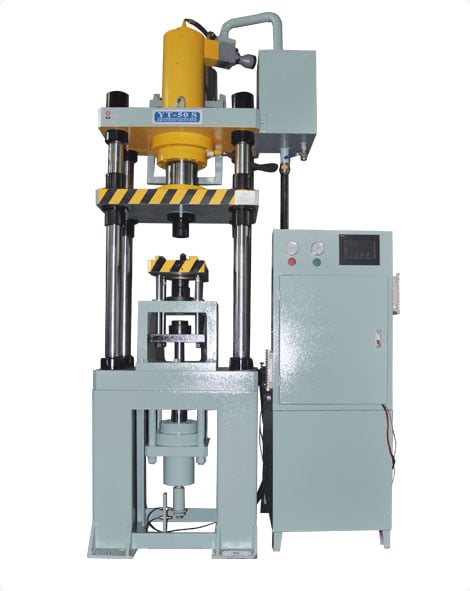
H-frame presses are among the most frequently utilized hydraulic presses, due to their easy operation and durability. As they can create tremendous amounts of pressure, it is crucial that operators know how to safely use this powerful tool.
Before beginning work on a hydraulic press, ensure the machine is clean and leaks are addressed. Also consider having a safety plan prepared before commencing with work; this plan should include what steps should be taken in the event of an accident, fire or loss of control of the press.
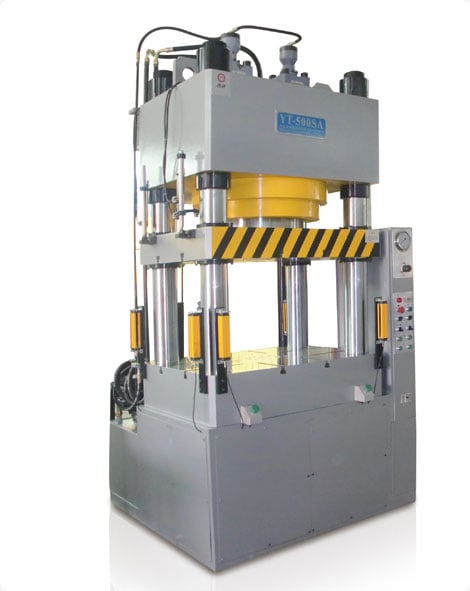
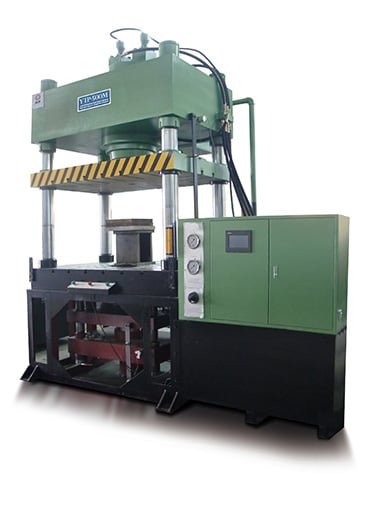
Hydraulic presses come in various varieties, from four-column type presses and single column types, to horizontal presses with several columns. Each type has its own benefits and drawbacks; it is important to choose one suitable for your needs based on factors like power and accuracy requirements. A four-column press has more power but may not provide as accurate results than its single column counterpart; depending on your requirements you could choose between bench and heavy-duty hydraulic presses as needed. When considering purchasing one it's wise to read product reviews carefully prior to making a purchase decision.
It uses a plunger
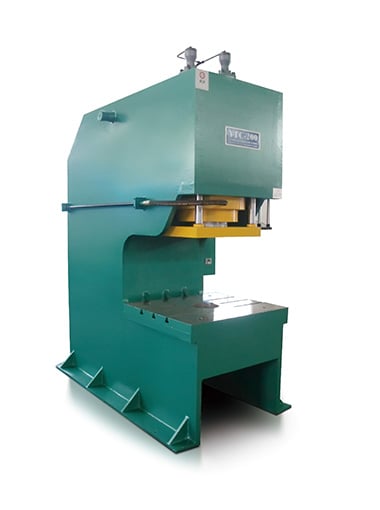
Hydraulic presses use a plunger to apply pressure on a small amount of liquid in a chamber, which then results in greater force that presses against the master cylinder. A variety of hydraulic presses exist; arbor presses (used for punching holes into metals and stamping inscriptions), C-frame presses (for straightening, drawing, punching and assembling work) and H-frame presses (capable of performing multiple types of pressing operations) all operate according to Pascal's theory of fluid pressure transmission - although H-frame presses operate more in line with Pascal's theory than their counterparts do.
Hydraulic presses consist of three parts, which include a power unit, two cylinders, and a plunger. The power unit produces hydraulic fluid to power both piston rod and ram in cylinder A and B; two metal pipes (cylinders) with two ports each have input and output ports to allow input/output of hydraulic fluid from their respective ports; their diameter can vary in order to exert different amounts of force against anvil and die; plus additional elements like pressure gauge and relief valve can all make up their hydraulic system.
Hydraulic presses have many uses in manufacturing and construction. They're often employed to mold plastics into various shapes and sizes as well as compress soil or rock. Furthermore, hydraulic presses are frequently utilized by auto industries for shaping car parts before assembly.
Hydraulic presses can help reduce noise pollution in the workplace, making them an invaluable asset to monitoring agencies. Excessive noise can have serious repercussions for employees' mental and physical wellbeing resulting in absenteeism and production downtime; fortunately, hydraulic presses tend to be quieter than other machines and can easily be customized to meet specific requirements.
XRF Scientific provides manual, power, and motorized hydraulic presses of various sizes to suit a range of needs. Our selection is microprocessor controlled for effortless loadability into both metric and imperial tons and can be tailored specifically to your application. Plus our user-friendly presses come complete with thermal instruments, travel displays, and counting functions - perfect for all kinds of work applications!
It uses a piston
Hydraulic presses are multifunctional machines that can serve a multitude of purposes. Utilizing hydraulics for force generation, hydraulic presses can be used to shape, mold and join different materials together. Hydraulic presses can be found across industries including automotive manufacturing and construction as well as laboratory settings to test products and ensure quality.
Hydraulic presses utilize a hydraulic cylinder with two interconnected cylinders and pistons that convert fluid power from a hydraulic pump into mechanical energy that moves ram press rams to press workpieces between pressure plates. Pressure applied by this hydraulic cylinder is controlled via limit switches that help adjust height, thickness, gap widths between plates as well as controls overall pressure between them.
Using Pascal's Law, hydraulic presses use Pascal's Law to generate high pressure within a limited space. This principle states that any force exerted upon a fluid will create an equal force equaling its area multiplied by pressure of the fluid, creating tremendous amounts of force within limited spaces - the ideal formula for producing heavy objects like car parts and machine components from this theory.
Hydraulic presses are capable of more than just shaping plastics and composites; they're also utilized in molding metal into different forms and shapes. Commonly found in manufacturing plants producing car components, and also serving to compress soil and rock during construction projects - as well as being utilized to produce molds for molding glass or casting metal parts.
Hydraulic presses can be an efficient tool in laboratory settings for producing samples for X-ray fluorescence spectroscopy analysis. The process involves placing powder samples in pellet dies that are then placed inside a hydraulic press; when pressure is applied on these pellets they vaporize, leaving behind samples ready to be examined by analysis.
Link to this article: https://www.ihydraulicpress.com/yn/3453.html
Hot Articles
-
The Difference Between Power Press and Hydraulic Press
Hydraulic presses are used across a wide range of industries for fabrication, assembly and maintenance. They use a pump to apply pressure to a steel……
-
Why Do Hydraulic Presses Catch Things on Fire?
Hydraulic presses are essential pieces of machinery in many different industries. But they also present serious safety hazards for employees who ope……
-
Where to Buy Hydraulic Press Pump
Hydraulics is a mechatronic technology that utilizes fluid pressure to multiply mechanical forces. Hydraulics is widely used to press, assemble, dra……
-
What is a Hydraulic Press Juicer?
Hydraulic press juicers use hydraulic pressure to extract juice from fruits and vegetables without producing heat, thus protecting more of their nut……
-
Hydraulic Presses in the Rubber Industry
Hydraulic presses are indispensable tools in the rubber industry for a variety of tasks. Common uses include bending, forming, and compression mould……
-
What Is a Hydraulic Press Used For in the Construction Industry?
Hydraulic presses are machines that utilize liquid as the working medium to transfer energy, using Pascal’s principle as its foundation. Hydra……
-
What Gauge of Metal Works Best For Hydraulic Press Silver Jewelry?
Hydraulic presses enable users to emboss, texture, bend thin or thick metal accurately while shaping it into 3D forms. Most machine shops and metal ……
-
Disadvantages of a Hydraulic Press
Hydraulic presses are powerful machines that can be employed for a variety of tasks. However, these tools also have their drawbacks. When purchasing……
Latest News
-
What is the Hydraulic Press Used For in Manufacturing?
The hydraulic press is used for a number of manufacturing processes. From forging to blanking and compress molding, a hydraulic press can help you p……
-
Why Does Paper Explode in a Hydraulic Press?
Crushing paper may not seem exciting or unexpected; yet Finnish workshop owner Lauri Vuohensilta managed to do just that using his 144-ton hydraulic……
-
Where to Buy Hydraulic Press for Jewelry
Make beautifully formed rings and bracelets using a hydraulic press. Learn the fundamentals and techniques of operating a 20-ton press from Melissa ……
-
Why Is a Hydraulic Press So Powerful?
Hydraulic presses are formidable machines capable of creating massive amounts of force. Their functioning involves using two cylinders – one……
-
What Does a Hydraulic Press Do For Fruits and Vegetables?
Hydraulic presses utilize static pressure to produce finite and precise parts, components and assemblies. Their programmability enables creative e……
-
Why Use an Hydraulic Juice Press?
Utilizing a hydraulic juice press can produce high-quality drinks packed with vitamins and nutrients. As this no-heat process maintains their proper……
-
What is Hydraulic Power Press?
A hydraulic press uses a hydraulic system to generate and transfer force, with smaller pistons providing power through pressure differential between……
-
Why Did Joseph Bramah Invent the Hydraulic Press?
Today, hydraulic presses are among the most frequently used machines on factory floors, used for stamping, forming, blanking and many other processe……