











Hot Articles
-
How to Maintain a Hydraulic Press
If your business relies on hydraulic presses, it’s essential to keep them running safely and efficiently. By following a regular maintenance r……
-

What Is a Hydraulic Press Cylinder?
Hydraulic presses are machines that produce compressive force at lower pressure to facilitate lifting heavy loads mechanically. Based on Pascal̵……
-
Where to Buy Hydraulic Press Pump
Hydraulics is a mechatronic technology that utilizes fluid pressure to multiply mechanical forces. Hydraulics is widely used to press, assemble, dra……
-
Hydraulic Presses in the Food Industry
Hydraulic presses are widely used in the manufacturing industry for a variety of tasks. These machines can assist with heavy-duty jobs like stamping……
-
What is the Hydraulic Press Principle?
A hydraulic press machine utilizes Pascal’s law to generate force by compressing a confined liquid. This principle states that pressure applie……
-
What Is a Hydraulic Press Used For in the Construction Industry?
Hydraulic presses are machines that utilize liquid as the working medium to transfer energy, using Pascal’s principle as its foundation. Hydra……
-
What Is Hydraulic Press Machine Price?
A hydraulic press uses liquid pressure to produce force, making it capable of forging, assembling, drawing, punching, stretching, stamping and pre……
-
What Can I Make With a Hydraulic Press?
Hydraulic presses are essential tools in many workshops, providing multiple uses. For instance, they can compress waste oil filters down into smal……
What Is The Material For Hydraulic Press?
time:2023-06-01 views:(点击 1,118 次)
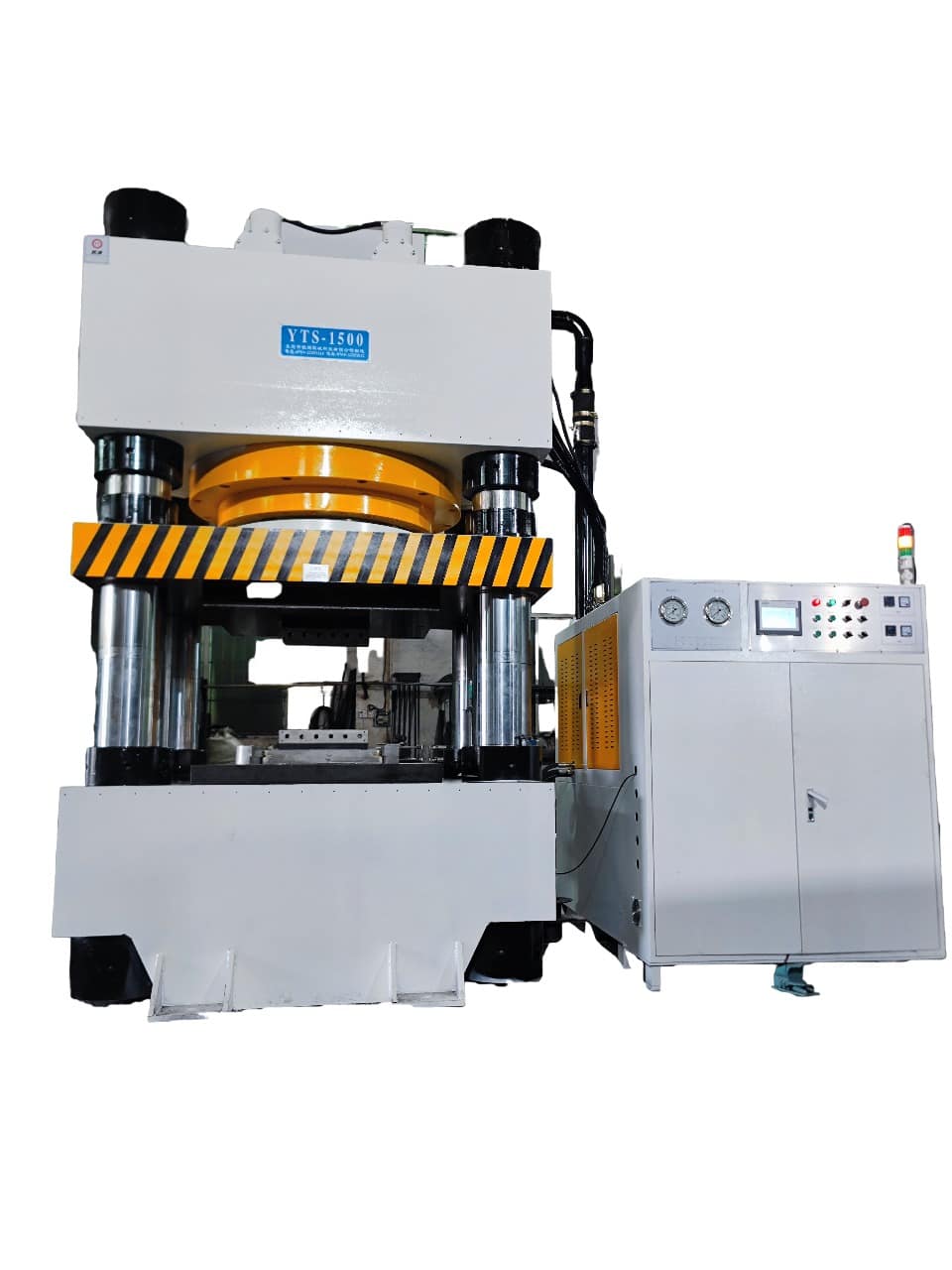
Hydraulic presses generate significant compressive force to straighten, bend, stamp or flatten materials into desired forms. They use fluid power transmission more efficiently than pneumatic systems.
Hydraulic presses operate according to Pascal's principle, in which pressure on confined liquid is transmitted unhindered through an incompressible fluid such as oil. They consist of a mainframe with two cylinders that carry pistons for pressing operations.
Hydraulic fluid
A hydraulic press is a piece of equipment used to apply significant force on various materials. Its applications span many industries, such as automobile production and manufacturing. A hydraulic press can be used for bending, stamping, punching, drawing and cutting various forms of material; powder compacting uses this type of machine too as they press powdered materials into shapes or designs before compressing. Hydraulic presses may be operated manually or with PLC control system.
Hydraulic presses rely on an intricate network of pipes, cylinders and pistons that generate and transfer force to their workpiece. A hydraulic pump forces oil through this network into smaller cylinders or pistons containing them; when activated it forces more oil through to create pressure and transmit this force to its workpiece through what is known as hydraulic gain.
Hydraulic fluid not only provides power to a press, but it also acts as a lubricant between metal components of the machinery. Without proper lubrication, these parts would rub together and damage each other - this in turn would diminish its pressure-generating capability and compromise its effectiveness.
Hydraulic fluid is a special kind of mineral or synthetic oil designed to transfer power. Its formulation may provide superior physical properties like high temperature performance, biodegradability, oxidation stability and corrosion protection, as well as dispersing heat effectively. Furthermore, hydraulic fluid also serves to protect hydraulic systems against corrosion and rust while dissipating heat effectively.
Hydraulic presses differ from other systems by operating with minimal moving parts and are much cheaper to operate and maintain, providing precise force delivery at lower cost than competing solutions. They can even be used to fabricate automotive parts and heavy-duty machinery.
For optimal hydraulic press performance, selecting an ideal type of hydraulic fluid is vital. To select an efficient option that matches up with your machinery and provides optimal viscosity index performance. Furthermore, an ideal fluid should also be free from impurities which could cause damage.
Cylinder
Hydraulic presses utilize metal pipes known as cylinders which contain hydraulic fluid. Each has two ports for input and output of this fluid, as well as a piston rod which moves up and down within its bore to generate hydraulic pressure. This piston rod should be constructed from material resistant to pitting corrosion or wear while its hard chrome plating should prevent it from scratching seals during movement.
There are various kinds of hydraulic presses, from small tabletop models to massive ones applying hundreds of tons of pressure. Each is tailored specifically for its task or industry and used to shape, mold and deform a variety of materials including metals, plastics, wood and powder metallurgy - they're found across industries as well as used by professional metal workers as a teaching aid in schools for student learners of metal working.
Hydraulic presses are widely used for various metalworking tasks, including bending, straightening, forging and pressing plastics, rubber and wood materials into dense forms. Furthermore, electric and air powered hydraulic presses may reduce maintenance costs and downtime while still offering great productivity levels.
A hydraulic press's cylinder is an integral component, transmitting force from its hydraulic system to an anvil. Depending on its design, single or double cylinder designs may exist depending on machine configuration. Some designs even feature additional ports to accommodate for ram-return valves which enable hydraulic systems to function without overloading individual cylinders and thus protect them from potential damage or failure.
An integral component of any hydraulic press is its hose connection between the cylinder and other parts of the system. For optimal operation, this should be free from cracks or cuts that could scrape seals or cause leakage that compromises the hydraulic system.
Hydraulic ram
Hydraulic rams are powerful tools used to apply force on objects that require deforming. Configured as an enclosed cylinder with piston attached at its top end, oil flowing into one side pushes the piston upward, raising the object. While commonly used to form metal, hydraulic rams have other applications. They are extremely versatile tools with strength controlled very precisely; perfect for bending, drawing, punching or coining objects into shape as well as forging pieces altogether.
Hydraulic presses are powered by hydraulic fluid and can be managed either electronically or mechanically, with mechanical presses using flywheels and belts to generate power while hydraulic systems use pistons and valves to manage pressure and cycle of the ram. Both types have advantages and disadvantages - for instance a mechanical press requires less maintenance while its more flexible counterpart offers greater convenience.
Hydraulic ram pumps may be an ideal way to supply remote livestock with drinking water in dry locations. Capable of pumping 1 gallon per minute (gpm), they're great for remote areas with little rainfall but need an abundant and secure source; ideal conditions would include one five feet higher up than where the pump will be situated.
PVC or polyethylene pipe should be chosen for making homemade hydraulic rams as it's easier to install than galvanized steel piping. A carpenter's level will help determine the elevation drop from water source to proposed location of ram pump.
Step one in designing a homemade hydraulic ram is to determine how much water needs to be pumped out. This will play an integral part in selecting an appropriate ram, with smaller-diameter models typically lifting heavier loads at higher elevations while larger ones might not. Step two consists of selecting an adequate hydraulic ram capable of lifting at least 100 pounds - this may require additional steps like making changes on your system if you find itself underperforming this requirement.
Hydraulic system
Hydraulic systems are powerful and versatile machines that use liquid as their working medium, capable of performing various tasks such as forging, stamping, cold extrusion, bending flanging sheet drawing as well as forging metal and plastic into various shapes - an invaluable asset in industries ranging from appliance production to aircraft construction.
An elementary hydraulic system comprises two pistons connected by a fluid-filled tube. When activated by its operator, this generates significant pressure between both pistons that transmits to material being pressed, producing strong mechanical force. A pump powers this hydraulic system; manual, pneumatic or electric operation are all possible forms. Different pumps generate different amounts of force while some even help perform multiple tasks at the same time.
Hydraulic systems use various materials depending on their application, from stainless steel to copper alloy or aluminum alloy. Their composition ultimately depends on performance requirements, cost considerations and corrosion resistance needs; with stainless steel being most popular due to its strength and corrosion-resistance.
Hydraulic presses are designed with safety in mind. Their hydraulic system features numerous safety features to prevent accidents and ensure its proper function, so regular maintenance must take place to keep everything working optimally. Cleanliness should also be ensured: any oil left in the system should be cleared away immediately so as to clear away debris that obstructs piston movement or causes blockages in its use.
Hydraulic presses are not only capable of performing forging and forming operations; they're also useful for various other uses like scrap baling, ceramic manufacturing, laboratory testing and scrap baling. As an indispensable piece of equipment for many automotive, aerospace and military factories.
Hydraulic presses come in both single-station and multi-station designs, with single-station presses containing one set of tools under their respective tables, while multi-station units can manage several operations at the same time. They come in various sizes and tonnages - a 10,000-ton hydraulic press can perform various processes including forging, stamping, bending and cold forming operations.
Link to this article: https://www.ihydraulicpress.com/yn/3327.html
Hot Articles
-
The Difference Between Power Press and Hydraulic Press
Hydraulic presses are used across a wide range of industries for fabrication, assembly and maintenance. They use a pump to apply pressure to a steel……
-
What Is a Hydraulic Press Fueled By?
Hydraulic presses are widely utilized in the manufacturing industry, yet many do not fully comprehend how or why they work as intended. A hydraulic ……
-
Hydraulic Press Vs Arbor Press
Hydraulic presses are a versatile tool that can be employed for various tasks. They operate by applying pressure from a pump to extend the press cyl……
-
The History of Hydraulic Presses
Hydraulic presses have a long and distinguished history in manufacturing. They remain essential components that keep industries running smoothly and……
-
What is Hydraulic Power Press?
Hydraulic power presses can help your business compress, assemble, draw, punch and trim materials more efficiently than mechanical presses do R……
-
What Is a Hydraulic Press Machine?
Hydraulic press machines generate mechanical power by applying force on an object, using liquid medium such as oil as its source. Because this liqui……
-
What Does Hydraulic Press Do?
Hydraulic presses play an essential part in numerous fabrication and production processes, from car crushing to producing fat-free cocoa powder. The……
-
What Is The Material For Hydraulic Press?
Hydraulic presses generate significant compressive force to straighten, bend, stamp or flatten materials into desired forms. They use fluid power ……
Latest News
-
Common Uses For a Hydraulic Press
Hydraulic presses are widely used in a variety of manufacturing processes. From metal forming to pressing powder products, they’re often the g……
-
What Is a Hydraulic Press Used For in the Pharmaceutical Industry?
Hydraulic presses are commonly employed in the pharmaceutical industry to compact powdered items such as face powder and medicine. Additionally, the……
-
How to Find the Max Pressure of a Hydraulic Press
Hydraulic presses are an incredibly useful tool used in many fields. They allow for the shaping of certain materials, making them highly beneficial.……
-
What is the Biggest Hydraulic Press in the World?
Hydraulic presses are machine tools that use static pressure to process materials such as metal, wood, plastic and powdered products. They’r……
-
The Hydraulic Press
A hydraulic press is a machine that utilizes the pressure generated in a fluid to compress, laminate or cut metals. This principle relies on Pascal&……
-
Hydraulic Press Vs Arbor Press
Hydraulic presses are a versatile tool that can be employed for various tasks. They operate by applying pressure from a pump to extend the press cyl……
-
What Is a Hydraulic Post Press Electric Platens?
Hydraulic press machines utilize hydraulic fluid in their cylinders to generate pressure that drives anvils and dies forward, acting like metal pipe……
-
Hydraulic Press Vs C-Frame Press
Hydraulic presses have many applications in various industries. Shops that need high-quality machines that are reliable and user friendly should con……