













Hot Articles
-
What is Meant by Hydraulic Press?
Hydraulic presses use hydraulic cylinders to transmit force and power, with control available via different pump types for creating more or less f……
-
What to Use When a Hydraulic Press Is Not Available
When it comes to pressurized metal objects, hydraulic presses are often the ideal machine. But these large machines do have some drawbacks that must……
-
What is the Maximum Hydraulic Press?
Hydraulic presses are used for forming, stamping and stamping parts in auto factories, electronics plants, heat treatment plants, gear factories and……
-
What Is a Hydraulic Power Press?
Hydraulic presses are one of the most useful and versatile machines on the market today, utilizing hydraulic power to generate mechanical pressure t……
-
Why Does Paper Explode in a Hydraulic Press?
Crushing paper may not seem exciting or unexpected; yet Finnish workshop owner Lauri Vuohensilta managed to do just that using his 144-ton hydraulic……
-
Hydraulic Press Juicer
Juicing is an excellent way to provide your body with essential vitamins and nutrients, aid bowel cleansing and potentially prevent many diseases.……
-

Finding the Right Hydraulic Press Factory
Finding the Right Hydraulic Press Factory Hydraulic presses are a great way to apply high pressure to a material. They can be used for a variety of ……
-
What is the Difference Between a Hydraulic Press and a Stamping Press?
When it comes to metal fabrication, there are various types of presses. Hydraulic presses are one type of machine that can be employed for shaping o……
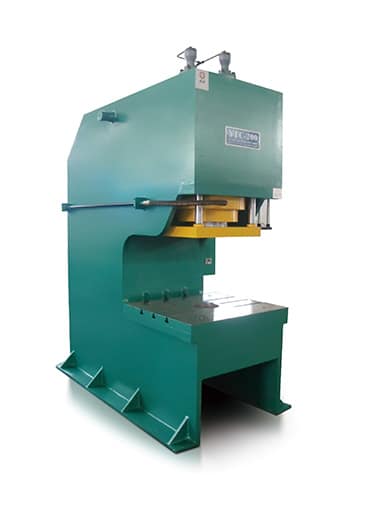
Hydraulic Presses for the Aerospace Industry
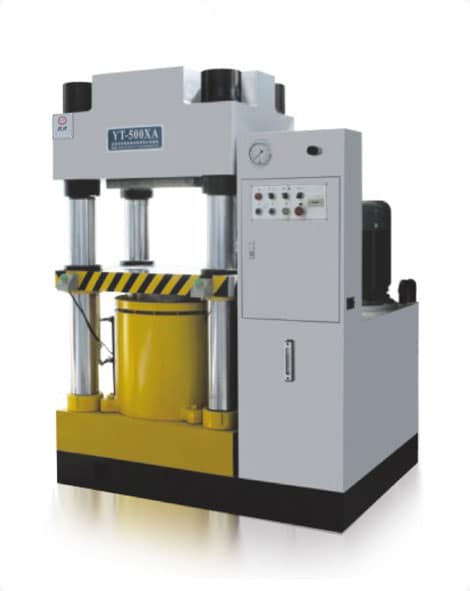
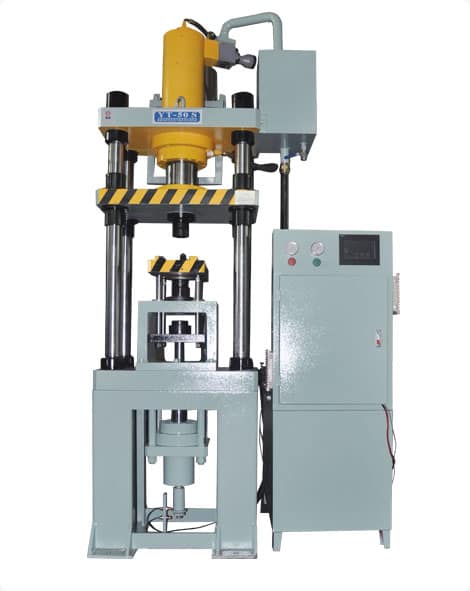
time:2023-03-14 views:(点击 1,019 次)Hydraulic presses are utilized to manufacture a range of components and products. These tools can be employed for metal forming, straightening, blanking, punching and drawing; all requiring force and accuracy.
Customizable hydraulic presse solutions are tailored to each product, the force required and the production process. In the automotive industry, for instance, these machines assemble parts such as bearings, shafts and gears.
Metal Forming
Metal forming is a type of fabrication that shapes metal parts to a desired shape by applying force greater than their yield strength.
Metal forming involves several processes. Extrusion, which produces a thin tube; stamping, which reshapes the surface of a metal part; and deep drawing are two that can reshape metal sheets into desired shapes.
Cold forming is a popular metalworking technique that involves shaping the workpiece at temperatures close to its ambient temperature. This requires less heating than warm forming, saving fuel costs and enabling higher production rates.
Aerospace manufacturers require custom hydraulic press machines that meet their exacting standards for tight tolerances and superior finish. MULTIPRESS provides the specialized machinery they require for these applications.
Deep Drawing
Aerospace parts are among the most intricate, challenging and intricate products in manufacturing - necessitating precise standards to guarantee a high level of quality control. Hydraulic presses offer this combination of performance, dependability and flexibility that gives aerospace companies peace of mind when meeting these demanding specifications.
Deep drawing, commonly referred to as hydroforming, is a shape transformation process where a flat sheet metal blank is drawn into a die. This method retains material throughout the forming operation and it often pairs well with other metalworking operations like blanking or piercing.
This process utilizes the radial force of the punch and pressure from within the die cavity to produce 3D shapes. To promote metal flow through this area, clearances between them must be maintained.
Part geometries such as stepped, domed and tapered cups can be created. To produce these non-standard deep drawn components, multiple draws must be performed in order to obtain the desired final shape.
Assembly
The aerospace industry is an expansive field that encompasses military aircraft, missiles, space systems and commercial airlines alike. All products produced within this sector are highly complex and require hundreds of thousands of distinct parts to complete production.
The aerospace industry requires materials that are lightweight and strong, as well as resistant to chemicals, heat and radiation. To improve their materials' quality, durability and effectiveness over time, billions of dollars have been invested into research and development projects.
Steel is the most commonly used structural component in the aerospace industry due to its versatility and durability. Not only that, but steel also boasts a favorable strength-to-weight ratio and is relatively inexpensive; additionally, its excellent dimensional stability at high temperatures make it an attractive option for aerospace designers.
Compaction
A hydraulic press utilizes Pascal's Principle to exert force on material, compressing or deforming it firmly. These presses come in manual, pneumatic and electric models to suit a range of applications from canning food items to welding appliances and more.
A hydraulic press consists of two cylinders connected by fluid-filled tubes. One cylinder is known as the slave cylinder, while the other serves as the master cylinder.
The pressure of liquid within a slave cylinder is transferred to the master cylinder through a piston, where it's used to push against materials being compressed.
In the aerospace industry, hydraulic presses are frequently employed to manufacture parts for airplane bodies and landing gear. These machines can create various shapes with deep or narrow recesses as well as portions with sharp creases.
Link to this article: https://www.ihydraulicpress.com/yn/1664.html
Hot Articles
-
Hydraulic Presses for the Aerospace Industry
Hydraulic presses are utilized to manufacture a range of components and products. These tools can be employed for metal forming, straightening, blan……
-
What is Something a Hydraulic Press Can’t Crush?
Hydraulic presses are powerful machines capable of creating enormous levels of force, making them suitable for a range of industries such as metalwo……
-
Where to Buy Hydraulic Press Oil
Hydraulic presses play an integral role in many industrial processes. They shape metal components while also serving to crush waste material. Howe……
-
Who is Hydraulic Press Channel?
A couple has become YouTube stars by operating a factory with a huge hydraulic press and making videos of themselves crushing everyday items in it……
-
What Can I Make With a Hydraulic Press?
Hydraulic presses are essential tools in many workshops, providing multiple uses. For instance, they can compress waste oil filters down into smal……
-
Where to Buy Hand Hydraulic Press
Hydraulic presses are widely used to produce household items, automobile components and aircraft components – as well as straighten metal ob……
-
What is the Difference Between a Hydraulic Press and a Power Press?
Hydraulic presses are widely used across a range of industries, helping operators fit, bend and assemble sheet metal parts, bearings and equipment. ……
-
The Hydraulic Press – Watch Lauri Vuohensilta Smash a Box
Hydraulic presses are an indispensable addition to any workshop, providing flattening and crushing samples, straightening bent metal pieces, as we……
Latest News
-
Hydraulic Presses for the Aerospace Industry
Hydraulic presses are utilized to manufacture a range of components and products. These tools can be employed for metal forming, straightening, blan……
-
What is an Example of a Hydraulic Press?
Hydraulic presses have numerous industrial uses. One such benefit is to shape or deform materials. They operate under Pascal’s Law, which stat……
-
Who Invented the Hydraulic Press For Cocoa Processing?
Cocoa processing is an integral component of chocolate manufacturing. From powder to bar production, this involves various steps involving multipl……
-
Blaise Pascal – What Did Blaise Pascal Use a Hydraulic Press For?
Pascal was a French mathematician, physicist, and religious philosopher renowned for advancing science during his lifetime. He created several pract……
-
Why Do Objects Explode Under a Hydraulic Press?
Hydraulic presses are highly effective machines for applying sustained pressure on objects. Configured as two cylinders with pistons stacked one o……
-
How Hydraulic Presses Help Manufacturing
Hydraulic presses can quickly adapt to meet the production or assembly needs of any company or institution, by simply altering pressure or stroke sp……
-
What is a Hydraulic Press and Column Press?
Hydraulic presses are industrial tools that deform and shape materials by means of a fluid-filled cylinder. This cylinder connects to an engine unit……
-
Why is a Hydraulic Press So Powerful?
A hydraulic press utilizes Pascal’s law to transform small amounts of energy into large forces. According to this law, fluid pressure increase……